

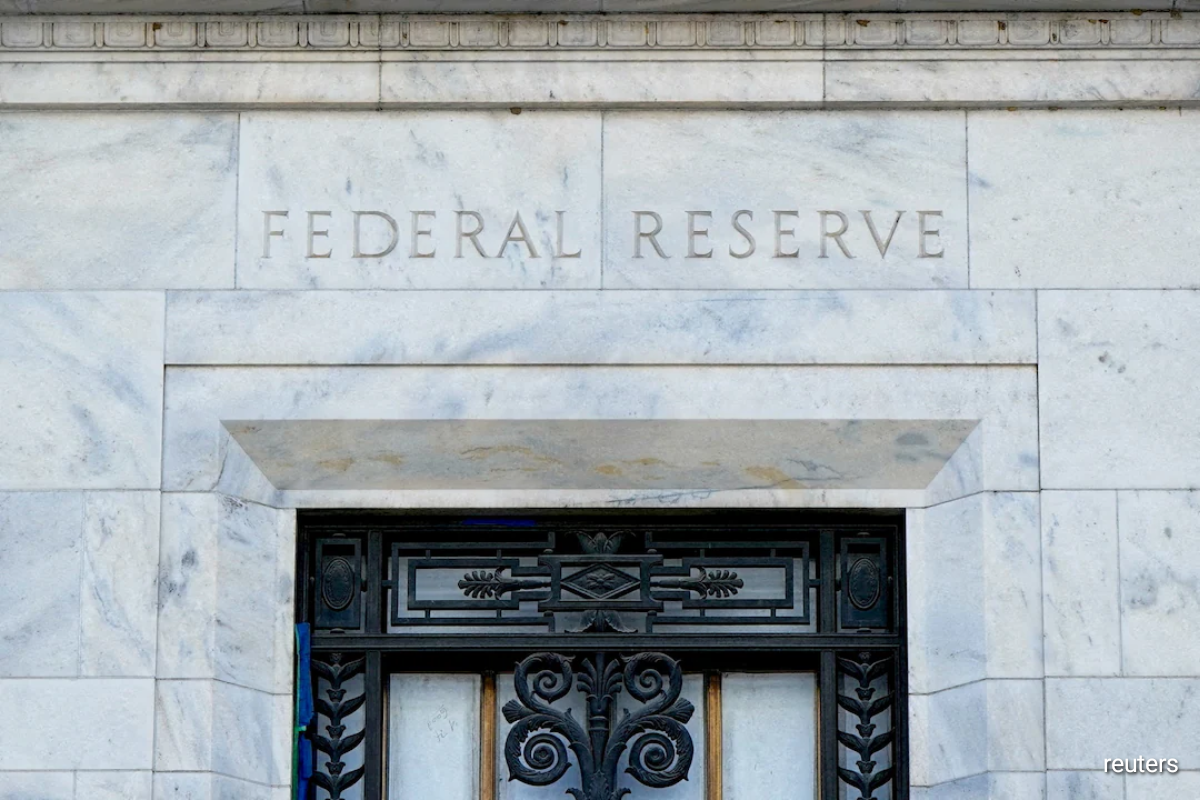
ORLANDO, Florida (Aug 17): Federal Reserve Chair Kevin Warsh has indicated there are a few routes for returning inflation to target. Unfortunately, the one that has by far the best chance of succeeding is the least palatable: raising interest rates.
Draining excess liquidity from the financial system by shrinking the Fed's balance sheet, or relying on an AI-fueled productivity boom to cool price pressures, are the other alternatives Warsh has nodded to. But if the goal is to meet the price stability half of the Fed's mandate and to send a signal to markets and the public that slaying inflation is the priority, they are poor substitutes for old-fashioned rate hikes.
Pulling the interest rate lever isn't a quick fix. Monetary policy works with a lag, which for decades was thought to be between 12 and 24 months. It's impossible to say for sure how long the lag is, and no two economic cycles are the same.
But thanks to clearer communication from policymakers — yes, forward guidance — unprecedented technological advances in a high-speed, data-driven economy and digitized financial markets, the lag time is shortening. Fed Governor Christopher Waller, has estimated it may be closer to nine to 12 months.
Whatever the number is, the transmission effects of balance sheet changes and productivity gain take even longer. That's if they exist at all.
To be sure, recent economic indicators have given the Fed some unexpected breathing room. But if inflation remains elevated and sufficiently above 2% to render the central bank's goal virtually meaningless, Warsh will be under even heavier pressure to act. Balance sheets and productivity won't cut it.
Fed footprint
It's worth recalling that the Fed has substantially reduced its balance sheet from the post-pandemic peak, yet inflation has still been above target for more than five years. The Fed shrank its balance sheet by more than a quarter, to US$6.6 trillion (RM26.78 trillion) at the end of last year, from US$9 trillion in April 2022. As a share of GDP, it has been cut to 28% from a peak of over 40% in 2022.
But further quantitative tightening could reduce bank reserves and liquidity in the system to worryingly low levels, risking a dangerous spike in money market rates. Indeed, the Fed is gradually expanding its balance sheet again by buying T-bills precisely to guard against that scenario and to ensure there's sufficient liquidity in a growing economy.
Warsh probably has backing on the 19-strong Federal Open Market Committee to reduce the balance sheet as a way to shrink the Fed's footprint in financial markets, but not as the primary tool to tackle inflation. And if the Fed is simultaneously buying T-bills, it could be a challenge to get the public and markets on board with a reverse "Operation Twist".
Treasury Secretary Scott Bessent also wants a smaller Fed balance sheet. But he also wants lower long-dated Treasury yield, something that would be complicated by the Fed putting more bonds onto the market, either via fewer reinvestments or outright sales.
"Any meaningful reduction in the Fed's balance sheet will take years," says Oscar Munoz, strategist at TD Securities.

Theory vs real world
The wait for an AI productivity boom to have any meaningful impact on inflation may be equally long. Economists agree on AI's disinflationary potential as workers increase output and businesses limit labor costs. However, the revolutionary technology's initial impact on prices is more likely to be upward. Estimates of AI-related spending over the next few years — on data centers, chips, software, construction, and power — run into the trillions of dollars.
That's inflationary.
Headline labor productivity, which measures hourly output per worker, has been pretty strong in recent years. It accelerated in the second quarter to a 1.4% annualized pace from an upwardly revised 0.8% in the first. On a year-on-year basis, it has been running just above 2% since 2019. That's solid.
But other, broader measures of productivity are mixed. The San Francisco Fed's Total Factor Productivity index has shown more modest gains in recent years, and on a rolling four-quarter basis, the "utilisation-adjusted" TFP index has turned negative.
As San Francisco Fed economists noted in May, "broader efficiency gains (from AI) remain unrealised so far."
John Silvia, CEO and founder of consultancy Dynamic Economic Strategy, puts it more bluntly. Conceptually, productivity growth, with everything else constant, should lower labor costs and therefore inflation. But there's simply no link between annual U.S. productivity growth and PCE inflation rates.
"When it comes to the real world, and I'm dealing with the actual data from 1982 to now, I cannot get a statistically significant relationship between the two," he says.
Banking on productivity or a smaller balance sheet to deliver on the inflation side of the Fed's mandate is a long shot. Warsh won't have that long.
Uploaded by Siow Chen Ming