

(Aug 17): Shorter-tenor India bond yields surged after the central bank said it will close a special dollar deposit window for overseas residents a month earlier than scheduled.
The move, announced late Friday, surprised traders after Reserve Bank of India Governor Sanjay Malhotra had ruled out an early end as recently as the Aug 5 policy meeting.
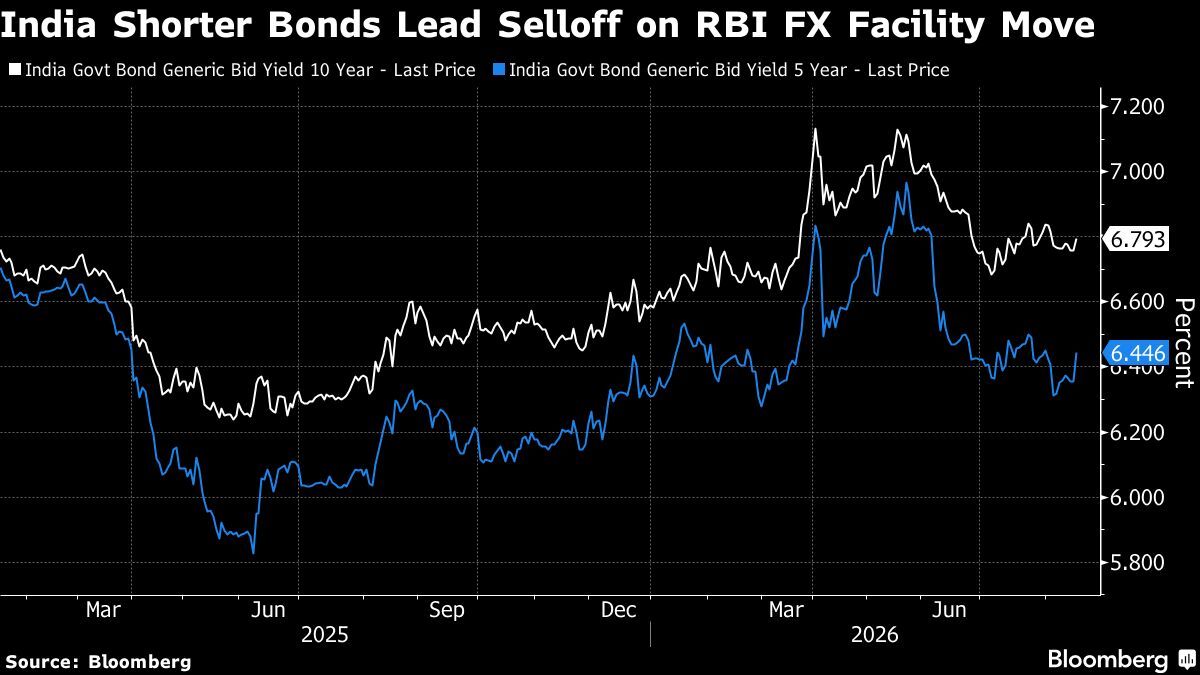
Bonds fell, led by the shorter-tenor papers, as the premature closure means less rupee liquidity to support demand. The five-year yield rose as much as nine basis points to 6.44% while the 10-year yield climbed five basis points to close at 6.81%. The move could also limit further increases in foreign-exchange reserves and cap gains in the rupee, economists said.
“The short end is selling off as inflows through the dollar deposit scheme will stop one month earlier, which will be less than the potential liquidity surplus market was factoring in,” said Gopal Tripathi, head of treasury at Jana Small Finance Bank in Mumbai.
The facility, which has drawn more than US$50 billion (RM203.35 billion), will now close at the end of August. Two other facilities for state-run companies and banks will remain open until December.
Those dollar inflows have bolstered the central bank’s forex reserves, adding over US$30 billion in three weeks. The reserves now stand at US$707 billion.
The RBI’s decision was likely driven by “cost-benefit analysis", economists led by Sonal Varma at Nomura Holdings Inc. wrote in a note. “These are borrowing funds, with three- to five-year maturities, creating future liability. With the RBI also bearing forward premium costs, the burden is likely seen as high.”
Still, the move may limit further central bank support to the rupee. Citigroup Inc. expects the currency’s recent gains to be capped at 95 per dollar in the near term. The unit weakened 0.2% to 95.6113, trailing its Asian peers on Monday.
“It seems that using the scheme to engineer any sharp appreciation of INR to reduce the undervaluation wasn’t one of the main objectives,” Samiran Chakraborty, chief India economist, wrote in a note. The lender was earlier expecting the rupee to strengthen to as much as 94.
The US bank now expects total gross inflows from the facility at US$70 billion, US$10 billion below its previous estimate.
Chakraborty wrote that while the RBI now has more firepower to limit currency swings, the key question is how the move will affect hedging and speculation in the market.
Uploaded by Arion Yeow