

This article first appeared in City & Country, The Edge Malaysia Weekly on August 17, 2026 - August 23, 2026
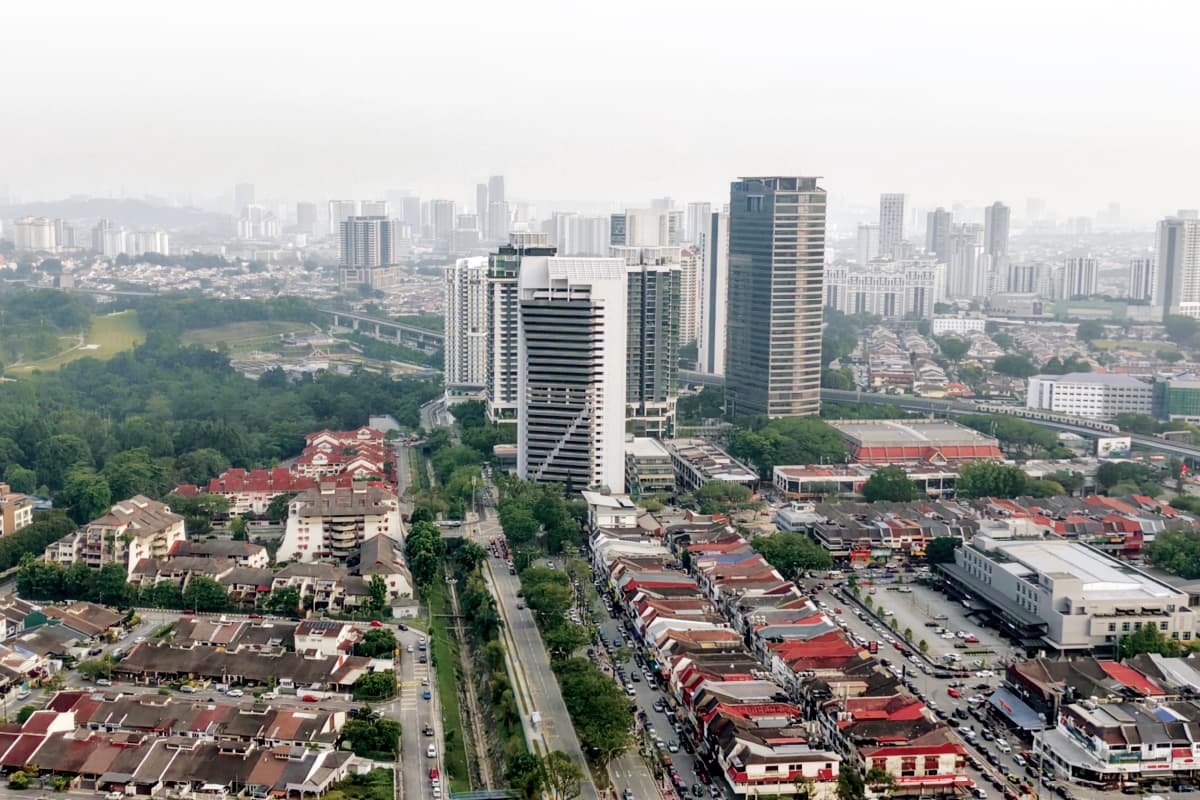
One of Kuala Lumpur’s most verdant townships, Taman Tun Dr Ismail (TTDI) is constantly bustling with activity. Workers stream into its many offices on weekdays while locals gather for meals at kopitiams, mamak stalls and the wet market — all having to fight for its notoriously limited parking space.
Over the decades, what began as a predominantly landed, low-density housing estate has transformed into an integrated neighbourhood anchored by public landmarks and amenities.
TTDI is also known for its active community engagement on local development. Following a landmark Federal Court ruling in 2023 that halted a condominium project on neighbouring parkland, its community has continued to advocate for the preservation of its green spaces.

As Rahim & Co Chestertons senior director of research and consultancy Sulaiman Saheh puts it: “Today, TTDI represents a hybrid of suburban planning and urban maturity, where growth has been incremental rather than disruptive. This hybrid evolution of sustained communities and modernising catalysts is what [enables it to] preserve its appeal as a popular residential area and [retain its strong capital value].”
Conceived in 1973, TTDI was named after Malaysia’s second deputy prime minister, Tun Dr Ismail Abdul Rahman, who passed away that year. The project on former rubber estate land was developed by a joint venture between the Urban Development Authority (now known as UDA Holdings Bhd) and SEA Housing Corp Sdn Bhd, and is located west of Kuala Lumpur, bounded by Jalan Damansara, the Damansara-Puchong Expressway (LDP), Jalan Abang Haji Openg and Pinggiran TTDI.
Half a century after its launch, TTDI remains one of Kuala Lumpur’s most resilient addresses. Largely built out by the 1990s, the 286ha township has since matured to combine home, leisure, work and transit in one low-density enclave.
The township has almost every modern convenience including schools, clinics, banks, retail, and food and beverage (F&B) outlets. Two public parks, Taman Rimba Kiara and Taman Lembah Kiara, sit at its edge, and its oldest landmark is the wet and dry market, Pasar Besar TTDI. Mont’Kiara, Bangsar and Damansara Heights are located close by.
With minimal land left for new development, TTDI’s identity is shifting from expansion to preservation. Today, steady buyer demand and a limited primary supply have made it a tightly held market where stability and selective asset enhancement drive future growth.

Capital value
TTDI’s property market has demonstrated relative resilience compared with other prime locations in Kuala Lumpur.
Sulaiman says this is largely due to its limited new supply, strong owner-occupier base, predominantly landed character and its proximity to the Klang Valley’s key commercial areas and green surroundings. All of which have continued TTDI’s desirability as a residential addresss.
“TTDI now has a settled owner-occupier-heavy population, many of them second- and third-generation families, alongside an expatriate community drawn to the international schools of the broader Damansara corridor,” says Henry Butcher Real Estate Sdn Bhd director of corporate real estate Long Shi Chuen.
According to him, TTDI’s residential segment has performed better than that of other prime areas in Kuala Lumpur.
“During weaker market periods, price declines were generally milder [than in other] high-rise dominated areas, which faced issues of unsold completed units ... [TTDI’s] landed residential segment has shown steady long-term performance, supported by genuine owner-occupier demand and limited new supply.”

Early transactions show TTDI’s transformation over the decades. According to Sulaiman, data from the National Property Information Centre (Napic) records one-storey terraced houses transacted at between RM100,000 and RM150,000 in 1985. Forty years on, the same houses changed hands at RM1.3 million to RM1.5 million.
“While price growth has moderated in recent years, particularly following the rebound effect in 2022, the decline has generally been less pronounced than in high-rise-centric areas as landed homes remain an ideal choice, especially for multigenerational families.
“TTDI continues to perform well above the broader KL average, particularly for the landed residential segment. Capital appreciation of TTDI properties leans more towards organic price stability rather than aggressive speculation, reflecting its transition into a mature market phase,” says Sulaiman.

According to data from the Valuation and Property Services Department (JPPH), a 2,409 sq ft two-storey terraced house on Persiaran Zaaba transacted at RM2.2 million in January 2026; a 1,897 sq ft unit on Jalan Athinahapan cleared at RM1.93 million in July 2025; and units in Lorong Burhanuddin Helmi were sold at between RM1.35 million and RM2.58 million between 2023 and 2025.
In 2025, bungalows on Jalan Athinahapan were transacted at between RM4.2 million and RM6.4 million, while two-storey terraced houses on the same road sold at RM1.5 million to RM2.2 million. Two-storey terraced houses in the Zaaba cluster sell at between RM1.3 million and RM1.9 million.
Ultimately, TTDI’s identity rests on its landed stock.
“Unlike areas such as KLCC or Mont’Kiara, which are dominated by high-rise developments, TTDI retains a significant portion of its original landed housing stock, creating a quieter, more grounded residential atmosphere,” Long says.
“The low-rise, landed characteristic of TTDI’s landscape has also preserved the green ambience despite the rise of concrete, commercial spots to meet the needs and wants of its residents,” says Sulaiman.
High-rise projects remain a newer, smaller part of TTDI’s market.
“Younger professionals have been moving into the condominium segment, attracted to MRT connectivity and the vibrant café and dining culture. With little land left, most new homes are high-rise or boutique projects on redeveloped plots,” says Long. He points to high-rise residential developments such as TTDI Ascencia, Sinaran TTDI and The Greens, alongside office towers Menara LGB and Menara KEN TTDI, which opened in 2013 and 2016, respectively.


Gross rental yields are 2% to 3% for landed houses and 4% to 5% for condominiums.
With regard to landed residential rental yields, Long notes, “TTDI performs broadly in line with other mature prime areas in Kuala Lumpur, as strong capital values naturally compress yields. However, [TTDI’s] stability, relatively low vacancy rates for well-maintained houses and long-term holding appeal continue to make it attractive to buyers and investors seeking quality and resilience.”
TTDI’s resilience is also linked to its connectivity. The completion of the Damansara Link and Kerinchi Link of the Sprint Expressway (Western Kuala Lumpur Traffic Dispersal System) in 2001, together with the Penchala Link in 2004, positioned the township within reach of the two major employment hubs of Kuala Lumpur city and Petaling Jaya, says Sulaiman.
The MRT Kajang Line’s TTDI station, which opened in 2017, further increased accessibility, drawing a larger catchment for shops in the area, he adds.

TTDI’s green surroundings are a key reason for its popularity, though Sulaiman says the township’s premium is not solely attributable to its green spaces. Instead, its verdant environment enhances the township’s established infrastructure, accessibility and limited landed housing supply.
Long says the long-term preservation of the green reserve has been a defining factor in shaping TTDI’s identity and sustained property demand, as walking, running and cycling trails have become increasingly rare in dense urban environments and are highly valued by residents and buyers.
Not surprisingly, the introduction of new developments near these green spaces has sparked backlash from the community.
A recent example is the resident protests over mud flooding linked to the development of the National Landscape Department’s office along Jalan Abang Haji Openg, which sits directly opposite a landed residential area.
Following the protests, Kuala Lumpur City Hall (DBKL) issued a stop-work order on April 18, and called for a re-evaluation of the project’s slope stability.

Six complementary pockets
TTDI’s commercial layout is best understood as six pockets, according to Long.
Jalan Tun Mohd Fuad is the most established. Its mix of F&B, banking, clinics and lifestyle outlets draws strong evening and weekend traffic, and commands the township’s highest ground-floor rents.
Lorong Rahim Kajai has become a café and restaurant corridor, and is popular with residents and visitors alike. Persiaran Zaaba is more mixed-use, leaning towards offices and professional services such as legal, accounting and medical practices, with a thinner F&B layer.
Jalan Datuk Sulaiman plays a quieter, community-facing role, with convenience shops and essential services at more accessible rents, while the MRT-adjacent Jalan Wan Kadir and Plaza TTDI cluster serves commuters with small offices, tuition centres and convenience stores.
Jalan Burhanuddin Helmi, opposite Menara KEN TTDI, is filled with eateries, clinics and small offices catering to the office crowd across the road.
TTDI has a two-tier office market. Modern towers Menara KEN TTDI and Menara LGB draw larger corporate and multinational tenants with their better specifications and parking, while traditional shopoffices with their lower occupancy costs are popular with F&B and service businesses.

“Rather than displacing shopoffices, modern office buildings have introduced a degree of segmentation, with each asset class catering to distinct tenant profiles,” he says.
Traditional shopoffices in good locations have seen capital growth over the years, he adds, especially where F&B demand and foot traffic are strong.
For residents, the township’s amenities are the main draw. Kate Liu, who has lived in TTDI for close to 10 years to be near her workplace, says the area suits her because of its conveniences and proximity to KL city centre and Petaling Jaya. But she has noticed the cost of TTDI’s popularity.
“TTDI has gotten a lot more congested of late; traffic is noticeably heavier and street parking at the shops is harder to come by,” says Liu, who doubts new developments nearby will ease.
While she currently has no plans to move, she may consider doing so when the congestion and over-development outweigh the convenience.

Market outlook
TTDI’s outlook will be defined by the scarcity of land. As most parcels have already been developed, opportunities for new projects are largely confined to redevelopment or intensification of existing sites, according to Sulaiman.
With few new launches and a buyer base that transacts mainly in the secondary market, existing homes form the bulk of available stock. As such, Sulaiman foresees sustained demand for well-located and well-maintained homes, particularly landed properties.
He says TTDI’s subsale market tends to exhibit relatively firm pricing, with transactions driven more by genuine occupier demand than speculative activity.
Long says the limited supply has strengthened sellers’ bargaining power, encouraging existing owners to hold on to their properties for longer. Meanwhile, well-maintained units in good locations continue to draw serious buyers and command firmer prices.
Age is the variable that separates residential stock, with older properties trading lower — a gap that opens the door to value creation through refurbishment.
“Taking into account the historical ageing factor of certain residential areas, prices may be affected by the condition of the older homes built pre-2000,” Sulaiman notes.
Looking ahead, Long and Sulaiman expect TTDI to maintain its position as a sought-after residential and commercial address, with value creation coming through the refurbishment and modernisation of older stock.
“As a mature market, TTDI is unlikely to experience the kind of rapid capital appreciation seen in emerging growth corridors. Instead, its strength lies in its ability to preserve premium value over time, supported by consistent owner-occupier demand and its reputation as a well-located, liveable neighbourhood,” says Sulaiman.
With limited new supply and a mature owner-occupier base, TTDI’s traditional price growth opportunities are constrained. Experts see this contributing to selective value-add plays for the area’s older commercial lots.
“Older properties with good locations but dated conditions can benefit from refurbishment and repositioning. Underutilised upper floors of shopoffices can be converted into modern small offices, clinics or specialised service businesses,” says Long.
Sulaiman sees potential in “secondary pockets that are undergoing gradual repositioning, particularly where changes in tenant mix or refurbishment efforts can enhance footfall and rental performance”.
“Investors who understand TTDI’s micro-locations and are prepared to add value through upgrading and repositioning can still find meaningful opportunities for capital appreciation within this mature and established market,” says Long.
Overall, Long expects capital values for quality residential and commercial properties to stay resilient over the medium to long term.
However, selectivity remains key.
“TTDI is an area [defined by] selectivity, asset quality and steady premium pricing. Its long-term appeal lies in its consistency and resilience, making it more suited to investors and homeowners seeking stability rather than short-term gains,” says Sulaiman.
Save by subscribing to us for your print and/or digital copy.
P/S: The Edge is also available on Apple's App Store and Android's Google Play.