

This article first appeared in The Edge Malaysia Weekly on August 10, 2026 - August 16, 2026
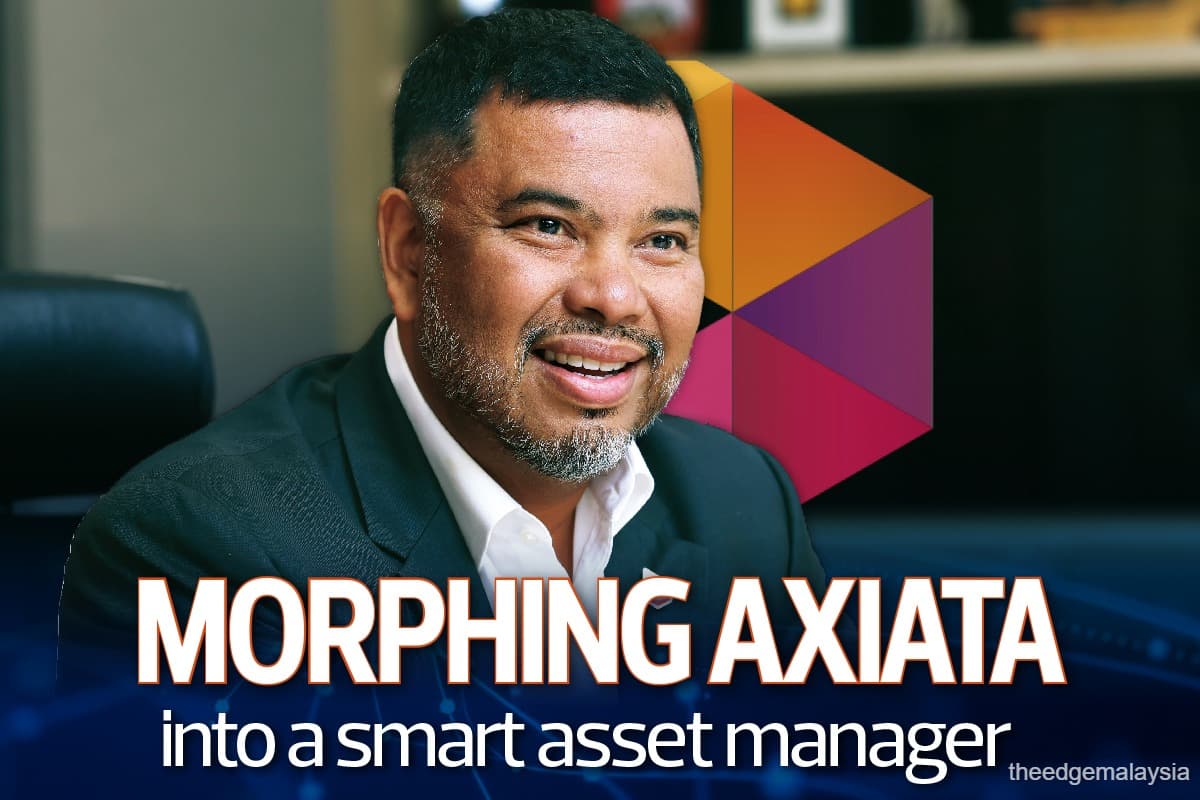
AXIATA Group Bhd’s (KL:AXIATA) new group CEO and managing director Nik Rizal Kamil Nik Ibrahim Kamil is not the archetypal telecoms executive who rose through the operational ranks armed with commercial or technology-related know-how.
His predecessor Vivek Sood, who was also Axiata’s group chief financial officer (CFO), had “over two decades of industry experience in multiple countries”, having served in non-finance roles in at least three other telecoms operators — including CEO of Grameenphone (Bangladesh), CEO of Telenor India and group executive vice-president and chief marketing officer of Telenor Group.
Nik Rizal had only served on the boards of Telekom Malaysia Bhd (KL:TM) and Astro Malaysia Holdings Bhd (KL:ASTRO) before joining Axiata as group CFO in January 2024 after three years in a similar position at RHB Bank Bhd (KL:RHBBANK).
Formerly executive director of investments at Khazanah Nasional Bhd — “where he led key investment and divestment initiatives, value creation programmes and private equity strategies across domestic and international markets in the telecommunications, media and technology (TMT) sector”, according to Axiata’s Feb 10 statement announcing his appointment — Nik Rizal seems more of an investment manager.
That may well be why Axiata’s board — chaired by Tan Sri Shahril Ridza Ridzuan, former managing director of Khazanah and former CEO of the Employees Provident Fund — chose Nik Rizal to be Axiata’s group CEO and MD from June 1 this year, although it his first CEO role. “Nik Rizal has played a central role in shaping Axiata’s strategy, strengthening financial discipline and supporting the execution of our long-term priorities,” Shahril said in the statement.
Tellingly, while Vivek was described as “an experienced telecommunications executive” when he was appointed on March 24, 2023, Nik Rizal is described in the statement as someone who “brings extensive experience and deep expertise across business finance, investment and accounting”.
The statement also noted that, as Axiata’s group CFO, Nik Rizal had served on the boards of several Axiata Group companies, including CelcomDigi Bhd (KL:CDB), Jakarta Stock Exchange-listed PT XLSMART Telecom Sejahtera Tbk, Dhaka Stock Exchange-listed Robi Axiata PLC as well as infrastructure companies EDOTCO Group Sdn Bhd and PT Link Net Tbk.
Indeed, Axiata needs to regain investor favour, with selling pressure exacerbated by its removal from the MSCI Malaysia Index announced on May 13 (effective May 29). Its share price has since fallen 24% year to date to close at RM1.90 last Thursday (Aug 6), while its RM17.5 billion market capitalisation has declined nearly 14%, or RM2.8 billion, since mid-May.
“I get asked by analysts and shareholders about our share price and, if you look closely, it is the same [as the] time that we were removed from MSCI,” Nik Rizal says.
The share price decline, however, prompted several analysts to upgrade their calls. At the time of writing, 13 analysts had a “buy” recommendation on Axiata, compared with seven “hold” calls and three “sell” calls. Target prices ranged from RM1.50 to RM4.10, with an average of RM2.71, according to Bloomberg data.
At RM1.90, the indicative dividend yield is 5.3% even if Axiata pays a dividend of 10 sen per share, or RM918.6 million in total, to shareholders this year — the same as last year. Indicative yield rises to a generous 5.8% if dividend increases to 11 sen per share this year (see dividend sidebar on Page 62).


High single-digit total returns, lower net debt
Efforts are already underway to “illuminate value”, Nik Rizal says, noting that Axiata’s North Star is delivering return on invested capital (ROIC) above weighted average cost of capital (WACC).
He reiterates the group’s commitment to shareholders under the Axiata28 strategy — first presented to investors in February this year — to deliver an annual increase of at least 10% in dividends from 2026 to 2028.
Axiata28 also commits to delivering “high single-digit annualised total shareholder returns (TSRs)” and lowering net debt-to-Ebitda (earnings before interest, debt, depreciation and amortisation) to below two times by end-2028, from about 2½ times as at end-March 2026.
“Our dividend commitment of at least RM3 billion over three years is very clear. That is something within our control, barring unforeseen circumstances. We should achieve that quite comfortably,” Nik Rizal tells The Edge in his first exclusive interview as CEO.
“Total shareholders return, share price appreciation will be my greatest challenge.”
He notes that Axiata does not need to “monetise” or sell any of its assets to be able to pay its dividend commitment this year.
“Monetisation and capital recycling are important levers in the Axiata28 framework, but they are only part of a much broader value creation strategy. As a smart asset manager, our focus is on maximising value across the portfolio through disciplined capital allocation, operational excellence, active portfolio management and strategic capital recycling. Our commitment to delivering more than RM3 billion in dividends to shareholders over the next three years is underpinned by the strength of our operating companies and the disciplined execution of Axiata28,” he says.
“We’ve demonstrated in the last two to three years that even without asset monetisation, there are other avenues [through which] we can pare down our debt, and that’s from internally generated dividends that we upstream as the companies continue to grow.”
Rather than a regional telecoms group, Axiata “offers a distinctive investment proposition as a listed smart asset manager focused on telecoms and technology assets across some of the fastest-growing markets in Asia”.
“Investors gain exposure to attractive regional growth opportunities through businesses with established market positions and strong cash-generating capabilities, while participating in emerging growth areas such as AI, fintech and cybersecurity. We believe the combination of resilient cash flows, disciplined capital allocation and technology-led growth is unique in the Malaysian market,” he elaborates.
The Axiata28 strategy also promises higher customer satisfaction scores, commitment to being an employer of choice as well as greater contribution to jobs and economic growth, as well as fiscal coffers, among other things.
What is certain is that, rather than expanding the company’s portfolio, Axiata28 is looking at an asset-light strategy, simplifying structures to “recycle capital” from mature holdings to new growth areas as it seeks to lift returns above its cost of capital.
Asset monetisation not a must-do
Incidentally, EDOTCO and Link Net are two Axiata infrastructure-related assets that investors are keenly watching for news of “monetisation” that may well happen by year-end, if conditions are favourable. EDOTCO is the world’s sixth-largest telecommunications towers company (TowerCo), with more than 47,000 owned and managed towers across seven markets; and Link Net’s digital infrastructure passes more than five million homes in Indonesia.
There has been speculation that US-based I Squared Capital and PT Solusi Sinergi Digital (Surge) — which is owned by Hashim Djojohadikusomo, the younger brother of Indonesian President Prabowo Subianto — could be a strategic partner for Link Net, although no confirmation on a deal has been made so far. I Squared Capital recently launched an industrial logistics and cold storage platform in Indonesia. Link Net was loss-making in FY2025.
Back home, Axiata has yet to officially confirm reports that at least three consortiums are seeking to buy a strategic stake in EDOTCO in a deal valued at between US$3.5 billion and US$4.5 billion. Names that have emerged include Australia’s Macquarie Asset Management, CVC Capital Partners plc and the Employees Provident Fund.
Declining to comment on the names, citing non-disclosure agreements, Nik Rizal says Axiata is not desperate to sell EDOTCO or Link Net to pare down debt or pay dividends. “EDOTCO is a good asset; so, we are not going to sell it cheap, right? We want to make sure the structure is right, the terms are right, timing is right — that’s the kind of discipline that we need to continuously administer as a smart asset manager. There is no rush, no fire-sale. For us, it is about maximising value and making sure that EDOTCO partners the right entity because we do not want a partner that starts doing funny things, say, for EDOTCO Bangladesh, because [Dhaka-listed] Robi’s operations are very much reliant on EDOTCO Bangladesh. That’s just one example.”
Nik Rizal also clarifies that Axiata has not ruled out asset monetisation by year-end. He says the IPO route for EDOTCO remains open while the group continues to welcome discussions with potential strategic partners.
“When we evaluate our portfolio, the question is not whether a particular asset should be monetised, but how best to realise its full value for shareholders. Depending on the asset and market conditions, that may involve retaining ownership, strengthening operations, optimising the balance sheet, bringing in strategic partners, or monetisation,” he says.
“As assets mature and approach full valuation, we will continue to assess the most value-accretive options available. The objective remains consistent: delivering sustainable long-term shareholder value while maintaining the flexibility to unlock additional value where opportunities arise.”
When maintaining an “add” recommendation and a RM2.87 target price for Axiata on July 29, CGS Securities analyst Prem Jearajasingam tells clients that he believes “the market has largely discounted the likelihood of Axiata monetising its infrastructure assets”. “We believe the delays, especially for the EDOTCO transaction, are largely due to the complexity of EDOTCO, whose operations span seven countries, and potential buyers seeking to exclude certain assets, which may require further negotiations with other parties, including buyers of those assets,” Prem writes.
“While we see the sale of Axiata’s infrastructure assets as a key catalyst for its shares re-rating, our estimates and Bloomberg consensus do not factor in these sales. Our FY2027F core EPS estimate of 13 sen and 12 sen DPS estimates do not factor in proceeds from the sale of Axiata’s infrastructure assets. Based on our current estimates, the sale of EDOTCO and Link Net in 2026F would lift FY2027 core EPS by 12% versus a 29% lift, if only loss-making Link Net were to be disposed of. In the event that the EDOTCO sale does not materialise, we believe the market could revert to a yield-based valuation methodology to value Axiata.” He notes that Axiata shares would be valued at RM2.40 each, assuming a 5% dividend yield. “Assuming a Link Net sale and 80% of the incremental profits paid out as profits, this same 5% dividend yield target would value Axiata at RM3.03 per share.”
As to whether strategic investors have indeed asked to exclude EDOTCO’s South Asian assets, Nik Rizal merely acknowledges that discussions are not always straightforward because EDOTCO is in seven countries. He adds that this in defence of its South Asian portfolio. “EDOTCO Bangladesh is dividend-paying. EDOTCO Pakistan is fairly small, but it is one that has an escalation in their contract, meaning [rental] rates go up every year. I would love to have that here.”
In 2025, EDOTCO Bangladesh was the group’s second-largest contributor after EDOTCO Malaysia, accounting for 31.9% of EDOTCO Group’s Ebitda of RM1.77 billion and 30.4% of group revenue of RM2.38 billion. EDOTCO Malaysia contributed 37.9% of Ebitda and 41.2% of revenue. EDOTCO Pakistan accounted for 6.6% of Ebitda.

No mega M&A, illuminating value
Nik Rizal says Axiata is no longer hunting for acquisitions in the telecoms sector, as none are deemed suitable in Southeast Asia and South Asia. Asked to address investors’ concerns over the risks that come with opportunities at regional operating companies, Nik Rizal says efforts to optimise operations and strengthen market positioning have begun to bear fruit.
“We are in the growth markets: Cambodia, Bangladesh and Sri Lanka. These markets are seeing solid growth, and our businesses there are performing strongly. These markets have diverse risk/reward profiles, [but] we believe we can build market-leading businesses that create sustainable long-term value,” he says, noting that Bangladesh and Sri Lanka are attractive markets because of their favourable long-term demographics, growing digital adoption and increasing demand for connectivity.
In Sri Lanka, Dialog Axiata — which merged with Airtel Lanka — recently overtook John Keells Holdings plc as the most valuable company (by market capitalisation) listed on the Colombo Stock Exchange, Nik Rizal says, adding that Dialog Axiata is well integrated into the local economy, having developed a “MySejahtera-like” application for the government of Sri Lanka to help administer vaccines during the Covid-19 pandemic and recently assisted the local government in administering petrol quotas.
“More importantly, our investments are not based solely on macroeconomic conditions. They are underpinned by the strength of our operating companies. Dialog, Robi and Smart have established strong market positions, resilient operating models and track records for generating value through different economic cycles.”
To be sure, Axiata’s strategy of monetising mature investments — including tower and infrastructure assets with predictable cash flows — and redeploying capital into higher-growth opportunities to deliver better returns to investors sounds compelling.
Yet, the fact that an IPO for EDOTCO has remained elusive for years speaks to the difficulty in execution. Higher interest rates have also made buyers more selective on long-duration infrastructure assets that require continued investments. As some observers have noted, there is perhaps never a perfect time for monetisation, given the challenge of deciding when to sell — not too early or too late — to optimise returns and ensure that a higher cost of capital does not erode gains from future operational improvements.
Can Axiata turn its portfolio of emerging market telecoms, telecoms infrastructure and digital assets into entities that can constantly generate economic value?

In the company’s 2025 annual report, Nik Rizal tells shareholders: “Disciplined portfolio management has been central to strengthening Axiata’s financial resilience. By prioritising ROIC, recycling capital and tightening cost and investment discipline, we are building a portfolio that can sustain dividends, manage risk and deliver long-term shareholder value.”
Asked about Axiata’s ROIC being below WACC in recent years, Nik Rizal notes that there has been “a lot of volatility” over the past five years, including the impact of mergers and subsequent integrations, where denominators have grown but numerators have yet to catch up. “So, there is a mismatch [that should improve] over time, as integrations are done and overhangs are resolved.”
He acknowledges that illuminating the value of its portfolio will not be easy but assures stakeholders that long-term incentive plans of key management — not just at the holding level but also operating companies — are aligned with the need to deliver better returns for shareholders. “Part of realising our full value potential is that ROIC must be sustainably above WACC — whether it’s CelcomDigi, XLSmart, [no exceptions].”
To be sure, selling a strategic stake in EDOTCO and returning the proceeds as a special dividend would please investors, but it would come at the cost of giving up a share of steady income. Reinvesting the capital in new growth areas such as digital businesses to create sustainable value is easier said than done.
“The greatest challenge is also our greatest opportunity, right? The greatest challenge is how do I [shape] the proper narrative and understanding of Axiata and the group in the years ahead?” Nik Rizal says, expressing confidence that continued operational efficiencies across Axiata’s portfolio of regional telecoms, infrastructure and digital assets will help build momentum towards delivering sustainable returns to stakeholders.
Read also: Save by subscribing to us for
your print and/or
digital copy. P/S: The Edge is also available on
Apple's App Store and
Android's Google Play.
Cover Story: RM3 bil dividend promise as Axiata seeks to grow digital businesses