

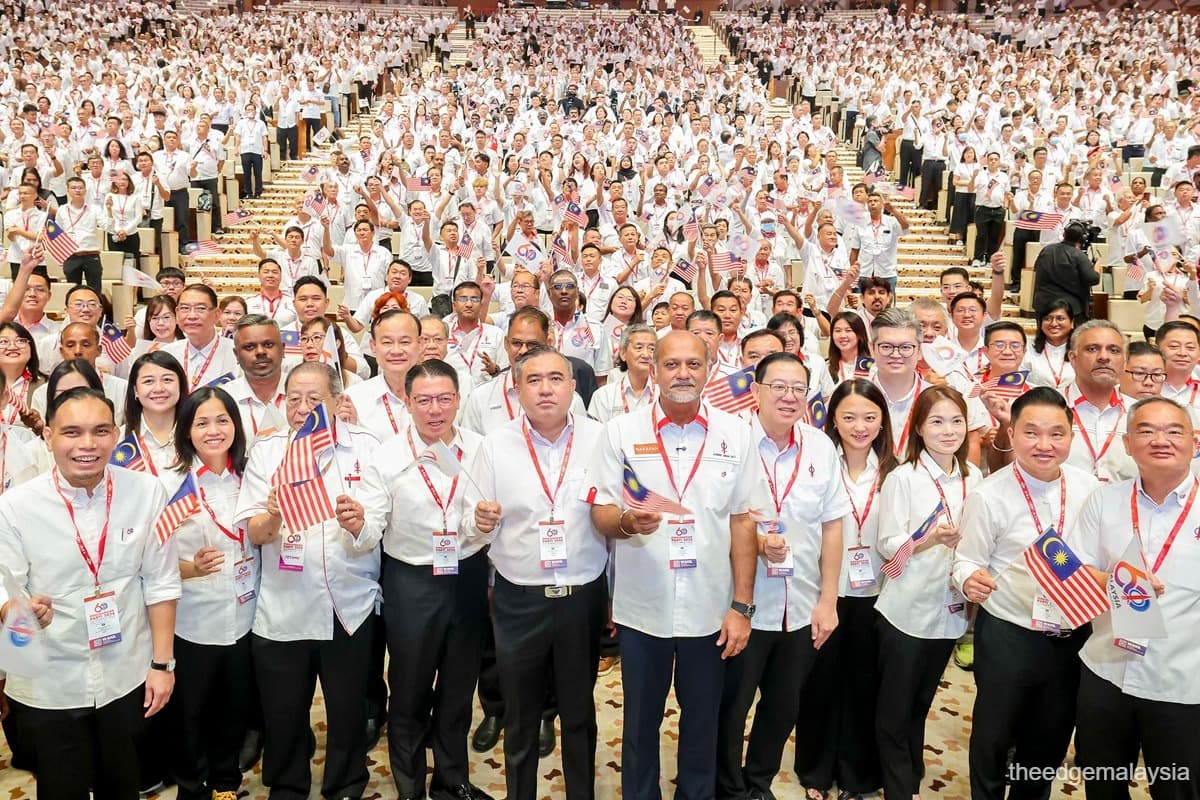
PUTRAJAYA (Aug 16): The Democratic Action Party (DAP)'s key leadership, at its congress on Sunday, spoke on the realities of being a part of the unity government ahead of party delegates’ debate and vote on whether to remain a part of the unity government.
The realities underlined were that the unity government is a collection of various political coalitions, and that unpopular decisions will need to be borne as a collective. Due to these, the party has faced various criticisms, and even protest votes against it, secretary-general Anthony Loke Siew Fook noted.
“Today we want to determine whether the direction we take is to remain in government until the end of the term so that we can continue to carry out our duties, try to influence and bring about changes, or we play a role as a pressure group within the government,” he said in his keynote speech at the party’s congress.
DAP’s part in the unity government marks its second time serving in the federal government, following Pakatan Harapan (PH) 1.0 in 2018, which came to an end in 2020 due to the Sheraton move.
The current stint has lasted nearly three years and eight months, which Loke notes “can also be considered an achievement”, being longer than PH 1.0’s 22 months.
Over 4,000 party delegates nationwide are expected to debate and vote on whether the party remains in, or leaves, the unity government.
The party-wide vote was first brought up in November last year, after its defeat in the Sabah state election, followed later by growing frustration among some supporters over the pace of the unity government's institutional reforms.
Party chairman Gobind Singh Deo reminded that the unity government is made up of different coalitions and “in such a situation, we have to look at what reforms can actually be agreed upon among all parties and be implemented.”
“Three and a half years is not a long time, not like the previous government that had 60 years and so on. We have brought reforms, but are they sufficient?
“We have also gone through several state-level elections, and those results have brought the need for us to reconsider how we move forward,” he added.