

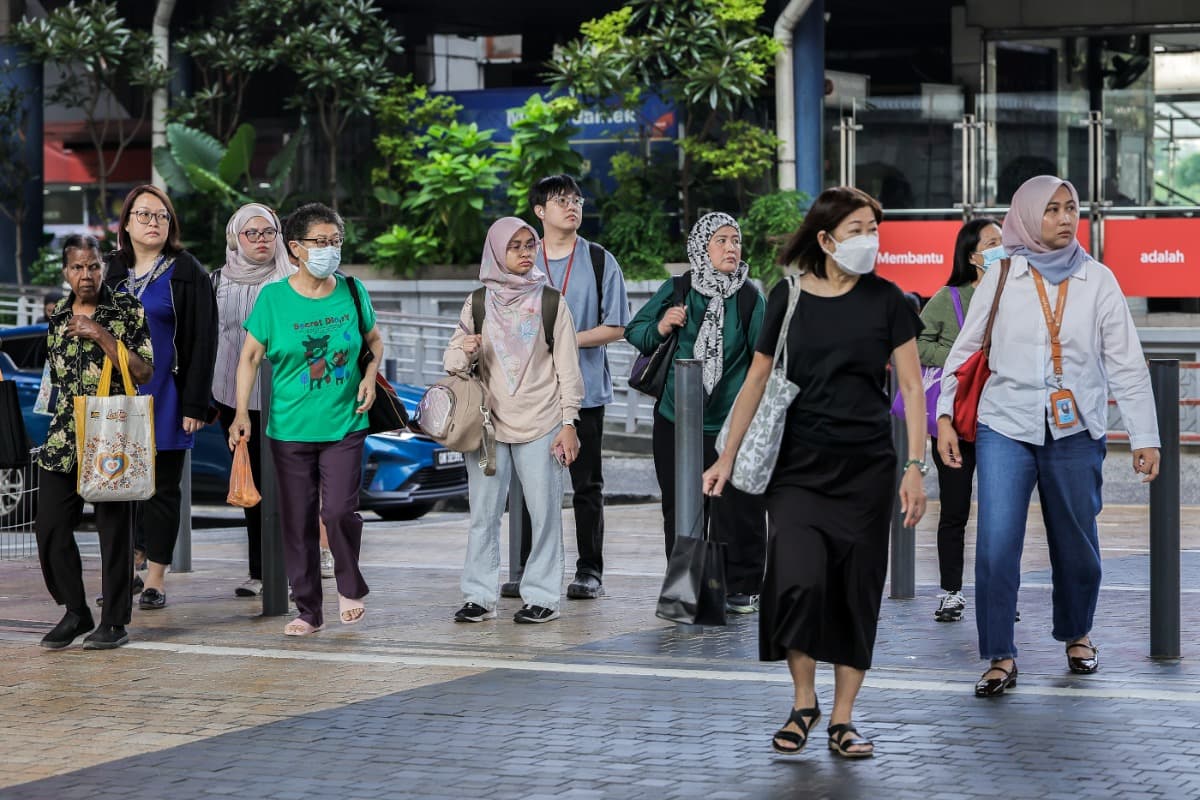
KUALA LUMPUR (Aug 14): Prime Minister Datuk Seri Anwar Ibrahim acknowledged that many Malaysians continue to face cost-of-living pressures despite stronger headline economic indicators, and pledged to continue prioritising measures to protect household purchasing power and support affected workers and businesses.
“While the headline economic indicators remain encouraging, we recognise that many Malaysians continue to face pressures from the cost of living, while some workers and businesses are navigating a more difficult operating environment,” Anwar, who is also finance minister, said in a statement issued by the Ministry of Finance (MOF) on Friday.
“The Madani government will therefore continue to prioritise measures that protect household purchasing power, support affected workers and businesses, and ensure that continued economic growth translates into higher incomes, better employment opportunities and tangible improvements in the lives of the rakyat,” he said.
The statement came after Bank Negara Malaysia (BNM) announced earlier on Friday that Malaysia's gross domestic product (GDP) expanded by a faster-than-expected 6% year-on-year in the second quarter of 2026 (2Q2026), accelerating from 5.4% in the preceding quarter and exceeding the official advance estimate and Bloomberg median forecast of 5.8%.
The stronger performance brought GDP growth for the first half of 2026 to 5.7%, against the government's full-year forecast of 4% to 5%. Headline inflation rose to 1.9% in 2Q2026, picking up from 1.6% in the first quarter, mainly due to higher external cost pressures following the West Asia conflict.
Anwar said the government’s response to the West Asia crisis, including financing support for affected small and medium enterprises (SMEs) and targeted fuel subsidies, had helped cushion households and the economy from external shocks.
“These measures helped sustain household spending, business activity and the economy’s strong growth momentum into the second quarter of 2026,” he said.
The government has also continued to provide assistance through Sumbangan Tunai Rahmah (STR), Sumbangan Asas Rahmah (Sara) and targeted subsidy mechanisms under Budi Madani to cushion vulnerable households from rising costs, Anwar added.
During the quarter under review, private consumption, the main driver of economic growth, expanded 4.8%, supported by higher spending on restaurants and hotels, transport, and food and beverages amid festive celebrations, the mid-year school holidays and sustained tourism activity.
Private investments grew at a slower pace of 4.3%, while public consumption and public investment increased 7.6% and 6.3% respectively.
Total trade rose 34.1% to RM1 trillion during the quarter, while the trade surplus widened more than fivefold to RM84 billion, supported by demand for electrical and electronics (E&E) and petroleum products, according to the MOF.
BNM maintained its 2026 GDP growth forecast at 4% to 5%, while projecting headline inflation of between 1.5% and 2.5%.
The MOF cautioned that geopolitical uncertainties, global supply-chain disruptions, higher input and food prices, and employment pressures in certain sectors remain key risks to household well-being and business activity.
"While Malaysia’s growth momentum remains resilient, the Madani government remains mindful that the benefits of economic growth are not felt evenly across households and businesses," the ministry said, adding the government will stay the course on reforms, with fiscal discipline remaining a priority as it works towards reducing the fiscal deficit to 3% or lower over the medium term.