

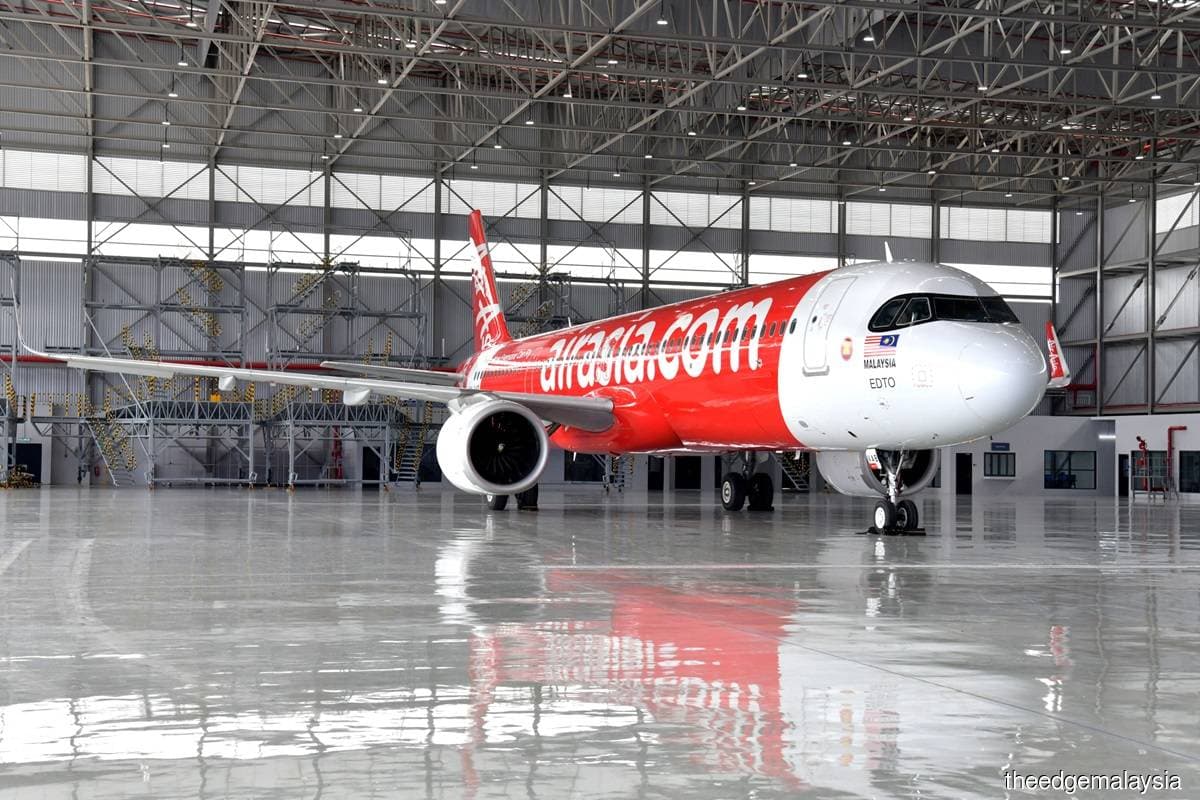
KUALA LUMPUR (Aug 13): AirAsia Group Bhd (KL:AAGB), formerly known as AirAsia X Bhd, posted a second quarter net loss, weighed down by a surge in jet fuel prices amid geopolitical tensions in the Middle East, along with foreign exchange losses.
The aviation group recorded a net loss of RM527.16 million for the quarter ended June 30, 2026 (2QFY2026), widening from RM154.9 million in the preceding quarter, according to its Bursa Malaysia filing on Thursday.
Following the weak quarter, AirAsia Group plans to cut seat capacity by 20% to 25% year-on-year in the third quarter — historically the softest period for regional travel — before restoring capacity in the fourth quarter for the year-end travel season.
The group said the quarter's losses were primarily driven by a 58% year-on-year surge in fuel expenses as average jet fuel prices spiked to US$183 (RM747.92) per barrel.
The group's headline net loss (including non-controlling interests) stood at RM830.52 million.
Excluding a net foreign exchange loss of RM330.97 million stemming from the depreciation of local currencies which includes the ringgit, Thai baht, Indonesian rupiah and Philippine peso against the US dollar, the group's net loss would have stood at RM499.6 million.
Revenue stood at RM5.09 billion, bringing cumulative revenue for the first six months of FY2026 to RM11.04 billion following the completion of the consolidation of Capital A Bhd's (KL:CAPITALA) aviation business earlier this year.
AirAsia Group did not provide year-on-year comparative figures in its financial filing due to the accounting treatment arising from the reverse acquisition of AirAsia Aviation Group Ltd (AAAGL).
No dividend was announced for the quarter under review.
In a separate statement, AirAsia Group said financial pressures were largely concentrated in its short-haul operations in Thailand, the Philippines and Indonesia, as well as its long-haul operations in Malaysia.
In contrast, its core short-haul operations in Malaysia and Cambodia remained profitable.
AirAsia Group said it has since suspended underperforming long-haul routes, delayed the launch of its proposed hub in Bahrain, and restructured its Philippine and Indonesian operations by reducing fleet allocations to focus on higher-yielding domestic and core Asean routes.
AirAsia Group chief executive officer Bo Lingam said the group recovered approximately 70% of the higher fuel cost burden during the quarter through dynamic fare adjustments and non-fuel cost reductions.
While a fare lag in April limited fare growth to 4% year-on-year due to pre-sold inventory, he said average fares expanded by over 20% across May and June as proactive pricing took effect.
“The second quarter represented the peak of energy market volatility, and we are treating 2QFY2026 as our floor quarter,” Bo said, adding that the group does not expect jet fuel prices to remain at the US$183 per barrel average seen during the period.
“As fuel normalises from 2QFY2026 highs against these higher established fare levels, our unit economics will improve naturally,” he added.
On operational performance, AirAsia Group carried 14.16 million passengers on seat capacity of 17.81 million during the quarter, resulting in a load factor of 80%. Revenue per available seat kilometre (RASK) rose 11% year-on-year to 21.28 sen.
The group plans to return 25 older aircraft to lessors within FY2026 to reduce lease costs, while new Airbus A220 and A321XLR aircraft are scheduled for delivery from 2028.
Shares in AirAsia Group closed one sen or 0.99% lower at RM1 on Thursday, valuing the group at RM3.36 billion.