

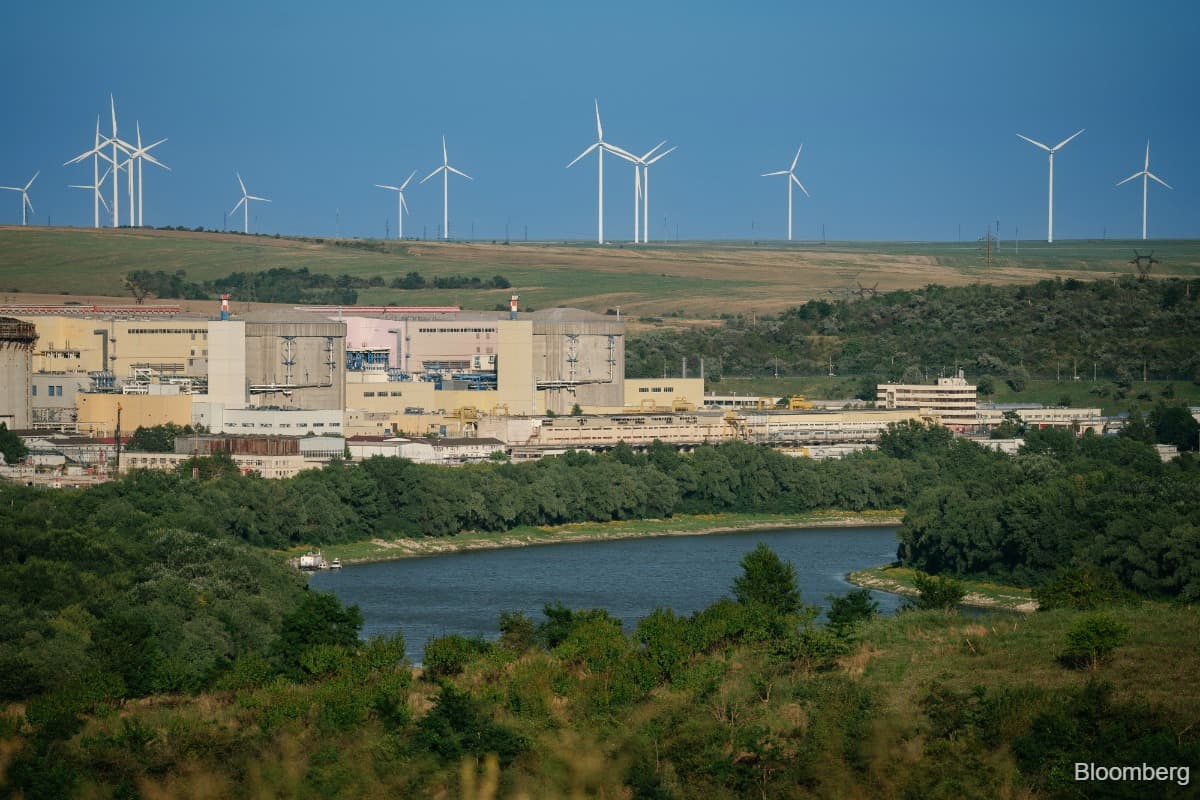
(Aug 13): Romania is shutting down its sole nuclear plant while Hungary is trying to salvage the operation of its own facility as a persistent drought curbs Danube river flows and hampers the cooling of reactors.
Authorities in Bucharest ordered the second reactor at the Cernavoda plant, east of the capital toward the Black Sea, to be taken offline on Thursday. The first unit was shut down in late July. It would be the first time since 2003 that drought would force the 1,400 megawatt (MW) facility to be fully halted.
Scorching heat waves and a near total absence of precipitation are drying up lakes and rivers, snarling waterway traffic and stretching power grids across Europe. The electricity strain is among the most acute on the continent’s east.

Hungary is also deploying soldiers to build a ground sill on the riverbed to deal with the conditions that forced the shutdown of three of Paks’ four nuclear reactors. The move may raise water levels within weeks, Prime Minister Peter Magyar said on Wednesday.
Paks accounts for about 40% of Hungary’s power generation while Cernavoda produces about 20% of Romania’s electricity. Both countries are relying on a combination of power imports, non-nuclear power plants as well as renewables such as solar and — in the case of Romania — wind energy as well to compensate for the outages.
Uploaded by Felyx Teoh