

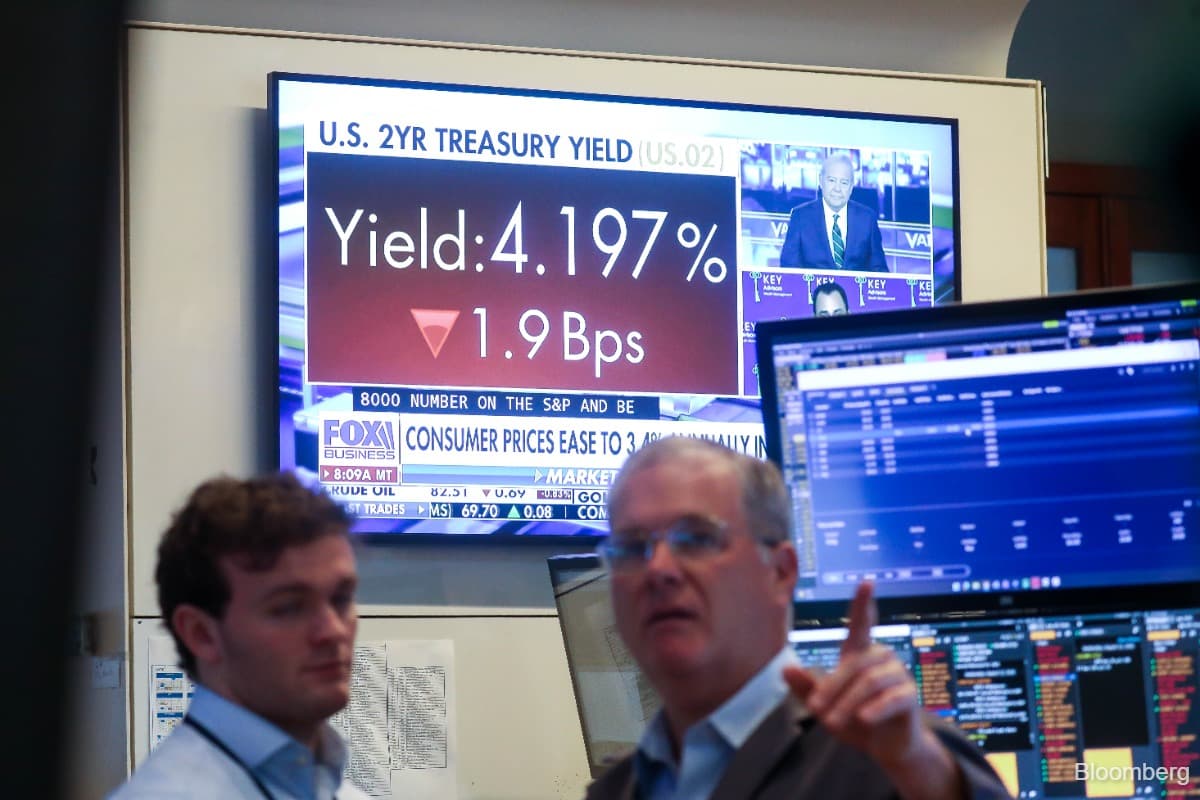
(Aug 13): The US government is about to sell 30-year bonds at the highest interest rate in a quarter of a century, after a historic sell-off that has stirred speculation the nation will tilt borrowing further toward short-dated maturities.
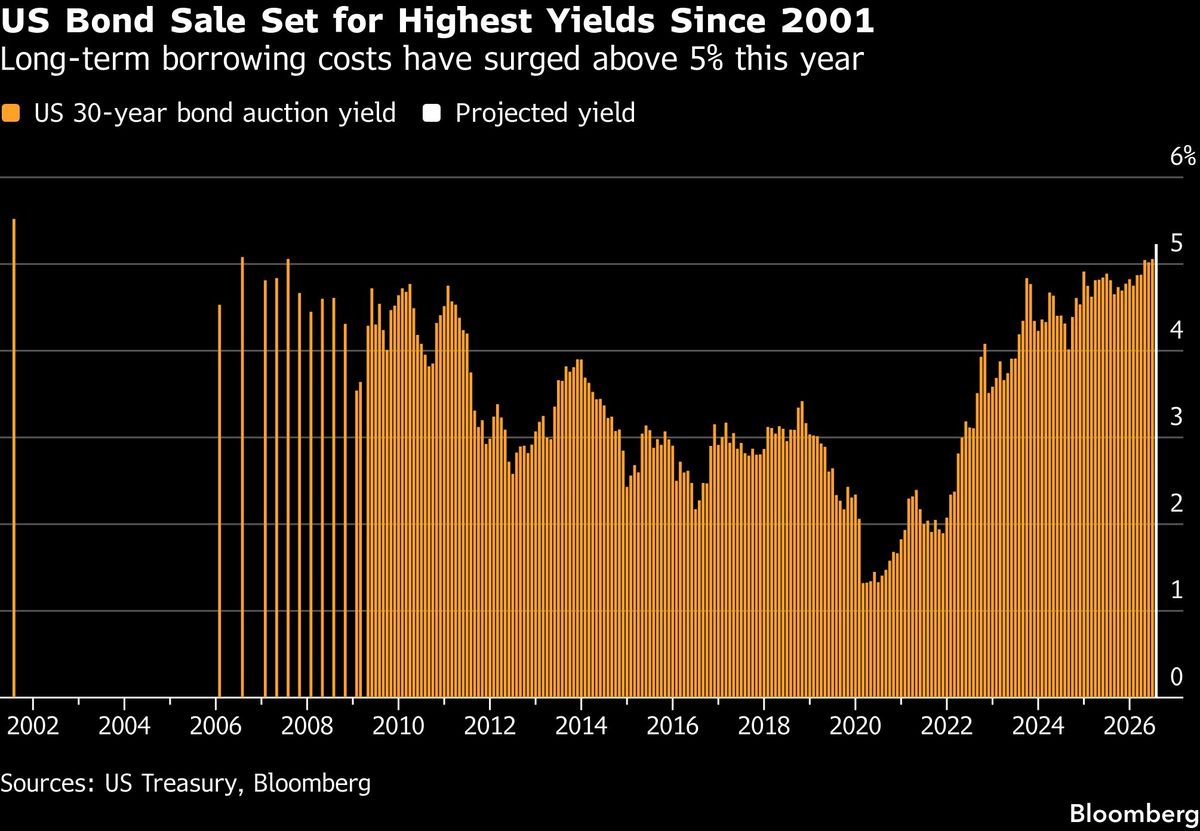
The Treasury will offer US$25 billion (RM102.2 billion) of 30-year debt at its monthly auction later on Thursday. In the when-issued market, where securities are traded before they are actually sold, the new bond has a projected yield of around 5.24% — which would be the highest borrowing cost since 2001.
It’s a headache for President Donald Trump and Treasury Secretary Scott Bessent ahead of mid-term elections in November. Lofty government financing costs are already feeding through to the broader economy, after years of elevated inflation and government spending.
The Treasury’s concern appeared to be on show last week when it tweaked its debt-sales guidance in a way that opened the door to potential cuts to long bond supply. Meanwhile, investors are still not rushing to lock in yields at multi-decade highs, signalling a collective wariness that the sell-off may not be over.
“We’re not really at a level where people seem to be going crazy, saying ‘I want to buy the 30-year,’ and that should be a warning,” said John Fath, a managing partner at BTG Pactual Asset Management US LLC. “Bessent may try to address it by decreasing supply, but there’s already a lot of 30-year paper issued, so it’s not necessarily just new supply driving price action. It’s new sellers.”
Long-term yields surged past 5% this year on investor concerns that a rise in energy prices will boost cost pressures, forcing the Federal Reserve to keep interest rates elevated for years to come. That’s on top of heightened Treasury supply from years of fiscal deficits, a sudden ramp-up of corporate borrowing to fund the artificial-intelligence boom, and waning demand from traditional buyers of long-dated bonds.
Interest on the public debt continues to be a key driver of the nation’s budget deficit. For the fiscal year to date, the tally is US$1.17 trillion — a 15% increase, thanks in part to higher yields on Treasuries. On Wednesday, a 10-year sale drew the highest yield for that tenor since 2007.
And if prices remain around current levels for the 30-year auction scheduled for 1pm in New York, it would be the highest borrowing rate since the Treasury axed the long bond in 2001. The decision, which was infamously leaked to Goldman Sachs traders before the public announcement, was reversed in 2005.
Today’s circumstances could scarcely be more different.
Back then, bond investors were enjoying the spoils of a multi-decade bull market. A series of federal budget surpluses had even fueled market concern that the supply of US government debt was too low. Nowadays, the amount of Treasuries outstanding is ten times larger and growing fast, having doubled since 2018 to around US$31 trillion.
And as traditional sources of demand have moved away from Treasuries, private market participants have stepped in — demanding juicier yields in the process.
“As the market becomes increasingly reliant on price-sensitive investors, the same amount of Treasury supply may require a larger yield concession to clear,” wrote a Barclays Plc team led by Demi Hu.
“Thursday’s 30-year auction is another test of whether a structurally higher term premium, persistent deficits and an increasingly unknown Fed reaction function are becoming the new equilibrium for Treasuries. Borrowing at fresh multi-decade highs may simply become the norm from now on,” said Bloomberg strategists.
Guidance tweak
The future size of long-bond sales has been the subject of debate over the last week, after Treasury officials made an unanticipated tweak to their latest quarterly borrowing policy statement. Instead of saying they are continuing to evaluate potential future “increases” in coupon and floating-rate note sales, as was the case previously, they said they are mulling potential “changes.”
Bond investors saw that as raising the possibility that officials will trim sales of the long bonds most under pressure. Even if such a downsizing does not materialize, the market consensus is that when the Treasury does move to bigger fixed-income auctions, it will likely focus on shorter-maturity notes that mature in two- to seven-years.
That would be an extension of its current maturity-shortening strategy, where officials have adjusted issuance toward bills which mature in a year or less. Doing so sidesteps the higher yields on longer tenors but increases refinancing risks.
“The only clear solution I see, is the US government tightening its budget,” Fath said, on how to bring down long-term borrowing costs. “The whole game plan of trying to move issuance up to the front end: You can only do that so much, right? Then it becomes what I would call irresponsible.”
Uploaded by Magessan Varatharaja