

This article first appeared in The Edge Malaysia Weekly on August 10, 2026 - August 16, 2026
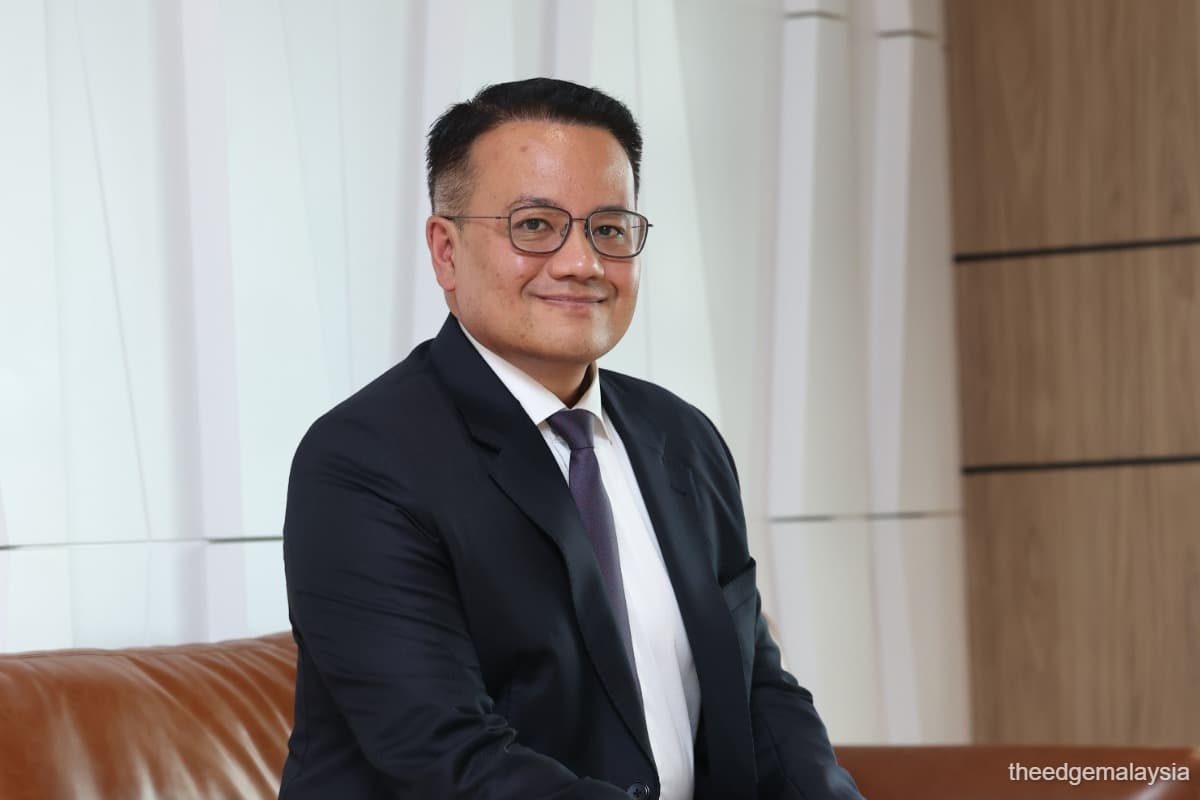
FOR much of his career, Datuk Rizal Rickman Ramli helped shape other organisations’ strategies. Today, he is responsible for executing one of Malaysia’s most consequential investment strategies.
Little was publicly known about the former Boston Consulting Group managing director before he emerged as Permodalan Nasional Bhd’s (PNB) new president and chief executive. An economics graduate of the University of Chicago with an MBA from Northwestern University’s Kellogg School of Management, he had joined the country’s largest fund management company in 2018 after spending nearly two decades in consulting, and formally took over the top job on July 1 this year.
As the first internal appointment to lead PNB since Tan Sri Hamad Kama Piah Che Othman in 1998, Rizal Rickman, who goes by Rick, inherited an institution in the midst of a multi-year transformation, rather than one in need of a reset.
So, instead of unveiling a new blueprint, he intends to stay the course.
“My plan all along was to make sure we maintained LEAP 6. I was a part of drafting it, I believe in the journey, and there’s still a lot we need to deliver,” Rick tells The Edge in an exclusive interview — his first since taking office.
Barely a month into his new role, Rick is pressing ahead with a broad diversification of PNB’s investment portfolio to strengthen long-term returns, reducing reliance on domestic equities, expanding overseas investments, increasing exposure to fixed income and selectively adding new asset classes such as private credit.
“When I joined PNB in 2018, about 98% of its portfolio was invested in Malaysia. By the end of 2025, we were at 28.5% international. The diversification has been both geographical and across asset classes. Instead of relying on one engine to generate returns, we now have multiple levers to pull,” he says.

The shift forms one of the central pillars of LEAP 6, PNB’s 2025-2027 strategic plan introduced under his predecessor Datuk Abdul Rahman Ahmad, as PNB targets RM400 billion in assets under management by end-2027. (see Chart 1)
The portfolio has gradually evolved from one dominated by domestic listed equities into a more diversified mix spanning global equities, fixed income, private markets and real estate.
Broadening PNB’s investment playbook
For decades, PNB’s investment strategy was closely tied to Malaysian equities. Just 10 years ago, roughly 70% of its portfolio comprised domestic listed shares, with much of the remainder sitting in cash.
While that structure served the institution well during the years of strong equity performance, Rick says relying on a single asset class became increasingly difficult as domestic equity returns became more inconsistent, underscoring the need for a broader mix of assets.
Fixed income, once less than 10% of assets, has grown to about 13%, while PNB is also building a global fixed-income portfolio. Meanwhile, private credit remains small but is emerging as another source of recurring income.

“Our unit holders want annual cash yield. Credit provides that annual cash yield. That’s why we’re building the credit portfolio.”
PNB accesses private credit through specialist fund managers, primarily in the US and Europe, where tighter banking regulations have created opportunities for institutional investors to finance mid-market companies.
“The yields are higher than conventional fixed income because you’re compensated for the additional illiquidity and risk, but we’re being very measured. We recognise the risk profile is a bit different. That’s why it’s still a small allocation within the portfolio.”
Rick stresses that the strategy complements rather than replaces PNB’s traditional equity investments.
“We’re still fundamentally an equity house.”
Overseas expansion driven by returns
PNB’s overseas investments have risen steadily to 28.5% of total assets, with the fund manager aiming to cross the 30% mark by 2027 under LEAP 6. (see Chart 2)
Rick says the target was never imposed from the top down. Instead, the allocation emerges from strategic asset allocation modelling that compares expected long-term returns and risks across global and domestic asset classes before constructing the overall portfolio.
“We don’t begin by saying we want a certain percentage overseas. We begin by asking what portfolio gives us the best risk-adjusted return over the long term.”
Ultimately, he says, PNB’s primary responsibility remains unchanged.
“Our overarching objective is to deliver returns. International diversification helps us achieve that.”
Some years, Rick adds, overseas investments outperform their portfolio weighting and account for a larger share of income while in others they contribute roughly in proportion to their allocation.
PNB’s overseas expansion does not diminish its role as one of Corporate Malaysia’s largest long-term shareholders.
The fund manager classifies companies in which it is the majority shareholder or single largest shareholder as its “strategic companies”. They include Malayan Banking Bhd (KL:MAYBANK), S P Setia Bhd (KL:SPSETIA), Duopharma Biotech Bhd (KL:DPHARMA), Sime Darby Bhd (KL:SIME), Sime Darby Property Bhd (KL:SIMEPROP) and SD Guthrie Bhd (KL:SDG).
Its “core companies” — businesses in which PNB owns at least a 10% stake or has invested more than RM1 billion — include Gamuda Bhd (KL:GAMUDA), Tenaga Nasional Bhd (KL:TENAGA) and CIMB Group Holdings Bhd (KL:CIMB).
Rick says active ownership remains central to PNB’s investment philosophy, even as the portfolio becomes increasingly diversified.
Supporting the fixed-price promise
Questions periodically surface over whether PNB’s fixed-price unit trust model can continue to deliver competitive distributions over the long term.
Over the past 10 years, its flagship fund Amanah Saham Bumiputera (ASB) has maintained an income distribution of more than four sen per unit, even during the pandemic years. (see Chart 3)
Given the fixed price of RM1 per unit, ASB’s performance has consistently outpaced the official Consumer Price Index (CPI) every year.
Rick argues that the structure remains fundamentally sound because it was designed with multiple layers of support.
“The model is sustainable. Our forefathers who built PNB and ASNB [Amanah Saham Nasional Bhd — the manager of the funds] thought this through very carefully.”
One is the reserves accumulated within the individual funds during the stronger years, allowing them to cushion distributions when the markets become more challenging.
Another, and perhaps the least understood, is PNB’s proprietary fund.
“People don’t fully appreciate the role of the proprietary fund. It exists to support the unit trust funds when needed.”
During the Covid-19 pandemic, the proprietary fund supplemented returns by waiving management fees, contributing bonus distributions and transferring selected assets into ASB to strengthen its income.
In more normal times, it warehouses investments until they mature into stable income-producing assets before they are transferred or monetised.
“The ideal situation is that you only need to tap the proprietary fund once every 10 years, during a major market dislocation,” Rick explains.
Originally seeded by a government contribution of about RM200 million and expanded over the decades through retained earnings, the proprietary fund is entirely separate from the public’s unit trust money.
As opposed to managing investments on behalf of external investors, the proprietary fund is PNB’s own capital, accumulated since its establishment in 1978 and continually reinvested to strengthen the institution’s balance sheet.
Rick likens it to a bank’s capital buffer. “We think about it almost like a Tier 1 capital ratio. It needs to be sufficiently meaningful so that, when necessary, it can support the unit trust funds.”
Building the bumiputera ‘relay race’
The proprietary fund has also taken on a broader strategic role following the moving of government-linked private capital investor Ekuiti Nasional Bhd (Ekuinas) under PNB in 2025 as part of the government’s plan to consolidate bumiputera-focused investment institutions.
Under the new arrangement, Ekuinas becomes PNB’s primary vehicle for domestic direct private equity and private credit investments while PNB itself focuses on the broader portfolio.
“Ekuinas is now under our proprietary fund. Domestic direct private equity and private credit will largely sit there.”
Rick says the arrangement allows a clear separation of responsibilities while preserving Ekuinas’ active investment model, where value creation extends beyond simply providing capital.
Unlike public market investing, where PNB largely acts as a shareholder, Rick says private equity requires a more hands-on approach. “Ekuinas doesn’t just write cheques. It has to play an active value-creation role.”
More importantly, Rick sees the arrangement as creating what he describes as a “relay race” for bumiputera companies with different government investment institutions supporting businesses at various stages of their growth.
Under the relay race model, companies receive early-stage backing before Ekuinas helps scale up their business through active private equity ownership.
“Ideally, Ekuinas exits through an IPO (initial public offering). The public gets the opportunity to invest and PNB acquires the remaining stake so the bumiputera institutional shareholding is retained,” Rick says.
He points to oil and gas logistics provider Orkim Bhd (KL:ORKIM) as an example. Following its listing, about 40% of the company was floated to public investors while PNB acquired the remaining 60% stake from Ekuinas, allowing ownership to pass from one bumiputera-focused institution to another.
Under its overseas private equity programme, however, PNB primarily deploys capital through specialist fund managers via separately managed accounts (SMAs), allowing it to build expertise while gaining exposure to global buyout funds.
“When we entered private equity, we didn’t have a track record. Using SMAs allowed us to learn from experienced managers before gradually investing directly alongside them,” Rick says.
Asked whether the scrutiny surrounding investments such as Indonesia’s eFishery and Malaysia’s FashionValet has tarnished private equity investing, Rick says the issue is less about the asset class itself than the investment model.
While venture and growth investing inevitably involves a higher risk of failure in pursuit of outsized returns, PNB has deliberately kept no exposure to venture capital, preferring to invest alongside established private equity fund managers that actively drive value creation.
“At that stage of investing, you have to accept that some investments will go to zero, while others can generate 10 or 20 times your money. The challenge is building a portfolio with more winners than losers,” he says. “For us, we’re more comfortable having a lead general partner between us and the entrepreneur, someone with the experience to drive value creation.”
Rick acknowledges that the higher level of public scrutiny faced by government-linked investors also changes the risk dynamics, making higher-risk venture investments harder to justify.
PNB had lost RM18.7 million on its investment in FashionValet. It had invested in FashionValet in 2018 with the intention of supporting the retailer’s growth as a bumiputera company. In a statement in 2024, PNB said it regretted the loss incurred and emphasised that the investment was made using its proprietary fund and not unit trust funds under ASNB.

From saving by choice to saving by habit
Beyond its investment strategy, growing PNB’s assets also depends on encouraging Malaysians to save more consistently.
Rick says the fund manager wants to shift savings “from discretionary to structural”, making investing a regular habit rather than something households do only when they have surplus cash.
This includes expanding programmes such as Auto Labur, which automatically deducts savings from customers’ bank accounts as well as promoting goal-based investing for education, retirement and other long-term financial objectives.
“If people have a clear goal, they’re more likely to stay invested. Ultimately, we need to help Malaysians build the habit of saving consistently,” he says.
Financial literacy also forms part of that effort through initiatives such as Kelab Pelaburan Bijak in schools and the Celik Madani programme for university students, which aim to introduce investing early in life.
More than an investment manager
Leaving a successful consulting career for PNB was not simply a career move, Rick says, but a chance to contribute to an institution whose purpose extends well beyond managing investments.
“Yes, you could call it national service because PNB is a national institution,” he answers when asked whether he sees his role that way. “But I joined PNB in 2018 because I believe in its mandate and purpose. The opportunity to help transform a domestically focused investment house into a more global, diversified organisation — I was attracted to that. There were interesting things to solve.”
“And I’ve stayed along the way because I wanted to create impact. Over the years, regardless of who the chairman or CEO was, I’ve always been able to focus on making a difference,” he adds.
That sense of purpose, Rick says, continues to shape how he measures success.
While investment returns remain PNB’s primary responsibility, he points to the institution’s stewardship programme as one of the achievements he is most proud of, particularly its efforts to improve governance and long-term performance among investee companies.
He also cites the recently launched 10 Bumiputera Champions initiative, a collaboration among government-linked investment companies to identify promising bumiputera-owned businesses and help prepare them for eventual stock market listing.
The programme aims to connect companies with mentors, strategic advice and operational expertise to accelerate their growth.
“Ideally, we help them scale, become IPO-ready and eventually access the capital markets themselves,” Rick says.
“Over the past two years, first as deputy president and now as president, I’ve been focusing on PNB’s nation-building agenda. Initiatives like GearUp and the 10 Bumiputera Champions programme — these are the areas I’ve led and helped to drive.”
Read also:
The push for better capital discipline
Save by subscribing to us for your print and/or digital copy.
P/S: The Edge is also available on Apple's App Store and Android's Google Play.