

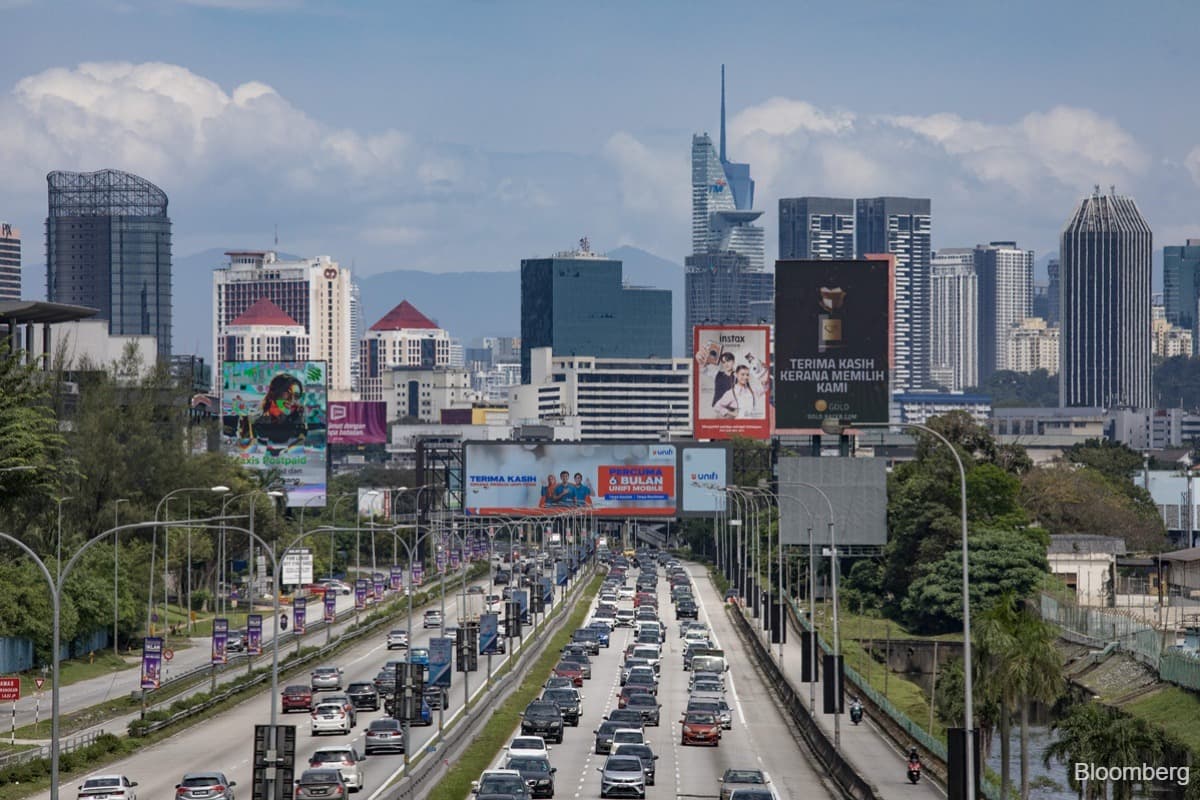
SELANGOR enters the next phase of its development from a position of considerable strength. It has Malaysia's deepest industrial base, strategic land, Port Klang, the KLIA economic corridor, a rapidly expanding data-centre ecosystem, substantial infrastructure and utilities, and a sizeable portfolio of state-linked companies.
The question, therefore, is no longer simply how much Selangor owns. The more important question is: How effectively is that capital being deployed?
For the business and investment community, this distinction matters. A large balance sheet does not automatically translate into economic value. What matters is the return generated by those assets, the cash flows they produce, the private capital they mobilise and the productivity they create across the wider economy.
The KPS discount deserves attention
I raised a question about Kumpulan Perangsang Selangor Bhd (KPS) during my debate in the Selangor State Assembly on Aug 11 because it provides a useful illustration of the broader capital-allocation question. KPS reported net assets of approximately RM2.02 per share, while its share price was around 54 sen on Aug 7. In other words, the market was valuing the company at roughly 27 sen for every RM1 of reported net assets.
This does not mean that the difference represents a cash loss. Nor does it necessarily mean that the underlying assets are impaired. But such a persistent discount should not simply be dismissed. It raises legitimate questions about return on equity, capital allocation, earnings quality, cash generation, portfolio structure and, importantly, the market's confidence in management's ability to unlock value.
This is what I describe as the risk of a value trap: valuable assets exist, but their economic value is not sufficiently translated into returns, growth, cash flow or valuation. For a private investor, a value trap is an investment problem. For a government, however, it can become a public-policy problem because the capital ultimately belongs to the people.
The overlooked cost is opportunity cost
Consider a simple illustration. If RM1 billion of capital generates a 3% annual return, it produces RM30 million. If the same capital could reasonably generate 8% under a more productive structure, it would produce RM80 million. The RM50 million difference is the opportunity cost of capital.
It may never appear as a loss in an audited financial statement. But economically, it is real. Over 10 years, even before compounding, that represents RM500 million of foregone economic capacity.
For Selangor, that opportunity cost ultimately translates into less fiscal capacity for infrastructure, water security, flood mitigation, mobility, urban renewal and other investments that improve productivity. That is why GLC reform should not be regarded merely as a corporate restructuring exercise. It is an economic competitiveness issue.
A Selangor investment holding company is a good idea — if the operating philosophy changes
The state government's proposal to establish a consolidated state investment holding company — sometimes described as a "Khazanah Selangor" — is directionally sensible. I support the principle. But consolidation alone does not create value.
Moving existing companies beneath a new corporate structure may simplify reporting lines, but it will not automatically improve returns. The more fundamental transition must be from asset administration to active capital ownership.
As I argued in the State Assembly, MBI should ultimately operate as a genuine strategic investment holding company, where every significant investment has an explicit investment thesis, target return and measurable value-creation plan.
That means asking questions familiar to every institutional investor: What is our cost of capital? What return are we targeting? Why should the state own this particular business? What competitive advantage does state ownership create? What is management's value-creation plan? What is the dividend policy? And, where an investment no longer serves a strategic purpose, what is the monetisation or exit strategy?
Not every state asset should be treated the same way
A sophisticated state investment framework must distinguish between three categories of capital. Strategic public assets — such as water, mobility and critical infrastructure — should be judged primarily on reliability, affordability, resilience and their contribution to economic productivity.
Commercial assets — including competitive businesses, manufacturing, property and investment holdings — should be subjected to clear return hurdles and industry benchmarks.
The third category is potentially the most transformative: development capital. Here, the state uses its land, balance sheet, regulatory coordination and strategic position to unlock new economic ecosystems — industrial parks, digital infrastructure, renewable energy, water infrastructure, transit-oriented development and logistics — while bringing in institutional and private-sector capital.
The state does not have to finance everything itself. Its capital should increasingly become catalytic capital.
From RM1 of public capital to several ringgit of economic activity
Rather than asking how much government can invest directly, we should ask: How much private capital can every RM1 of state capital mobilise?
State Assets & Capital > Productive Investment > Cash Flow & Returns > State Dividends & Revenue > Productive Infrastructure > Private Investment > Jobs & Productivity > Higher Household Income > Larger Economy & Tax Base > Reinvestment
That is the economic flywheel Selangor should be building. The ultimate test is whether state capital generates new wealth, attracts private investment, creates skilled employment and expands household income.
Measure value creation, not corporate size
Revenue and profit before tax remain important, but they are insufficient measures of capital efficiency. I would propose that the state publish a consolidated annual scorecard covering at least: Return on Equity (ROE), Return on Invested Capital (ROIC), Free Cash Flow Conversion, Dividend-to-State, Five-Year NAV Growth, Capital Appreciation, Private Capital Mobilised and Economic Multiplier.
For listed companies, Total Shareholder Return should additionally be benchmarked against relevant Bursa Malaysia indices and comparable companies. A company becoming larger is not necessarily the same as a company becoming more valuable.
KPS could become the first value-unlocking case study
The substantial discount between KPS's reported NAV and its market valuation should therefore be treated not merely as a criticism, but as an opportunity. If the state believes intrinsic value materially exceeds market value, management should articulate a credible pathway for closing that gap.
That could include clearer subsidiary strategies, disciplined capital allocation, stronger cash deployment, a transparent dividend framework, monetisation of non-core assets where appropriate, explicit ROE targets and a three-to-five-year value-creation roadmap.
The objective should not be to manage the share price. It should be to improve the underlying economics sufficiently that the market eventually recognises the value. If successful, KPS could become Selangor's first major value-unlocking case study.
The five-year objective: Improve capital productivity
Over the medium term, overlapping GLC activities should be rationalised. Non-core assets should be reviewed for monetisation. Capital should progressively migrate towards businesses and infrastructure with stronger returns or strategic economic multipliers. Recurring dividends to the state should grow, and private institutional capital should increasingly participate alongside government.
With the right structure, RM1 of public capital should not necessarily finance only RM1 of development. It should help mobilise several ringgit of private and institutional investment. That is a far more scalable development model.
The 10-to-20-year ambition: A stronger state balance sheet and a richer population
Selangor should gradually expand its recurring income base beyond conventional taxes, land premiums, dividends and asset disposals towards a broader mix of investment income, infrastructure income, dividends, capital appreciation and economic participation.
If properly executed, the cycle becomes self-reinforcing. Investment income finances infrastructure. Infrastructure raises productivity. Higher productivity attracts private investment. Investment creates better jobs. Better jobs raise household incomes. A larger economy expands the state's revenue base. And part of that additional capital is reinvested into the next generation of productive assets. That is what I mean by compounding prosperity.
The ultimate KPI is not the government's balance sheet
The debate over Selangor's GLCs should move beyond whether a particular company made or lost money in a particular year. The bigger question is whether the state's considerable balance sheet is being converted efficiently into long-term economic capacity.
A future Selangor should not measure success simply by how many billions of ringgit MBI, PKNS or other state entities control. We should ask instead: Are recurring state revenues increasing? Is private investment being crowded in rather than crowded out? Are productive jobs expanding? Are wages rising? Is infrastructure becoming more competitive? And are the next generation of Selangorians inheriting a more productive economy?
From owning assets to creating value. From preserving capital to compounding capital. From GLC-centric development to economy-centric development.
From a state that is wealthy on its balance sheet to a society that experiences that wealth through higher incomes, better opportunities and sustainable prosperity.
Muhammad Hilman Idham is the Selangor State Legislative Assembly member for Gombak Setia.