

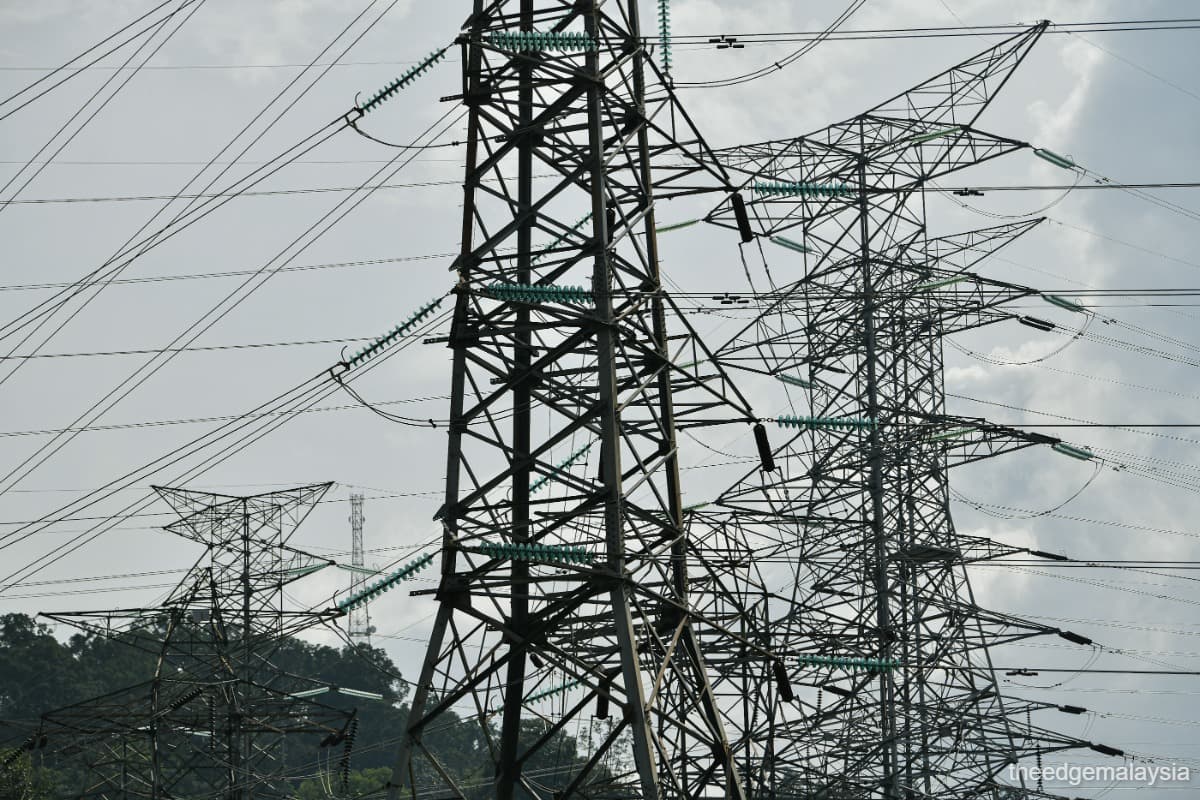
KUALA LUMPUR (Aug 12): Malaysia’s push for greater energy efficiency could create new opportunities for mechanical, electrical and process utilities contractors as factories and commercial buildings upgrade existing systems, according to MBSB Research.
Unlike the National Energy Efficiency Policy and Action Plan (NEEAP) 1.0, which focused mainly on building more energy supply, NEEAP 2.0 covers both electrical and thermal energy and is supported by the Energy Efficiency and Conservation Act (EECA) 2024, which came into force in January 2025.
The plan targets an 11.6% reduction in energy demand versus business-as-usual by 2035. This does not mean total energy consumption will fall by 11.6%; rather, Malaysia aims to consume less energy than it otherwise would have without the efficiency measures.
NEEAP 2.0 estimates 815,382 terajoule (TJ) of cumulative energy savings between 2026 and 2035, equivalent to around RM85.2 billion in avoided energy costs.
Industry is expected to account for the largest share of savings at 69%, followed by commercial buildings at 21% and households at 10%. However, commercial buildings have the highest 2035 reduction target at 13.2%, compared with 11.9% for industry and 8.7% for households.
The plan promotes upgrades such as energy-efficient chillers; pumps; motors; lighting; and heating, ventilation and air conditioning and automation systems. MBSB said the key investment opportunity is the shift from simply building more power capacity towards using energy more efficiently.
Of the estimated RM36.6 billion in investment opportunities, around RM9.1 billion is expected to come from industrial and commercial projects, including energy-efficient motors, automation, heating, ventilation, and air conditioning and chillers, heat recovery, mechanical and electrical retrofits, and district cooling.
The larger RM26.9 billion domestic component is mainly related to households replacing existing appliances with more energy-efficient models.
Potential beneficiaries of industrial and commercial spending include Critical Holdings Bhd (KL:CHB), KJTS Group Bhd (KL:KJTS), Solar District Cooling Group Bhd (KL:SDCG), AWC Bhd (KL:AWC) and BM Greentech Bhd (KL:BMGREEN).
Under the EECA, major energy consumers using at least 21,600GJ over 12 consecutive months must appoint a registered energy manager, establish an energy management system, submit annual reports and conduct periodic energy audits.
Non-compliant businesses may be required by the Energy Commission to implement improvement plans, potentially turning energy-audit recommendations into actual retrofit projects. Failure to appoint an energy manager or establish an energy management system can result in fines of up to RM50,000.
MBSB maintained a neutral view on Tenaga Nasional Bhd (KL:TENAGA), saying NEEAP 2.0 is designed to moderate future electricity demand growth rather than reduce overall demand. Tenaga’s earnings also remain regulated under the incentive-based regulation framework.
Solar engineering, procurement, construction and commissioning players such as Solarvest Holdings Bhd (KL:SLVEST), Pekat Group Bhd (KL:PEKAT) and Samaiden Group (KL:SAMAIDEN) could benefit by cross-selling energy-efficiency and management solutions alongside solar and battery energy storage systems.
Meanwhile, the RM26.9 billion domestic opportunity could benefit consumer companies including Fiamma Holdings Bhd (KL:FIAMMA), Khind Holdings Bhd (KL:KHIND), Senheng New Retail Bhd (KL:SENHENG), Pensonic Holdings Bhd (KL:PENSONI), Panasonic Manufacturing Malaysia Bhd (KL:PANAMY) and Cuckoo International (MAL) Bhd (KL:CKI) as households increasingly replace older appliances with more energy-efficient models.