

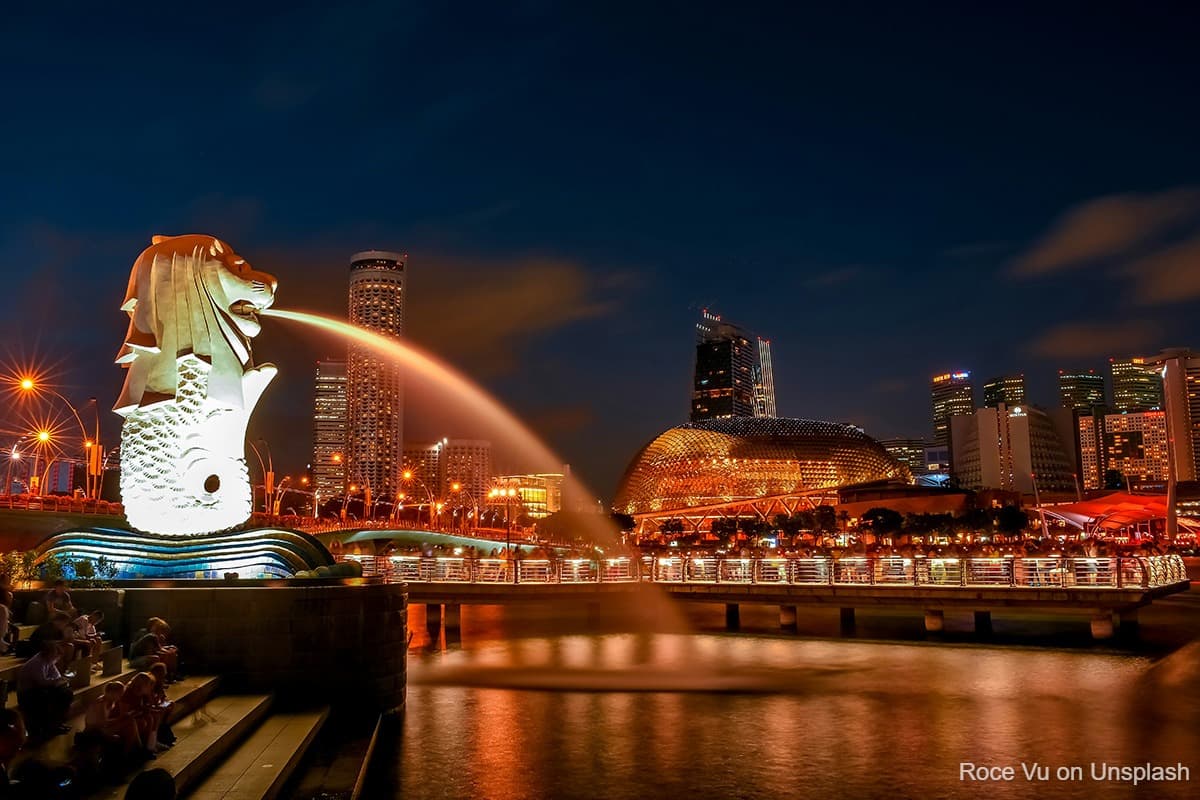
As it celebrates its 61st national day, Singapore is in remarkably good shape despite the turmoil in the world around it. The economy has been expanding robustly for the past two years while inflation remains relatively low. Median incomes are growing and surveys show that Singaporeans are among the most optimistic in the world in terms of their hopes and expectations for the future. At the political level, a fourth generation of leaders has taken office and displayed confidence and competence. This performance and the smooth way the political succession was handled helped to underline the country’s political robustness. And, to top it all, Singapore enjoys the most convivial relations with its neighbours that it has ever enjoyed. Foreign investors, high-net worth individuals, skilled professionals and talented entrepreneurs from all over the world flock to Singapore, prizing its stability and predictability which have earned it a high level of trust.
Still, this enviable track record cannot detract from the fact that there is a degree of fragility in this picture which should not be underestimated. In the near term, economic growth is disproportionately powered by a single factor of AI-related capital spending which is almost certain to slow and bring our economic growth down sharply.
However, the more important question which we address here is the longer term challenges: the global situation is fundamentally less in Singapore’s favour than before: Its economic partners are turning more protectionist and inward-looking, threatening the globalisation that benefited it. Technological progress is potentially racing ahead of our capacity to manage its downsides. Small nations like Singapore are also less secure as powerful countries abandon the norms that provided a modicum of protection to the less powerful. The region around Singapore is looking a little shaky as well.
The government’s Economic Strategy Review report offered a way forward with a range of proposals to be implemented. Taking the report together with the lessons we can learn from recent trends in the world environment, it strikes us that a further number of questions still need to be asked. How does the evolving global environment change our overarching national goals and priorities? How do we then refresh the economic model so that our goals can be achieved? The answers to these questions will shape how economic strategy fully evolves in the coming years.
The Economic Strategy Review provides a good road map
A great deal of thought went into the report which is why the proposals are all sensible and will take the country forward. Singapore’s policy makers’ response correctly acknowledged the need to sharpen Singapore’s value proposition, enhance its agility and strengthen its resilience for a period when shocks will be more frequent.
The road map involves building leadership in existing areas of strength, making Singapore a leader in AI solutions, extracting more value from its global hub operations, creating a more dynamic eco-system to allow Singapore firms to scale up, a range of measures to empower workers and strengthen human capital, and build more buffers in its economic structure so as to ensure greater resilience.
All this makes eminent sense and will certainly help put Singapore on a good trajectory. But, looking at the big picture suggests that Singapore’s strategic response may need to go further.
The next lap for Singapore – greater ambition is needed
Given the global backdrop, it is likely that the city-state will need to move on from aiming at a certain pace of economic growth to prioritising the quality and composition of economic change. In a more unstable world, we need an economy and society that can withstand economic shocks as well as threats of a national security nature, while generating the resources needed to maintain our sovereignty. In doing so, it needs to ensure that it sustains the jobs, business opportunities and quality of life that Singaporeans aspire to.
As it does so, some hard facts have to be faced – while Singapore has done well, the reality is a little discomfiting for the two major engines of its economy: Singapore is still in the second tier of global financial centres, well below New York and London. And, it does not have the inherent strength to be at the cutting edge of advanced manufacturing. Singapore is now the 27th largest economy in the world but much of that reflects the contribution of foreign companies that base themselves in Singapore rather than the innovation and inherent skills of local companies.
We would respectfully submit that this is not a model that can sustain Singapore in the coming decades. The ambition must be to raise Singapore into the top tier of global centres of finance and commerce – and to develop home-grown companies that excel in advanced manufacturing.
Recent experience suggests further changes to economic strategy could be considered.
A number of areas are examined below, where lessons can be learnt for Singapore’s economic strategy going forward. These are not exhaustive but the four areas here suffice to make the point that changes in approach are needed.
First, bottom-up strengths matter. It is even more important now to possess inherent ability, and not be overly dependent on foreign companies and talent:
● How was Ukraine able to resist invasion by Russia, the third most powerful country in the world? President Zelenskyy and his team were not educated at top tier universities and almost certainly would not have made it to the Singapore administrative service. Yet they made the difference – they were inspiring and demonstrated courage and extraordinary astuteness. In addition, it was the bottom-up strengths that also mattered. With a deep pool of engineering and scientific talent, there were enough bold, patriotic and highly educated Ukrainians who could think on their feet and innovate new weapons and tactics – and who operated in a system that empowered such bottom-up efforts. Ukraine also had enough domestic manufacturing capacity to turn those ideas into a formidable war machine. Does Singapore have these strengths?
● Another example is the Netherlands. This tiny country is the second largest agricultural exporter in the world by value which is quite astounding considering that it occupies around 42,000 square kilometres which ranks it the 133rd largest by geographical area. A key reason for this achievement is how the country makes use of its universities. Wageningen University is ranked 206th in the global 2026 rating – well below our top two universities. That raises an important question for our universities and research centres – are we too fixated on the rankings or should we focus more on what these institutions actually contribute to Singapore’s development?
Second, competition is increasingly among eco-systems rather than countries. China has stunned the world by emerging as a high-tech exporter and a technological powerhouse. One of the keys to this remarkable achievement is the emergence of eco-systems such as the Pearl River Delta. A super-competitive urban agglomeration was created by bringing together entrepreneurs and innovators, technological development capacity, excellent infrastructure, a mass of ferociously competing component manufacturers and logistics providers, sources of plentiful financing and highly supportive local and central governments. The economies of scale and scope that such an eco-system offers allow the companies that operate there to be highly competitive.
As China’s economic prowess grows, more countries will try to emulate this urban agglomeration approach to establishing competitiveness. What do countries such as Singapore who lack such scale economies do in response?
Third, the trade-offs inherent in Singapore’s current economic model are becoming harder. Extracting USD600bn plus of economic output from a land area that is half the size of Greater London does impose strains. London generates about USD1,000 bn but it has a hinterland that many of its workers can repair to and which provides a vent. As Singapore tries to grow further, these strains will become more prominent. For example, trying to accommodate Singapore’s growth ambitions with the need to house its still-growing population generates challenges as seen in the ongoing controversy over the redevelopment of Maju forest and Gillman Barracks to accommodate pressing housing needs.
The pain point is this – are we trying to do too much within our limited land area? The economic model that is being followed still seems to require a continued increase in the population – but the resulting tensions will probably make it more and more difficult to pursue this model.
Another trade-off arises as national security must be accorded a higher priority. The wars in Ukraine and the Middle East are up-ending many of the old nostrums about defence. The way we structure our military, intelligence services and diplomacy will need to change – doctrines have to adapt, and huge investments will be needed in defence technology. But that will be very expensive and will compete with other demands on the exchequer.
Fourth, it’s time to change legacy policies that are still in use. Singapore has generally been an obedient pupil of free market economics. It was the first city to use prices to control traffic congestion, for example. Over the years, it has employed more and more tools including extraordinarily punitive charges on vehicle ownership, high taxes on petrol and electronic road pricing. Another example is pricing of government-owned land. Since government owns more than 80% of the land in Singapore, this matters hugely. The Singapore Land Authority even sells land at what it determines to be a market price to the Housing & Development Board for the construction of public housing. Similarly, there are world-beating rates of surcharges in the pricing of water and electricity.
The issue is not that this is theoretically the wrong approach but, rather, to what practical extent it should be carried, as there are substantial cost implications of such an approach. First, it is not clear that some of these pricing strategies still produce the desired result. For example, with costs of owning and operating a car already sky-high, it is questionable whether incremental increases will have any impact on congestion. Second, most other countries do not employ such measures and so do not suffer the cost consequences. That makes Singapore much more expensive to operate in for businesses which lose competitiveness, aside from eating into the purchasing power of the average Singaporean. It may not have mattered before but as the global economy becomes more competitive, the damage to Singapore’s competitive position could become more material.
Conclusion: the way ahead
The above analysis leads to some broad suggestions on economic strategy.
The essential appeal made here is to be more ambitious. Singapore should work towards being a global heart of commerce and finance on par with New York and London. It should help its home-grown companies increase their competence in advanced manufacturing in the way Taiwan has managed. If the latter requires big changes in the way Temasek and Enterprise Singapore operate, then so be it.
The other area of greater ambition should be in creating a powerful eco-system with a greater chance of competing with others such as those in China. Since this cannot be achieved without scale economies, what we are really suggesting is a bolder vision for regional integration with Malaysia’s Johor state and Indonesia’s Riau Islands province. The Johor-Singapore Special Economic Zone is a good start but it is not enough and needs to be expanded substantially.
Next, let us engage in a major cost compression exercise by adjusting our policy parameters on land and road pricing. Rather than set out reasons why this exercise will be difficult, let us find a way to do this. Like the need for a highly competitive eco-system, this is almost an existential requirement.
Finally, we need to liberate the energies of our people and our local companies so that Singapore becomes more adept at the bottom-up and more spontaneous initiatives that are vital if Singapore is to rise to the next level. Some good changes have been made in the education sector which will help over time. A meaningful further step would be to deregulate more so as to reduce the compliance burden on small companies. Two decades ago, the late Sim Wong Hoo raised the issue of how drivers in Singapore are not allowed to make a U-turn unless a sign specifically allows them to do so – in contrast to other countries where drivers are trusted to make U-turns so long as a "No U-turn" sign is not present. More than twenty years later, the U-turn signs remain in place. And that is our final appeal - it’s time to change that regulatory mindset away from a punitive one to a more balanced one.
Manu Bhaskaran is CEO of Centennial Asia Advisors
Uploaded by Tan Siew Ching