

This article first appeared in Forum, The Edge Malaysia Weekly on August 10, 2026 - August 16, 2026
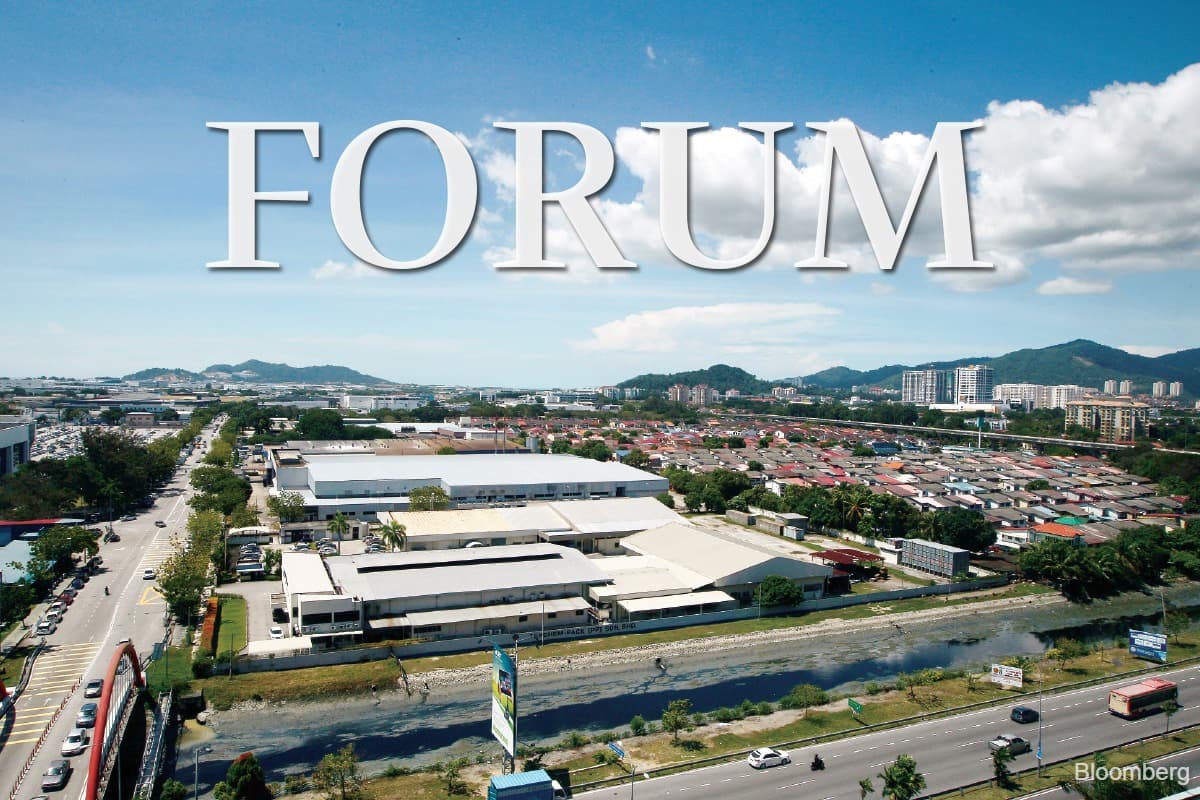
More than half a century ago, southern Penang was part of the state’s rice bowl. Families in Bayan Lepas worked the paddy fields through the monsoon and harvest, while jobs were limited and young people looked elsewhere. Few in 1971 could have imagined that the same coast would one day sit at the heart of a semiconductor ecosystem moving into design and other higher-value activities.
When the paddy fields became the country’s first free trade zone in 1972, Intel opened its first offshore production facility there. A great-grandfather who planted paddy depended on the rain and a rice price set far beyond Penang. His daughter entered a factory and brought home a regular wage, giving the family more room to plan and keep the next generation in school. Her son studied engineering as suppliers arrived and technical knowledge accumulated, joining an industry where Malaysians maintained equipment, improved processes and ran plants. The fourth generation begins higher, with opportunities in advanced packaging, semiconductor equipment and chip design.
Across four generations on one stretch of coast, a factory became an ecosystem as technical experience accumulated, engineering capability deepened and Malaysian companies grew around it. Each generation inherited more choices because Bayan Lepas itself had become more capable. That economic leap took more than 50 years, a timetable that looks very different in the world Malaysia now faces.
Bayan Lepas grew during an era of expanding trade, specialised supply chains and just-in-time production, when companies placed each activity where it was most efficient and assumed goods, capital and technology would keep moving. The Covid-19 pandemic exposed the weakness of systems with little room for disruption, while geopolitical rivalry, energy insecurity and trade restrictions now shape investment. As companies move from just in time towards just in case, resilience, trusted suppliers and secure energy carry greater weight.
The next economic regime may be more fragmented, regional and influenced by national security, while artificial intelligence creates industries and business models we cannot yet name. Technologies can now reshape an industry within a few years, leaving workers, companies and financial institutions less time to adjust. What Bayan Lepas achieved across four generations must now become possible much faster.
Malaysia therefore needs to shorten the distance from employment to skill, from skill to enterprise and from enterprise to scale. Workers and companies need to move through those stages faster, before opportunities move elsewhere. That progression depends on foundations that investors and companies can rely on through several cycles.
The government’s role is to maintain a credible policy and fiscal framework, invest in the institutions supporting long-term decisions and use public capital where it can unlock markets that remain too thin. A company committing a long-term asset to Malaysia is making assumptions about our public finances, rules and response to shocks. Malaysia’s fiscal deficit has declined from 6.4% of gross domestic product in 2021 to 3.7% last year, supported by a stronger fiscal framework, retargeted fuel subsidies and modernised tax administration. This year’s global supply crisis tested that progress, as the government worked to cushion the impact on households while keeping the deficit on a path below 3% over the medium term.
That credibility was priced through Malaysia’s recent US$1.5 billion (RM6.13 billion) global sukuk, which drew demand from more than 140 international investors and was 4.7 times oversubscribed. Both tranches achieved the tightest spreads ever recorded for Malaysia’s global sukuk issuances, at 15 basis points over US Treasuries for the 5.75-year tranche and 25bps for the 10-year tranche. As the sovereign curve is an important reference for Malaysian issuers borrowing internationally, fiscal discipline reaches beyond Putrajaya into the cost of capital for Malaysian companies.
The country’s banks, asset owners and fund managers must develop the expertise and instruments to back good Malaysian companies earlier. The government can provide certainty, but the market has to take risk. The government should make the foundations predictable while investors make the possibilities exciting by backing new companies, technologies and business models before the outcome is obvious. Public capital can help open a market, enabling private capital to carry a larger share as companies grow and creating a clearer path from first investment to scale.
Venture capital takes the earliest risk, growth capital and private equity finance expansion, banks step in as cash flows strengthen, and public markets support mature companies. Khazanah Nasional’s Jelawang Capital under Dana Impak and Kumpulan Wang Persaraan (Diperbadankan)’s (KWAP) Dana Perintis bring institutional funding into earlier stages, while banks and the capital market provide greater depth as companies grow.
That willingness to put Malaysian capital behind Malaysian growth is already visible in the wider investment numbers. Domestic investors provided RM222.4 billion, slightly more than half of the record RM431.1 billion in approved investments last year. I would hold on to that number because foreign investors notice whether Malaysians are willing to invest in Malaysia too. Through GEAR-uP, the six major government-linked investment companies (GLICs) have committed an additional RM120 billion of domestic direct investment over five years.
The strength lies in connecting each stage of financing so that promising companies can continue growing without losing momentum. The standard remains high, and the challenge is to price risk earlier rather than waiting for uncertainty to disappear. For the fifth generation of the Bayan Lepas family, that means being able to build a Malaysian company further up the value chain, with investors willing to back her before the outcome is certain.
The same test should guide what Malaysia watches after every major investment. Following the job, wage and skill over time shows whether productivity is reaching workers, suppliers are gaining capabilities and promising firms are growing. One early step on wages is coming through the government-linked system, where the living-wage commitment is now broadening across 34 GLICs and government-linked companies, covering almost 200,000 workers at a minimum of RM3,100 a month.
That progression also needs to spread across the country, with each region building on its own strengths. Penang and Kulim, Kedah, can move further into design and advanced packaging, Johor can build an integrated manufacturing and cross-border ecosystem with Singapore, while Sarawak brings lower-carbon energy and a growing industrial base. Malaysia becomes stronger when these places do different things well within the same national system.
Bayan Lepas therefore offers a standard for Malaysia’s next economic leap, with success measured by how quickly investment raises the starting point for people and companies and whether each stage makes the next easier to reach. The people in the paddy fields of Bayan Lepas in 1971 could not see the semiconductor cluster ahead. They could see that jobs were scarce, young people were leaving and Penang needed another path. The decision taken in 1972 opened that path, and each generation widened it.
The fifth generation in our Bayan Lepas family may enter an industry none of us can yet name, within a global economic regime whose final shape none of us can yet see. We may not know what she will build, and we do not have to. Our responsibility is to give her generation the same sense of possibility that Bayan Lepas opened for the first generation, from a much stronger starting point, while shortening the distance between her ability and her opportunity.
Our success will be measured by what we make possible for her to build from Malaysia.
Senator Datuk Seri Amir Hamzah Azizan is minister of finance II
Save by subscribing to us for your print and/or digital copy.
P/S: The Edge is also available on Apple's App Store and Android's Google Play.