

This article first appeared in Digital Edge, The Edge Malaysia Weekly on August 10, 2026 - August 16, 2026
Selangor will be among the first adopters of a new RM2 billion sovereign digital infrastructure prototype being developed by the Malaysian Communications and Multimedia Commission (MCMC), which is slated for completion as a proof-of-concept (POC) this month.
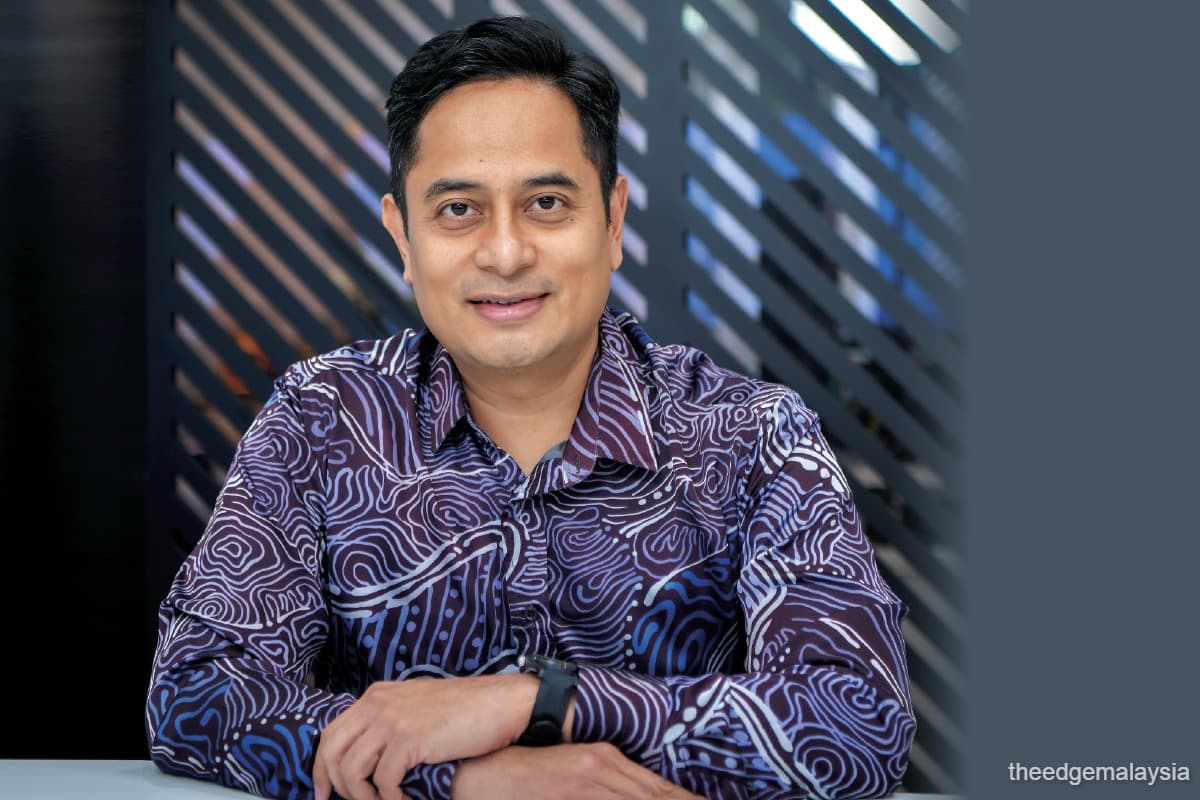
The state will utilise the secure local framework to migrate key government workloads and deploy analytical artificial intelligence (AI) use cases. Selangor Islamic Affairs and Cultural Innovation state executive councillor (exco) Dr Mohammad Fahmi Ngah tells Digital Edge that while building an independent sovereign infrastructure from scratch is highly cost-prohibitive for individual states, MCMC’s upcoming unified technical stack offers a viable path towards robust local data governance.
According to Fahmi, about 20% of government operational data — specifically assets driving critical public services like traffic management and street lighting — must remain strictly localised and sovereign to protect against cyberattacks and external disruptions.
To fulfil the true definition of data sovereignty, the entire digital architecture — spanning compute, storage, graphics processing units (GPUs) and AI computation layers — must physically reside within national boundaries rather than being processed in foreign-hosted public clouds.
Fahmi stresses that leaning on MCMC’s architecture mitigates the risks associated with relying entirely on American or Chinese clouds as the localised stack will carry structural security guarantees verified by the National Cyber Security Agency and CyberSecurity Malaysia.
“Prioritisation will be given to local AI models which will be installed on those local infrastructure with the guarantees again of security and sovereignty,” says Fahmi.
Laying the foundations for Malaysia’s first AI city
The integration with MCMC’s infrastructure aligns with Selangor’s broader vision to transcend being a mere technology user and establish the country’s first AI city.
By the end of this year, Selangor aspires to secure a Smart State certification. This milestone requires all 12 of Selangor’s local councils to hit at least Level 1 of the national Smart City framework, potentially making Selangor the second state to achieve this status after Johor.
To accelerate this transformation, Selangor has mandated that every local council identify 25 internal workflow processes to optimise via AI agents. The state has set aggressive benchmarks for these deployments, targeting a minimum 50% reduction in operational turnaround times and a 30% cost reduction.
To support the rollout, the state expects to select its AI training providers by the end of June to upskill civil servants. This will be followed by the appointment of specialised AI analytics consultants in July to break down long-standing data silos across fragmented municipal departments, such as unifying cross-council licensing and streamlining public cleanliness complaint systems.
“We’ve realised that [this is the] problem, so we’re all going back to having a single, secure and sovereign infrastructure that everybody has to sit in [on] so that the AI can operate better. We cannot afford having 12 councils with 12 different infrastructures and 12 different AI systems [working in silos]; that doesn’t work anymore,” he says.
Enforcing local content
As foreign tech giants ramp up multibillion-dollar hyperscale data centre footprints across Malaysia, Selangor is leveraging policy mechanisms to ensure the local economy benefits directly. The state has instituted a policy requiring a minimum of 30% local content in every data centre operating within its borders.
This 30% threshold encompasses physical hardware procurement and high-value engineering inputs, such as localised semiconductor development.
Fahmi highlights state-backed ecosystem drivers like the Selangor IC Design Park in Puchong and the upgrade of the Selangor Digital School into the Advanced Semiconductor Academy of Malaysia.
These initiatives run alongside collaborations with domestic firms like SkyeChip Bhd (KL:SKYECHIP), which aims to train 500 local integrated circuit (IC) design talents annually.
Beyond administrative efficiency, Selangor is eyeing advanced applications like high-granularity “digital twins” — 3D virtual city models detailing topography, drainage systems and tree cover — to tackle pressing environmental vulnerabilities like flash flooding.
By utilising automated AI agents to continuously monitor shifting terrains, sedimentation and road conditions, the state intends to better track and manage climate risks.
Fahmi states that this objective mirrors frameworks utilised by the US Federal Emergency Management Agency to generate precise flood risk maps.
“Providing data-driven transparency on climate risks and localised fibre or utility layouts is a vital economic tool. For example, it allows multinational corporations to accurately assess and price insurance premiums for physical plants,” he says. “We expect to significantly raise trust and predictability for incoming foreign direct investments and domestic direct investments.”
Save by subscribing to us for your print and/or digital copy.
P/S: The Edge is also available on Apple's App Store and Android's Google Play.