


This article first appeared in City & Country, The Edge Malaysia Weekly on August 3, 2026 - August 9, 2026
People, passion and professionalism have shaped Henry Butcher Malaysia (Mont Kiara) Sdn Bhd’s (HBMK) journey from a boutique property management company into one of the country’s most respected names in strata management.
Success in property management is rarely noticed. Residents and office tenants return to clean common areas, functioning lifts, secure surroundings and well-maintained facilities without giving much thought to the people working behind the scenes. When everything runs smoothly, the best property managers are often invisible.
For managing director Low Hon Keong, that quiet consistency defines success far better than industry accolades.
HBMK has received numerous recognitions over the years, including 10 awards at The Edge Malaysia Best Managed & Sustainable Property Awards (BMSPA) 2026. Since the inception of the awards in 2017, HBMK has won 72 of those accolades, including 35 gold and eight Editor’s Choice.
Yet, Low sees these achievements as a reflection of something more enduring.
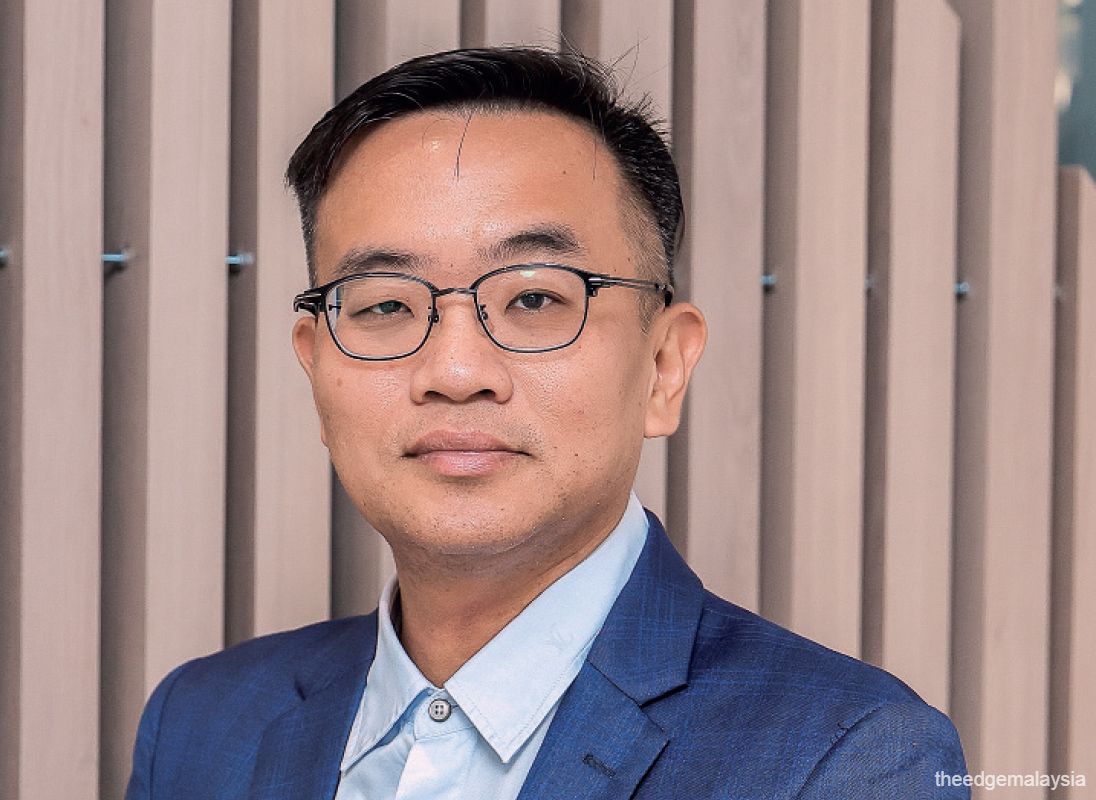
“Winning the awards doesn’t mean we are the leader. What it means is that our clients have trusted us throughout the journey. Some of them have stayed with us for more than 20 years. They gave us the confidence and the opportunity to grow. These awards belong not only to us but also to our clients.”
His response reflects a leadership philosophy that has guided HBMK’s growth over the past two decades. Rather than pursuing recognition for its own sake, the company has focused on three principles that underpin every decision it makes: people, passion and professionalism.
Together, they have shaped not only HBMK’s culture but also its reputation as one of Malaysia’s leading property management firms. Before becoming HBMK, the entity was a property management division under the asset consulting firm Henry Butcher Malaysia. In June 2015, it was incorporated as an independent company.
People first always
Although property management is commonly associated with buildings and infrastructure, Low believes it is fundamentally a people business.
“It is a very difficult industry because it is labour-intensive. You rely very much on people and the soft touch that they bring. Without a good team, we would never be where we are today.”
That belief has influenced the way HBMK builds its organisation. Instead of relying solely on experienced hires in an increasingly competitive market, the company has invested heavily in developing its own people.
A number of its senior management team joined as fresh graduates and have spent their entire careers with the company, learning the business from the ground up. Low himself followed the same path. Having spent more than 20 years with the organisation, he has witnessed its transformation from managing a modest portfolio into overseeing more than 100 properties across the Klang Valley, Penang and Johor with a workforce of over 1,000 employees.
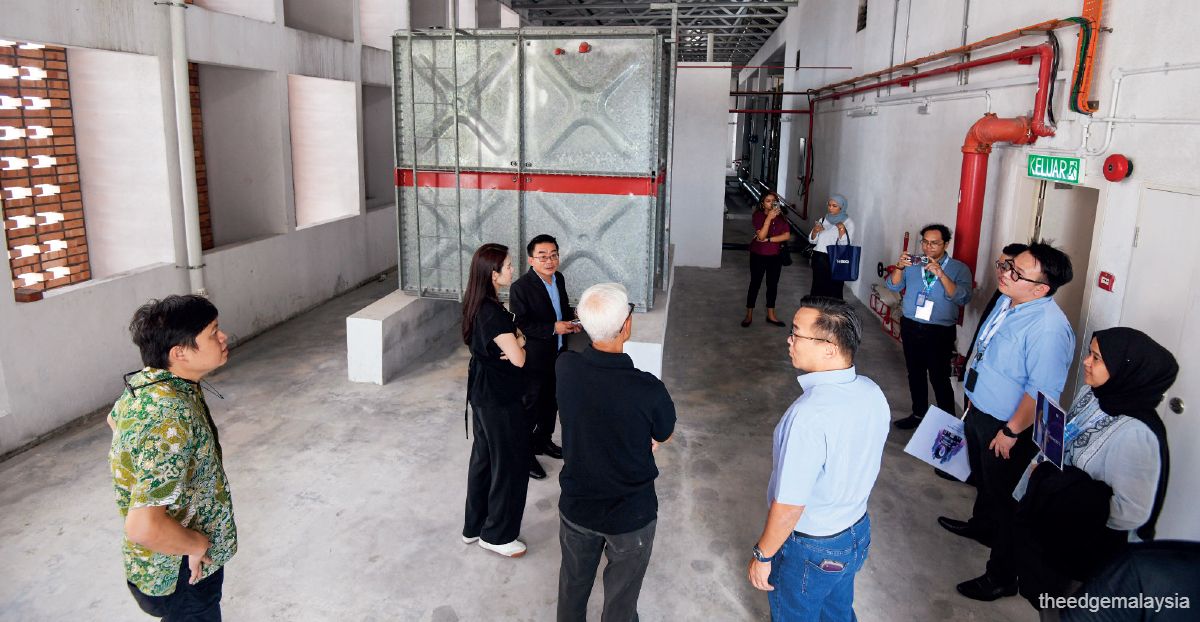
For Low, cultivating talent is not simply a human resources strategy; it is essential to the industry’s future.
Young recruits work alongside experienced colleagues, gaining practical knowledge through observation, mentoring and day-to-day exposure rather than relying solely on classroom training. In some cases, HBMK even deploys more manpower than contractually required, absorbing the additional cost as a long-term investment in developing future leaders.
“We would rather invest in human talent. Along the way, they learn from one another. They understand how to handle different situations before they have to face them on their own … People always say they have a good team. But building a team takes time and effort. Everyone has to understand our culture, our way of doing things and how we provide professional service,” he says.
Leadership on the ground
Low believes leadership cannot be taught from behind a desk. He regularly visits the properties under HBMK’s management, attends residents’ meetings and engages directly with employees, management committees and homeowners.
“I believe in being on the ground. I want to understand our people, our residents, the committee members and the difficulties they face. Before making any conclusion, we must understand both sides of the story.”
That approach has become particularly valuable in an industry where disagreements are inevitable. Property managers often find themselves mediating disputes between residents, management committees and service providers, balancing differing expectations while protecting the long-term interests of the community.
For Low, where his staff are concerned, the first responsibility is not to provide immediate solutions but to listen.
“Sometimes when someone shares a problem, they may not necessarily be seeking an answer. They may just need a listening ear,” he says.
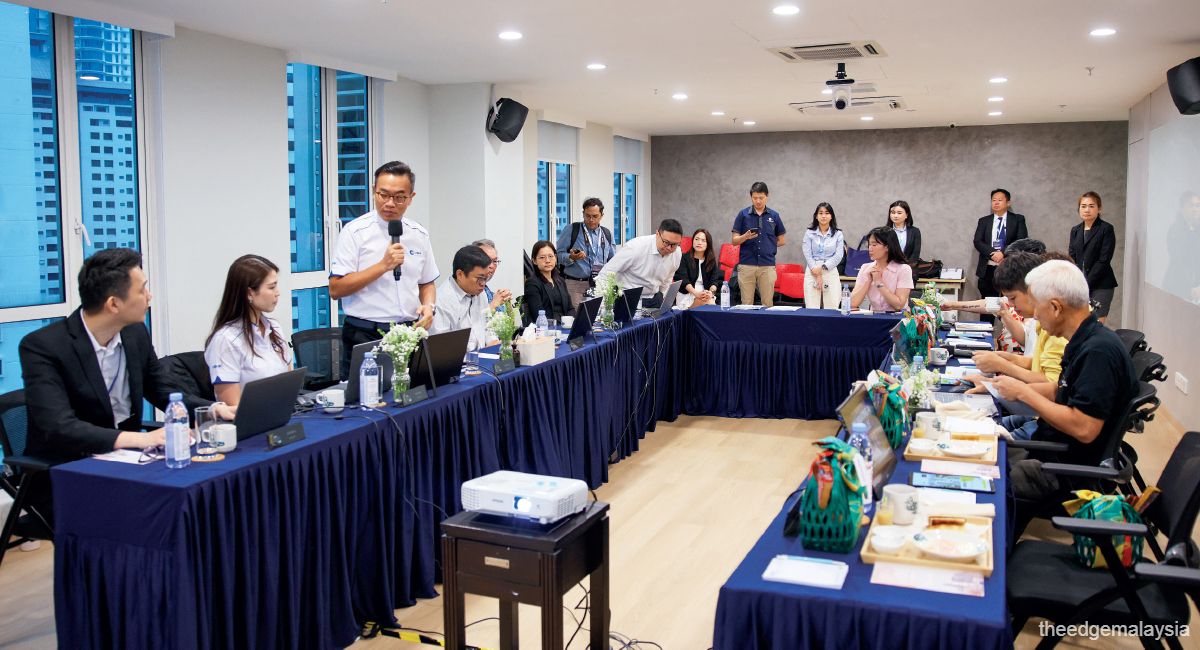
Low believes people perform best when they feel trusted, supported and understand how their contributions fit into the organisation’s wider purpose. Understanding each employee’s strengths also enables the company to place individuals in roles where they can thrive.
“When you put the right people in the right positions, one plus one becomes more than two. People become passionate about what they do. They take ownership because they are proud of their achievements,” he explains.
For Low, putting people first extends beyond career development. He recalls visiting a technician who had lost a leg following a serious accident. Accompanied by company representatives, he met the employee’s family and personally presented financial assistance.
The visit was more than a gesture of goodwill. “I don’t see a technician or a handyman. I see someone who is part of our family,” he remarks.
For Low, property management has never been solely about maintaining buildings. It is about creating communities, developing people and building relationships that endure. Those relationships have become the foundation upon which HBMK has built its reputation, and they provide the starting point for the second pillar of Low’s philosophy: passion, which has sustained both his career and the company’s growth for more than two decades.
Passion: The driving force
For Low, passion is not about enthusiasm or motivation alone. It is the commitment that spurs a property manager to show up after a late-night residents’ meeting, patiently explaining difficult decisions, resolving disputes and building trust one interaction at a time.
“The only reason why we have stayed together and managed to grow is passion. Without passion, you cannot do this for very long. When passion becomes your driving force, you can go very far.”
After completing a diploma in valuation and later a degree in property management at Universiti Teknologi Malaysia, Low chose a path few of his peers were interested in. While many entered valuation, he was drawn to what happened after a building was completed.
“I was always curious about the back-of-house operations. How does a building actually function? How do all the services work together? Property management allowed me to understand that.”
His early years managing office buildings and residential developments became an education that no classroom could replicate. Residents’ meetings exposed him to different personalities, expectations and challenges, while long evenings discussing maintenance budgets, repairs and neighbourhood concerns taught him that successful property management depended as much on communication as technical expertise.
“There were evenings when I would finish one meeting at about 8pm before rushing to another that continued until midnight. I invested my time. The clients gave us the opportunity to learn,” he says.
Many of those residents remain friends and clients today, reinforcing Low’s belief that lasting relationships are earned through consistency rather than promises.
One experience continues to stand out. During an annual general meeting at one particular condominium seven to eight years ago, residents strongly opposed an increase in maintenance fees. Instead of defending the proposal, Low carefully explained every item in the budget, showing what services would have to be reduced if fees remained unchanged.
“I told them, if you don’t want to increase the maintenance fee, that’s fine. But let’s look at what you are prepared to compromise. They were reasonable people. When you explain things honestly, people understand that you’re not trying to cheat them,” he says.
As residents began to understand the realities of maintaining a property, the discussion shifted from confrontation to collaboration. The property remains under HBMK’s management today.

For Low, experiences like these demonstrate that property management is ultimately about managing communities rather than buildings. Technical knowledge is important, but empathy, patience and honest communication are what build lasting trust.
Professionalism that earns trust
The third pillar of Low’s philosophy is professionalism — not as a matter of qualifications alone, but as a commitment to doing what is right, even when it is unpopular.
“Ultimately, people want peace of mind. They want to know that their home and investment are being looked after properly,” Low notes.
That responsibility has become increasingly important as HBMK’s portfolio has grown to include some of Malaysia’s highest-end residential developments. Managing premium communities means looking beyond day-to-day maintenance to safeguard long-term value for residents and owners alike.
For Low, professionalism begins with getting the fundamentals right.
Maintenance fees must be collected consistently to ensure buildings remain financially sustainable. Residents must receive clear and timely communication because transparency builds confidence. Decisions should always be evaluated for their long-term impact rather than short-term savings.
This long-term mindset also shapes HBMK’s advice to management corporations. While lower-cost solutions may appear attractive initially, they often prove more expensive over the life cycle of a building.
“The question is not only whether something can be done today. We need to ask whether it can be sustained for the next one, five or 10 years. We must do the right things. Sometimes, what is right is not always popular,” he admits.
That principle extends to technology. HBMK has adopted digital tools to analyse operational data, monitor building performance and provide management committees with better information for decision-making.
Data enables more informed discussions on issues such as maintenance expenditure, utility consumption and equipment replacement.
Yet, Low cautions against relying on technology alone. Artificial intelligence and digital systems can improve efficiency, but they cannot replace practical experience, sound judgement or an understanding of the realities on the ground.
“With data, we can show the facts. Yet, we cannot depend too much on technology. We still need to make sure it is practical for the actual situation.”
A culture built to last
With more than 100 properties under its belt, Low is careful not to measure success by the size of the portfolio alone. Growth, he believes, must always be supported by the right people, trusted partners and clients who share the company’s values.
“We are not rushing into expansion. If there is a good opportunity, good manpower and good partners, we will explore it. And we do not view other firms as our competitors … we compete with ourselves. We know our strengths and weaknesses, and we continue to improve based on that,” he says.
It is a mindset that has shaped the organisation from the beginning — focusing on raising standards instead of chasing recognition, developing people instead of merely filling positions, and managing communities rather than simply maintaining buildings.

Looking ahead, Low expects professional property management to become even more important as technology, sustainability requirements and investor expectations continue to evolve.
Yet, despite these changes, he believes the company’s core principles will stay the same.
He often recalls a conversation years ago with a resident, who reminded him that behind every employee was a family relying on the company for their livelihood.
“I remember those words until today. There are thousands of people and thousands of families connected to this company. We have a responsibility.”
That responsibility goes beyond delivering well-managed properties. It includes creating opportunities for employees, supporting their growth and fostering a culture where everyone feels valued and accountable.
For HBMK, the measure of success will never be defined solely by the number of awards it wins or properties it manages. Instead, it will continue to be guided by the three principles that have shaped the company from the start: people who built the organisation, passion that drives its purpose and professionalism that earns lasting trust.
Save by subscribing to us for your print and/or digital copy.
P/S: The Edge is also available on Apple's App Store and Android's Google Play.