

This article first appeared in Digital Edge, The Edge Malaysia Weekly on August 10, 2026 - August 16, 2026
Lilly (Not real name), who is five years old, appears in brand collaborations and product review videos alongside her mother, digital creator Sarah (Not real name). It all started when Sarah began documenting her infant daughter’s transition to solid foods in 2022. As Lilly grew older, she began taking an interest in the process and wanted to take part, becoming a regular feature in Sarah’s content.
“As a new mom, I was navigating baby-led weaning, experimenting with recipes and researching the best ways to feed my child. I began documenting her mealtimes and sharing photos of the food I prepared. Over time, it grew into a supportive community where other parents, especially mothers, found inspiration for their own children’s meals.
“As Lilly grew older, around a year and a half, she started showing a huge interest in what I was doing in the kitchen. She wanted to join in, touch ingredients and help out, so I started involving her in the actual cooking process. Capturing those sweet, candid moments together evolved into our cooking videos, and it just grew organically from there,” says Sarah.
These days, the videos — known as “sharenting*” in social media lingo — include thoughts on trends, product reviews and brand collaborations involving Lilly and her sibling.
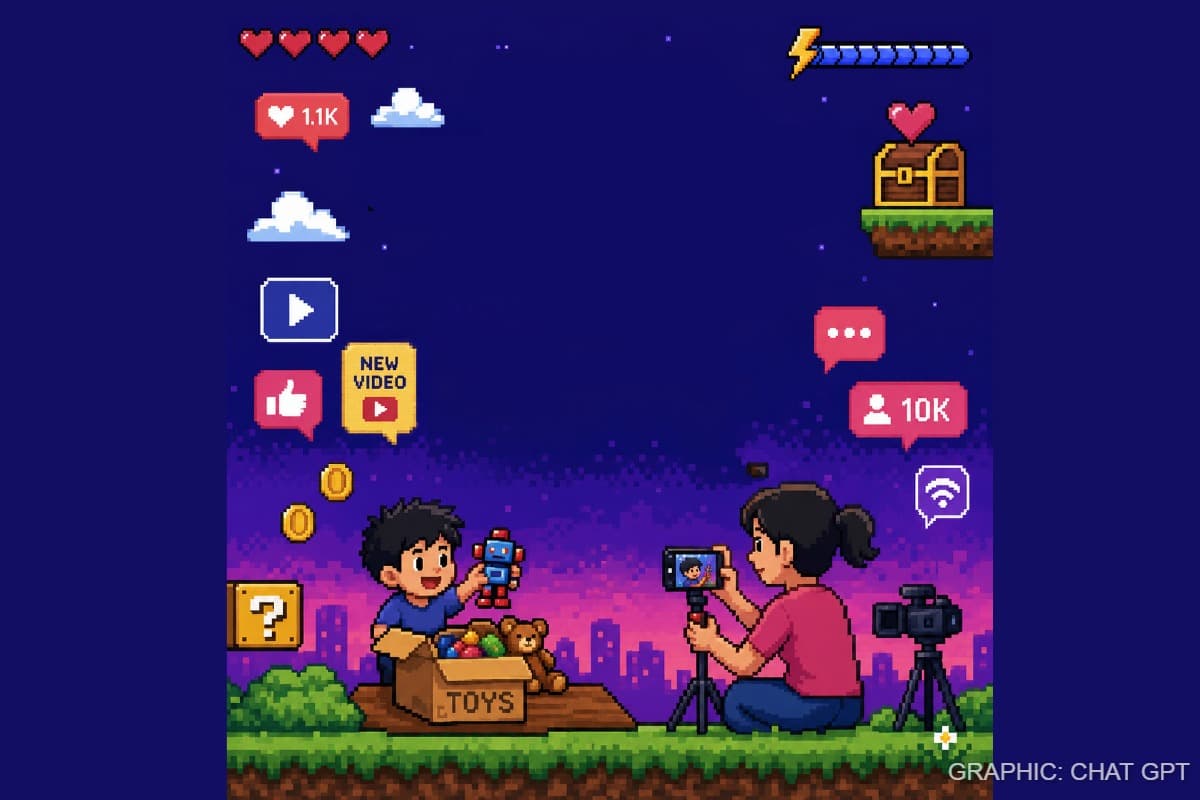
To a child, such activities may seem like just spending time with a parent, playing or pursuing an interest. But when brands pay for content and a child becomes part of a commercial product, the distinction between play and work is less clear-cut.
This has sparked debate over when a child’s participation in monetised content crosses from play and creative expression into digital child labour*, and what protection should apply as kidfluencers become part of the wider creator economy.
“Kidfluencer*” is the industry term for children who build online audiences through content creation, often involving paid partnerships and brand endorsements. While there are no reliable statistics on the size of the industry, which is one of the fastest-growing segments of the creator economy, it is estimated to be worth more than US$100 billion (RM408 billion) a year globally.
A 2023 research paper led by the Harvard TH Chan School of Public Health, titled “Social media platforms generate billions of dollars in revenue from US youth”, estimated that six social media platforms collectively generated nearly US$11 billion in advertising revenue from US users under 18 in 2022.
The study found that YouTube had the largest US audience under 18 in 2022, with 49.7 million users, followed by TikTok with 18.9 million, Snapchat with 18 million and Instagram with 16.7 million.
YouTube generated the most advertising revenue from users aged 12 and under with US$959 million, while Instagram led among those aged 13 to 17 with US$4 billion, followed by TikTok with US$2 billion and YouTube with US$1.2 billion.
Child digital labour has also come under the radar of the United Nations Children’s Fund (Unicef). In February, the UN body published the “New Frontiers in Child Labour: Why Digital Risks Demand Urgent Attention” report, urging governments and regulators around to world to look into hidden forms of child labour in the digital space.
In Malaysia, existing legislation covering child labour was written for more conventional forms of employment and does not expressly address children appearing regularly in monetised social media content, particularly when the accounts and income are controlled by their parents.
The National Child Policy and Action Plan (2026-2030), launched last November by the Ministry of Women, Family and Community Development, sets out measures to address child labour, exploitation, internet safety and digital harms. However, it does not clearly establish who is responsible when a child’s online activity becomes commercial labour, leaving questions over working conditions, earnings, parental responsibility and platform accountability unanswered.
This is particularly relevant to emerging forms of child digital labour, such as monetised content creation and influencer activity, where the boundaries between participation, entertainment and work are becoming less clearly defined.
Parents do not necessarily view the creation of content with their children as labour. What viewers see are children cooking, unboxing toys, reviewing products or participating in activities they enjoy.

When does content become work?
From a legal perspective, a child appearing incidentally in an ordinary, non-commercial family post would not normally be considered employment, says Richard Wong Chun Kiat, co-founder and principal partner at Wong Partnership Advocates and Solicitors.
The situation changes when the child participates for gain, particularly when the content generates income through advertising, sponsorships, affiliate links, subscriptions, gifts or platform revenue.
Factors that could indicate employment include the child having to follow a schedule, script or brand brief; undergo repeated takes or rehearsals; prepare costumes or make-up; or follow directions from a parent or brand about when and how to participate.
They also include cases where the child’s image or personality is the primary reason audiences watch the content, or where their participation is required to fulfil a contractual deliverable, says Wong.

“Not every form of lawful child work is ‘child labour’ in the harmful sense. It becomes legally or socially problematic child labour when it is below the permitted minimum age, unlicensed, hazardous, excessive, coercive, harmful to the child’s health or morals, or interferes with education, rest and development,” he adds.
The International Labour Organization similarly distinguishes child labour from work undertaken by children that does not affect their health and development or interfere with schooling. This can include helping in a family business or earning pocket money outside of school hours.
In Malaysia, the Children and Young Persons (Employment) Act 1966 prohibits children and young persons from hazardous work or employment, with limited exceptions including light work in a family business, approved public entertainment, government-sponsored training or educational programmes, and approved apprenticeships.
But the law predates social media and the creator economy, raising questions over how those protections should apply when a child regularly produces commercial content from home.

Mediha Mahmood, CEO of the Communications and Multimedia Content Forum of Malaysia (Content Forum), says self-regulation will therefore have to work alongside legislation as the industry develops.
“This is because legislation often takes time to develop and adapt, while the influencer and social media landscape continues to move at an incredibly fast pace,” she adds.
Such measures could include ensuring content creation does not interfere with a child’s schooling, rest or personal development; setting limits on filming hours and frequency; and protecting children’s privacy by avoiding the disclosure of personal information, locations or sensitive moments.
Content Forum is developing guidelines for influencers, with a significant portion of the guidelines applying to kidfluencers.
“What we are trying to do is, we want to fill in that gap while regulations and the laws are catching up. We want the industry to have a working standard now rather than waiting months or years for legislation to define every single scenario. The law gives us the floor, but self-regulation is how we want to raise the bar above the floor and we want to do it fast,” says Mediha.
Content Forum, which oversees and promotes self-regulation of content over electronic networked media, has also been working on guidelines for influencers and branded content covering commercial transparency, consumer protection, ethical conduct and social responsibility.
Another initiative, Trusted Creator, aims to recognise influencers who meet established content and ethical standards, helping advertisers, brands and the public identify responsible creators.

Protecting a child’s earnings
Working conditions are only one part of the problem. Kidfluencers can also be financially vulnerable because the adults managing their accounts often control the money generated by their content.
Children under 13 cannot independently operate accounts on most major social media platforms and, in most countries, they cannot open bank accounts without a parent or guardian.
Some countries have started responding to this problem. In August 2023, Illinois became the first US state to require adults using a minor’s likeness in paid online content to set aside a portion of the earnings in a trust account.
Malaysia has no requirement mandating that a fixed portion of a kidfluencer’s income be placed in a protected account.
“The 1966 Act was drafted for conventional employment and performances. It does not expressly address a parent-operated account where no formal employment contract exists, or how advertising revenue is paid to a parent and the child’s share of mixed family-channel income,” Wong says.
He argues that a framework should take into account fees paid directly for a child’s performance, as well as a proportionate share of platform advertising and subscription revenue, affiliate income attributable to the child, licensing and merchandise using the child’s identity, and substantial non-cash benefits.
The money should be held in a protected account for the child, with withdrawals allowed only for documented expenses genuinely benefiting the child.
“Parents should provide statements to maintain proper record keeping, maintain a ledger and be subject to audit. Ordinary household expenses should not automatically be charged against the child’s earnings,” Wong says.
There is precedent for protecting the income of children working in entertainment.
California introduced what became known as the Coogan Law in 1939 after child actor Jackie Coogan discovered that the fortune he earned as a child had been spent by his mother and stepfather. The law now requires 15% of a child entertainer’s earnings to be placed in a trust.
Wong says a framework for kidfluencers could include welfare assessments, evidence of the child’s assent, records of schooling and working hours, protected earnings accounts and a process allowing children to stop participating in commercial content.
The rules, however, would need to distinguish between occasional participation and sustained commercial activity. An occasional appearance in a family video should not face the same regulatory burden as a child effectively producing commercial content every week.
A loophole to address
Malaysia’s new online safety requirements add another dimension to the issue.
Since June 1, the Child Protection Code under the Online Safety Act 2025 has barred children under 16 from registering or maintaining accounts on major social media platforms.
Wong says implementation of the age restriction is progressive rather than an immediate deletion of every existing account belonging to someone under 16. Relevant licensed platforms are required to restrict account registration to users aged 16 and above, and use approved age-verification processes.
But restricting account ownership does not necessarily address the commercial use of children in social media content. A child may not own an account but could still appear regularly in monetised videos posted through a parent, guardian, brand or family business account.
“Hence, enforcement remains fragmented unless the law expressly regulates monetised content ‘substantially featuring a child’, regardless of who owns the account.”
For Sarah, greater awareness of her children’s digital footprint has made her more mindful about the long-term consequences of sharing their lives online. She continues to see content creation as something her family enjoys together, but believes the growth of social media has created risks that individual parents cannot always manage themselves.
“I fully support regulations aimed at protecting children’s mental health, safety and well-being online. The digital landscape moves fast, and safeguards are definitely necessary. As a creator, we are primarily a parent-managed account where the audience consists of parents, caregivers and home cooks, not children scrolling independently,” stresses Sarah.
Save by subscribing to us for your print and/or digital copy.
P/S: The Edge is also available on Apple's App Store and Android's Google Play.