

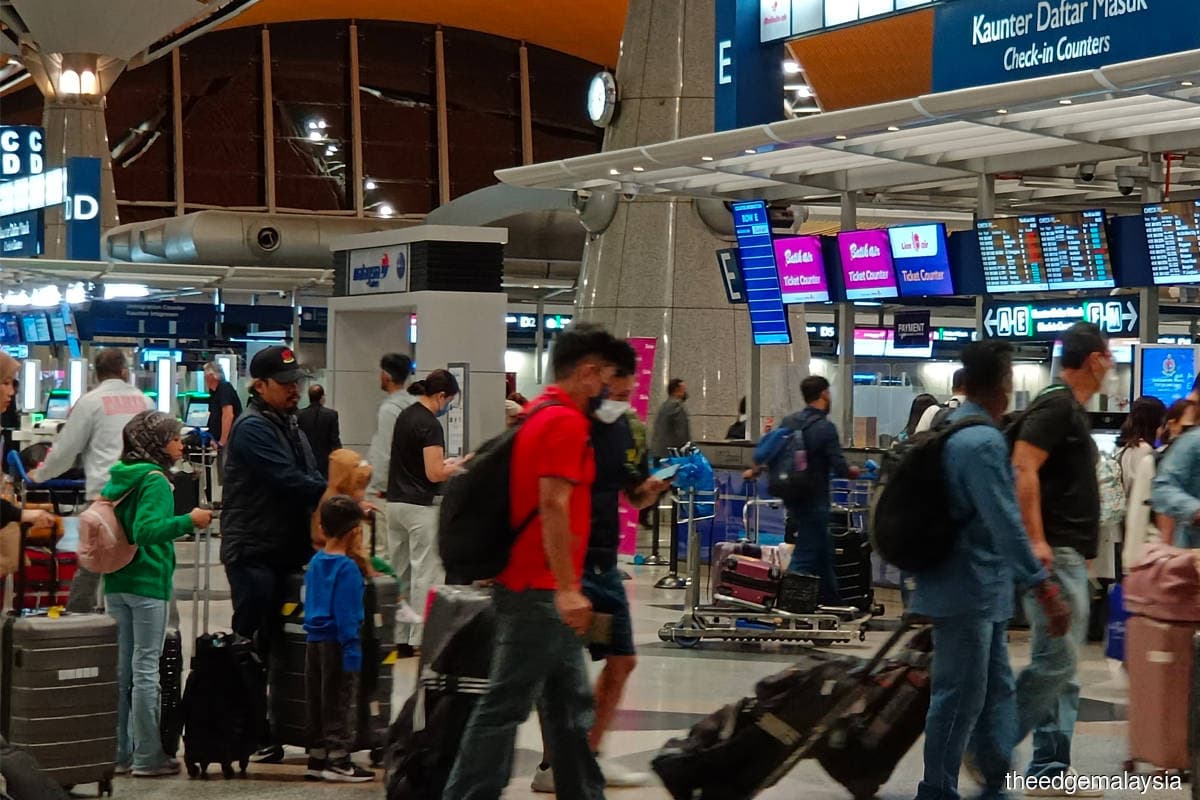
(Aug 7): When a Malaysia Airlines pilot was arrested in Jakarta on July 28 with 25kg of ecstasy in his luggage — and reportedly tested positive for methamphetamine, MDMA and cocaine after landing — the case was quickly framed as an airport security failure. It is that. It is also something the public discussion has largely missed: a policy failure that Malaysia has already solved once before, in a different industry, and has yet to translate to aviation.
The government's response has moved in the right direction. The Civil Aviation Authority of Malaysia (CAAM) has opened a regulatory review of airport screening compliance. Malaysia Airlines is running an internal investigation. On Aug 5, the Minister of Communications, speaking as government spokesperson, directed the Malaysia Aviation Group (MAG) to review its background-check standard operating procedures (SOP) for aviation personnel. All of this is necessary. None of it, on its own, is sufficient.
The reason it is not sufficient sits in one detail from the pilot's own reported admission: he had done this twice before, according to Indonesian investigators, including once with 7kg of methamphetamine. The failure being surfaced by his arrest is not that a single airline had a flawed SOP. It is that an individual with prior drug-running history was moving through the Malaysian aviation sector without triggering any sector-level signal. He was not moving through one operator. He was moving through an industry.
What is missing is a mandatory, harmonised employee screening standard for the aviation sector — the aviation equivalent of what Bank Negara Malaysia (BNM) did to the banking industry eight years ago.
In 2018, BNM issued its Employee Screening Policy Document. The mechanics are unglamorous but powerful. Financial institutions must conduct pre-employment screening for all new hires. They must request employment references from every current and former employer covering the past seven years. Prospective employees must sign a statutory declaration on past criminal convictions or ongoing criminal investigations. And, critically, an institution receiving a reference request from another institution is required to respond with defined information. Conduct records travel with people. An individual dismissed from one bank for cause cannot quietly resurface at the next.
Eight years on, the effect is visible across the sector. Screening is embedded in hiring workflow. The cost of a check is a small fraction of what a single conduct failure would cost the institution. And the public trusts Malaysian banks with their money to a degree that would have been unimaginable in a system where reference checks were optional and non-reciprocal.
Aviation now needs the same architecture. CAAM has the standing to build it without waiting for primary legislation, in the same way BNM did. A CAAM-issued policy document should require, at minimum, pre-employment screening covering identity, employment history, professional licences, criminal record and bankruptcy status — applicable to pilots, cabin crew, licensed engineers, ground handlers with airside access, cargo handlers and airport security personnel.
It should require a mandatory seven-year employment reference chain with reciprocity between aviation operators, so that a dismissal for cause at one carrier is visible to the next. It should require a statutory declaration at hiring and at every re-screening cycle. It should introduce a periodic re-screening obligation of no less than every 24 months for aircrew and airside-cleared staff, alongside a strengthened random drug-testing regime. And it should establish a CAAM-hosted adverse-conduct registry — the aviation-sector analogue of BNM's financial markets Association of Malaysia inquiry — with screening conducted by independently certified providers rather than by employer self-attestation.
None of this is a foreign import. It is a Malaysian precedent that Malaysian regulated industry has already adopted successfully. The BNM policy moved from exposure draft to effective date in roughly eight months. Aviation could reasonably move on a similar timeline.
The deeper point is that aviation is not the only sector where this gap exists. Ports and freight, e-hailing and last-mile delivery, caregiving, tenant-facing property roles, private healthcare — all operate under significant trust exposure without a harmonised, mandatory screening baseline. A properly designed aviation standard would function as a template that other regulators can adapt to their sectors. It would also send a signal that Malaysia is willing to hold its regulated industries to standards commensurate with the public trust placed in them.
The MAS pilot case will produce a set of SOP tweaks at MAG and at Malaysia Airports Holdings Bhd. That is the visible response. The invisible response — and the one that actually reduces the probability of a repeat — is a sector-wide screening standard. The template has been sitting in Bank Negara's policy library since 2018. What is required now is the institutional will to lift it, adapt it, and apply it to the industries that most need it.
Mark Leow is the founder and managing director of Verity Intelligence, a Malaysian background screening and verification company established in 2010. Verity conducts employee screening for over a thousand companies in Malaysia for risk mitigation and due diligence.