

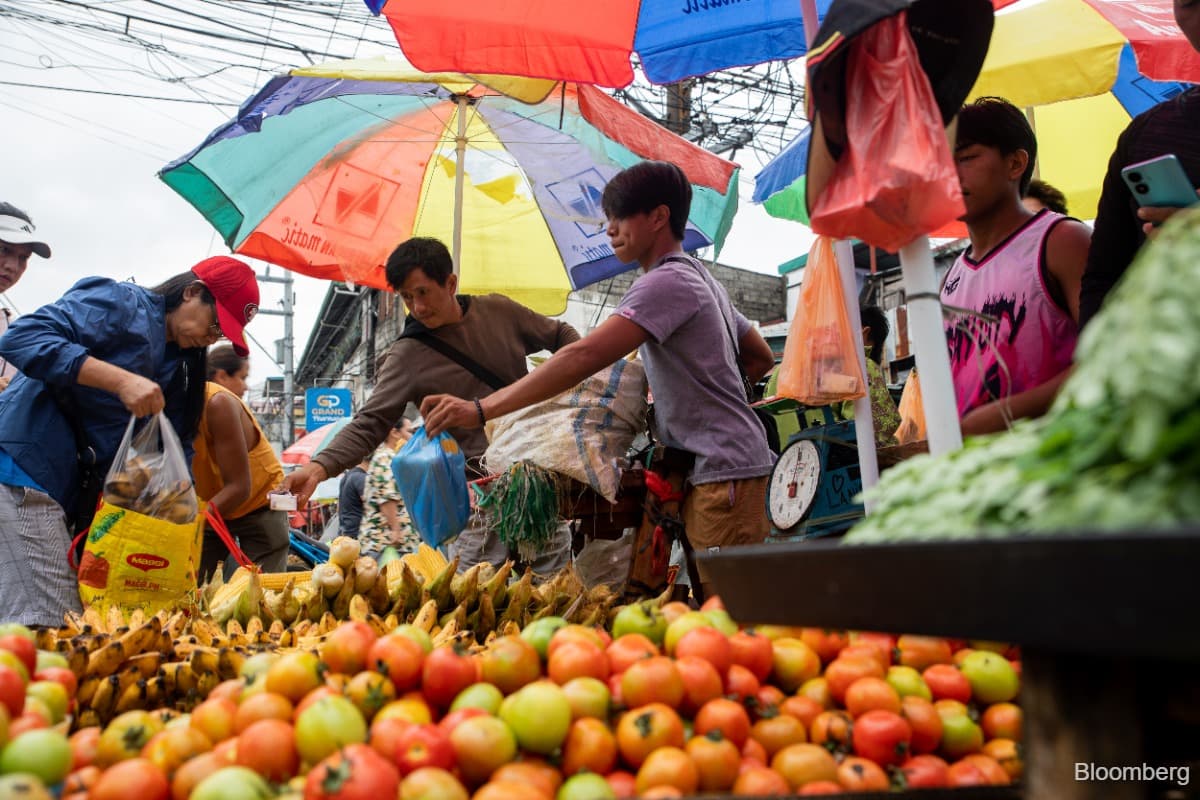
(Aug 5): The Philippine central bank said it’s ready for a policy rate move if needed, as inflation in July remained way above its tolerance range even after slowing for a third month.
The Bangko Sentral ng Pilipinas “is prepared to take further monetary action as needed to ensure that inflation returns close to the 3% target”, it said in a statement on the July price data. “The BSP will continue to monitor recent developments and their potential impact on inflation and growth.”
Consumer prices rose 6.2% from a year ago, the Philippine Statistics Authority said earlier in the day. That’s lower than the median estimate in a Bloomberg News survey, where economists expected inflation to remain at June’s 6.4% level.
The headline reading eased mainly due to slower inflation in transport, which factors in gasoline prices. Core inflation, meanwhile, decelerated for the first time in six months.

Governor Eli Remolona has signalled the need for further monetary tightening to rein in price gains, with the next policy meeting scheduled for Aug 27.
“We maintain our expectation for the BSP to carry out measured rate increases,” Metropolitan Bank & Trust Co said. “The downward trajectory suggests that BSP was correct in holding off on overzealous aggressive rate tightening.”
The central bank may, however, stand pat if second-quarter gross domestic product data due Friday will show further weakening, according to Alvin Arogo, head of research and economist at Philippine National Bank.
The peso led gains in emerging Asian currencies on Wednesday, closing 0.7% stronger to 60.75 against the dollar. Stocks ended the day slightly lower.
The Philippines has had among the fastest inflation and among the slowest growths in Southeast Asia this year. The BSP has raised its key interest rate by 50 basis points this year to rein in inflation.
Economists expect growth to be just marginally higher in the second quarter after sliding to 2.8% in the first three months of 2026, leaving the country a laggard within the region.
Philippine prices are still rising at around twice the pace of any other major country in Southeast Asia due to the country’s dependence on Middle East oil, which has spiked in price due to the protracted Iran war. Weakness in the peso, which fell to a record low of 61.85 to the dollar last month, is also increasing the cost of imports.
Rice prices rose 17.1% in July from a year earlier following declines in 2025, underlining the cost-of-living pressures afflicting the country of around 113 million people.
Uploaded by Arion Yeow