

KUALA LUMPUR (Aug 5): Banking sector earnings are expected to grow a decent 3% in 2026 and 6% in 2027, according to UOB Kay Hian Research.
“Earnings resilience will be underpinned by modest loan growth, stable credit costs and relatively stable NIM (net interest margin) with banks’ asset liability management helping to offset some of the headwinds from yield pressure,” the research house said in a note on Monday.
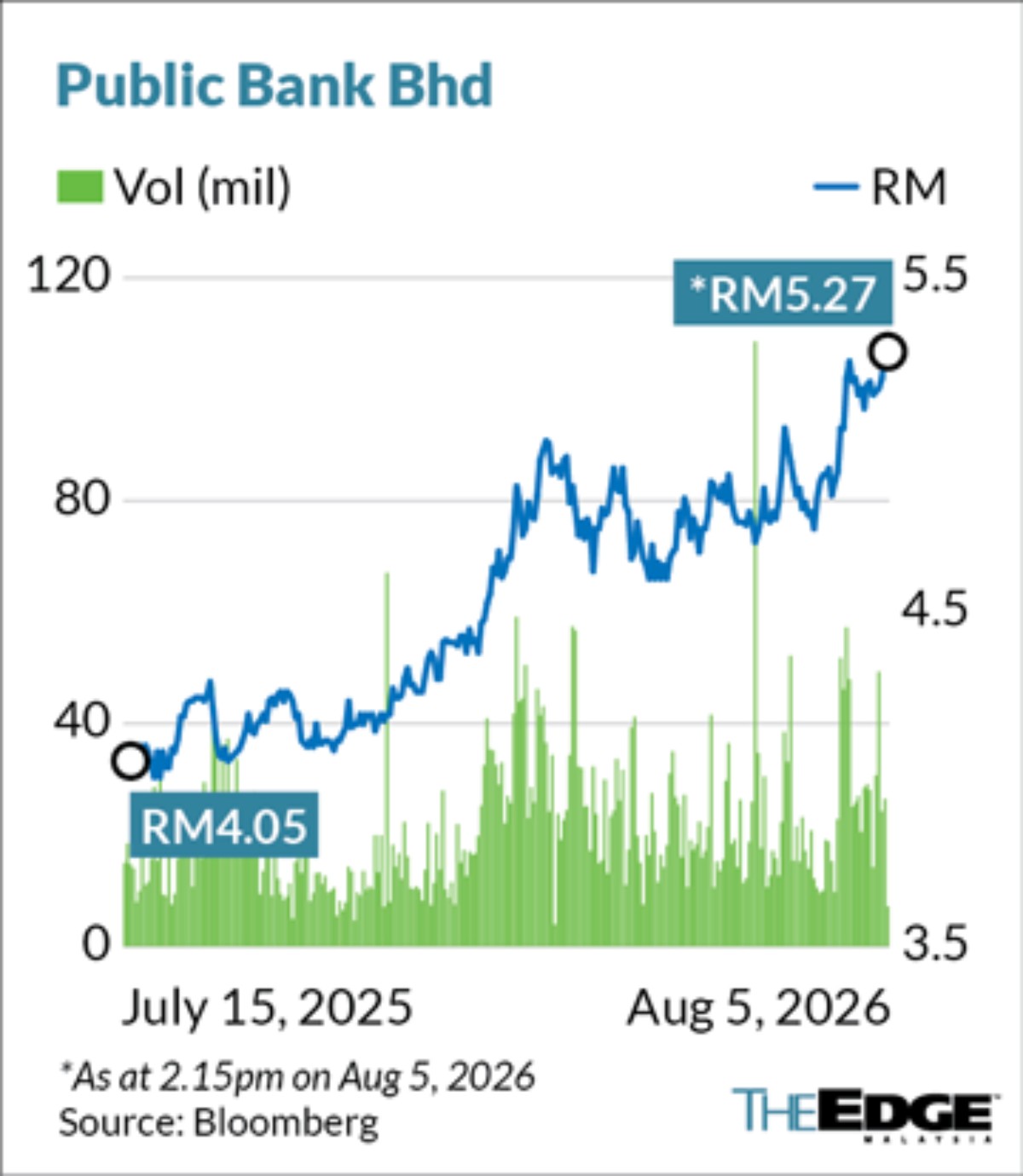
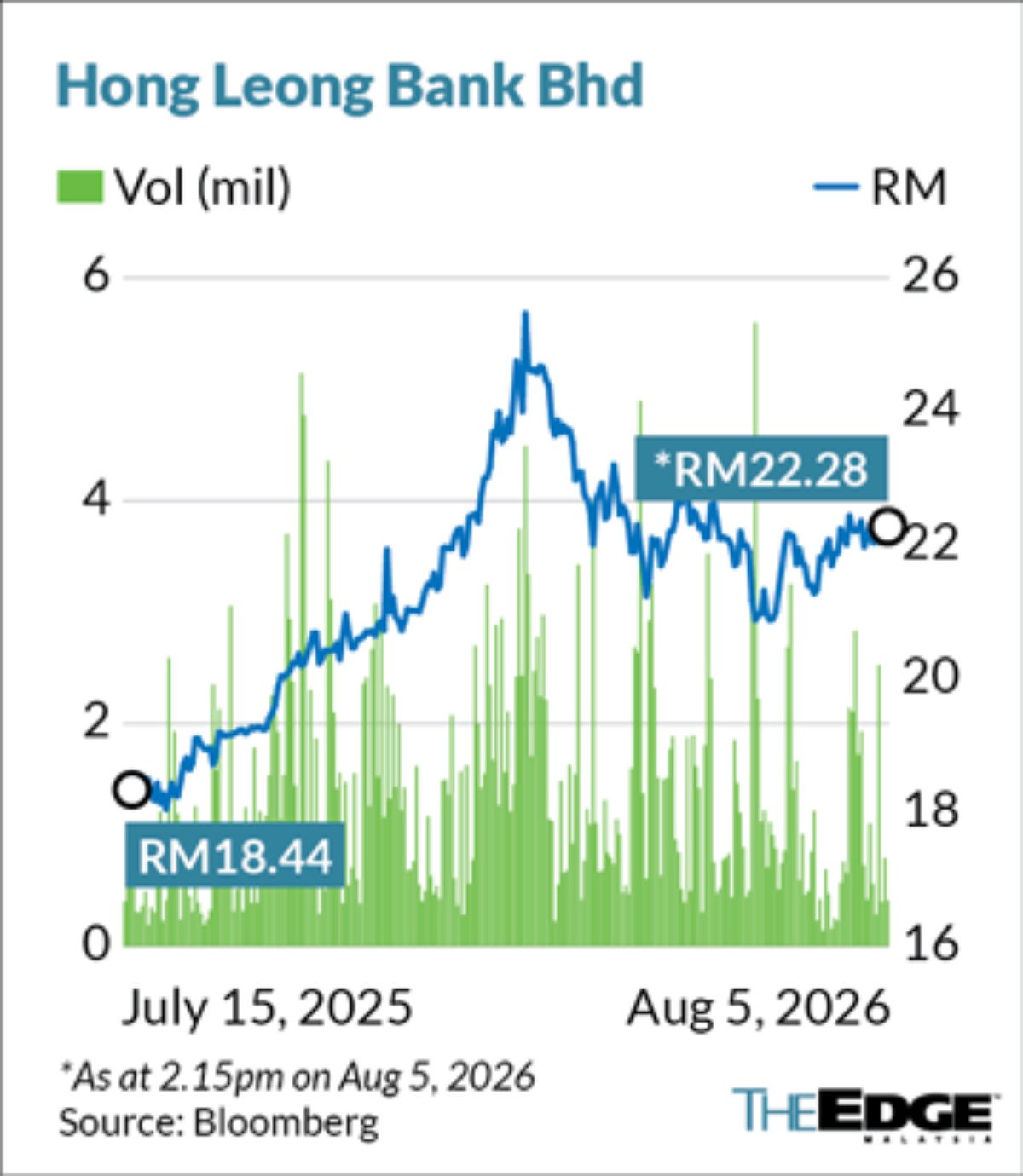
UOB favours Public Bank Bhd (KL:PBBANK) and Hong Leong Bank Bhd (KL:HLBANK) for their defensive earnings profiles and near-term capital management upside following the adoption of Basel III reforms on June 26.
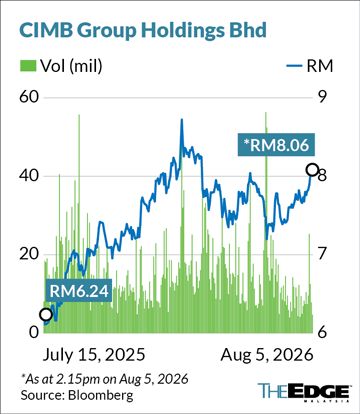
Meanwhile, UOB views CIMB Group Holdings Bhd (KL:CIMB) as a high-beta and liquid laggard that is likely to recover the fastest once geopolitical tensions ease. The group also offers one of the sector’s highest dividend yields, at approximately 6.6%.
The house reported that loan growth moderated slightly, easing to 5.5% year-on-year (y-o-y) on June 26, down from 5.6% in the previous month.
It attributed this moderation to the easing of business lending, from 6.4% in May to 6.1% in June, and household lending, from 5.2% to 5.0% within the same period.
Nonetheless, the research house still expects banks to grow loans as it maintains its loan growth forecast at 5.0%-5.5% for FY2026.
Loan applications rose 27.0% y-o-y in June while approvals increased 22.8% y-o-y, signalling an improved loan pipeline despite the aforementioned softening growth.
Further, asset quality among banks remains healthy as the overall gross impaired loan ratio stayed historically low, at 1.43%, which continues to provide a decent buffer against potential asset-quality deterioration.
Thanks to potentially attractive dividend yields of around 5.5% and a defensive earnings profile which is less exposed to tariff risks, the house remains constructive on the sector, expecting it to outperform the broader market. UOB also maintains its ‘overweight’ rating on the sector.
However, the house identified higher-than-expected asset quality deterioration from the sustained spike in oil prices on businesses as a potential risk to the rating.