

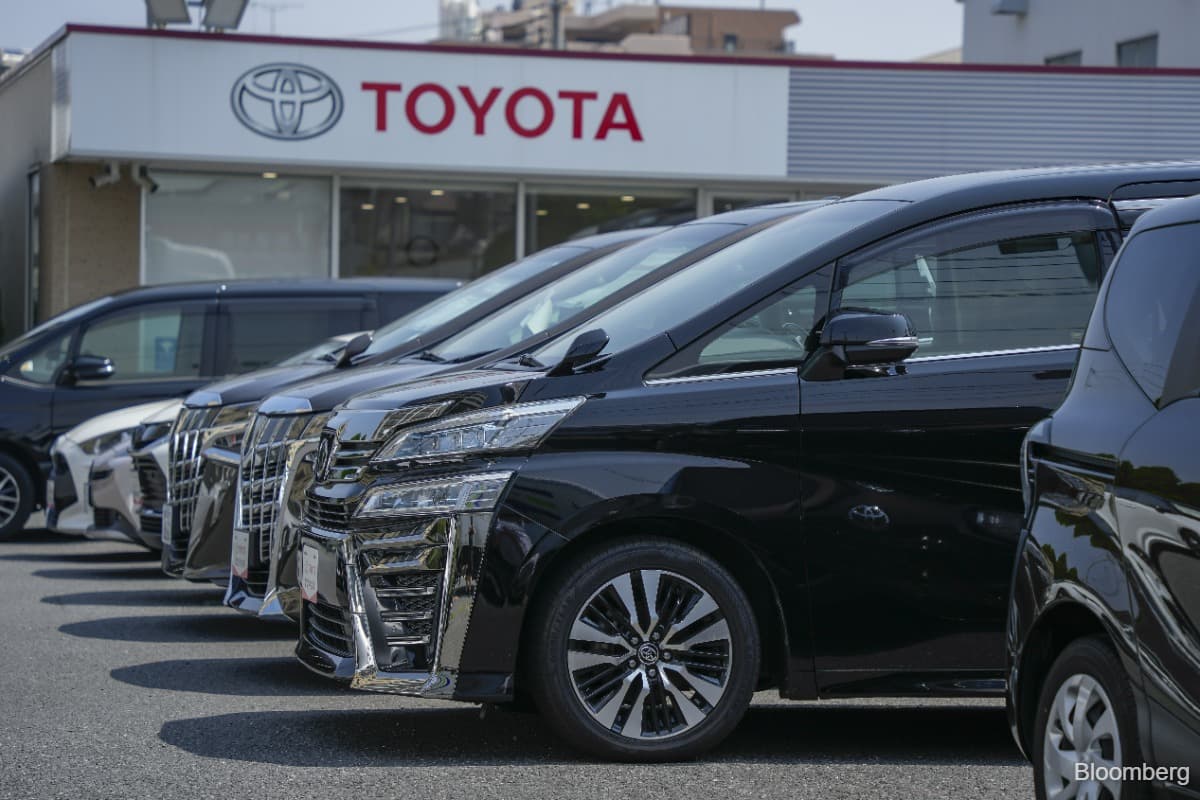
(Aug 4): Toyota Motor Corp unveiled a ¥1 trillion (US$6.3 billion or RM26 billion) buyback and lifted its profit outlook as resilient hybrid demand and a weak yen helped make up for rising costs, tariffs and supply disruptions.
The world’s largest carmaker raised its operating profit outlook by more than 10% to ¥3.4 trillion for the fiscal year through March. Analysts are projecting, on average, profit of ¥3.9 trillion. Toyota’s stock recouped earlier losses but remained down 1.4% in afternoon trading in Tokyo.
Toyota has benefited from the enduring popularity in the US of gas-electric hybrids, a technology it helped pioneer. This, along with the weak yen during the first half, helped provide a buffer from soaring raw material costs and supply chain disruptions triggered by the war in Iran, which has upended many of the region’s key shipping routes.
“The share buyback represents a clear case of Toyota delivering on its commitments,” said Bloomberg Intelligence senior auto analyst Tatsuo Yoshida.
Toyota said it plans to purchase as many as 500 million shares, or 4.2% of outstanding stock excluding treasury shares, as it seeks to improve capital efficiency. The buyback will be done through August 2027, the company said, adding that it plans to cancel 200 million treasury shares, or 1.4% of issued stock, once the buyback is completed.
The sales forecast was raised to ¥54 trillion from ¥51 trillion. The upward revision “reflects changes in the external environment, including foreign exchange assumptions”, chief accounting officer Takanori Azuma told reporters, adding that sales declined due to the impact of the Middle East conflict.
Foreign exchange remains one of the biggest variables for Toyota, which generates much of its revenue overseas while retaining a large manufacturing base in Japan. Toyota’s foreign exchange outlook puts the yen at 160 to the dollar, although the yen’s rebound beyond that level over the past week after coordinated intervention by Japan and the US could impact the outlook, if the reversal is sustained.
Even so, the yen’s slide to a 40-year low earlier this year has been a blessing for Japan’s biggest exporters. Toyota and other domestic carmakers are set to reap the benefits of a temporary but much-needed respite from US tariffs, higher raw material prices and supply chain snags.
Profit for the quarter through end-June was ¥1.1 trillion, marking five straight quarters of year-on-year declines. Sales for the period were ¥13.5 trillion.
Toyota’s largest suppliers are struggling with ballooning costs and logistical problems as well as shortages of aluminium, resins and other basic supplies. With little visibility on when the turmoil in Iran will subside, it’s hard to predict how long it will impact production.
“Supply-demand gaps have emerged for several popular models, and closing them quickly will be important to securing sustainable growth,” Azuma said.
The carmaker’s global sales fell in June — the fifth month in a row — as regional conflicts and intense competition squeeze legacy brands fighting to adapt to the industry’s rapid shift toward software-driven, battery-powered cars.
Chairman Akio Toyoda has pursued what Toyota calls a multipathway strategy, rather than betting exclusively on battery-powered cars. Toyota’s hybrid-heavy lineup has given it an advantage as consumers baulk at the price and charging requirements of fully electric vehicles. Hybrid sales are on track to exceed five million units for the first time in the 2026 calendar year, Azuma said.
China remains a weak spot, with Toyota and its Japanese peers struggling to keep pace with BYD Co and other domestic manufacturers that are introducing cheaper, increasingly sophisticated electric and plug-in hybrid vehicles. The pressure in China is forcing Toyota to lean more heavily on local engineers and suppliers, while accelerating the development of models tailored to the world’s largest auto market.
Uploaded by Chng Shear Lane