

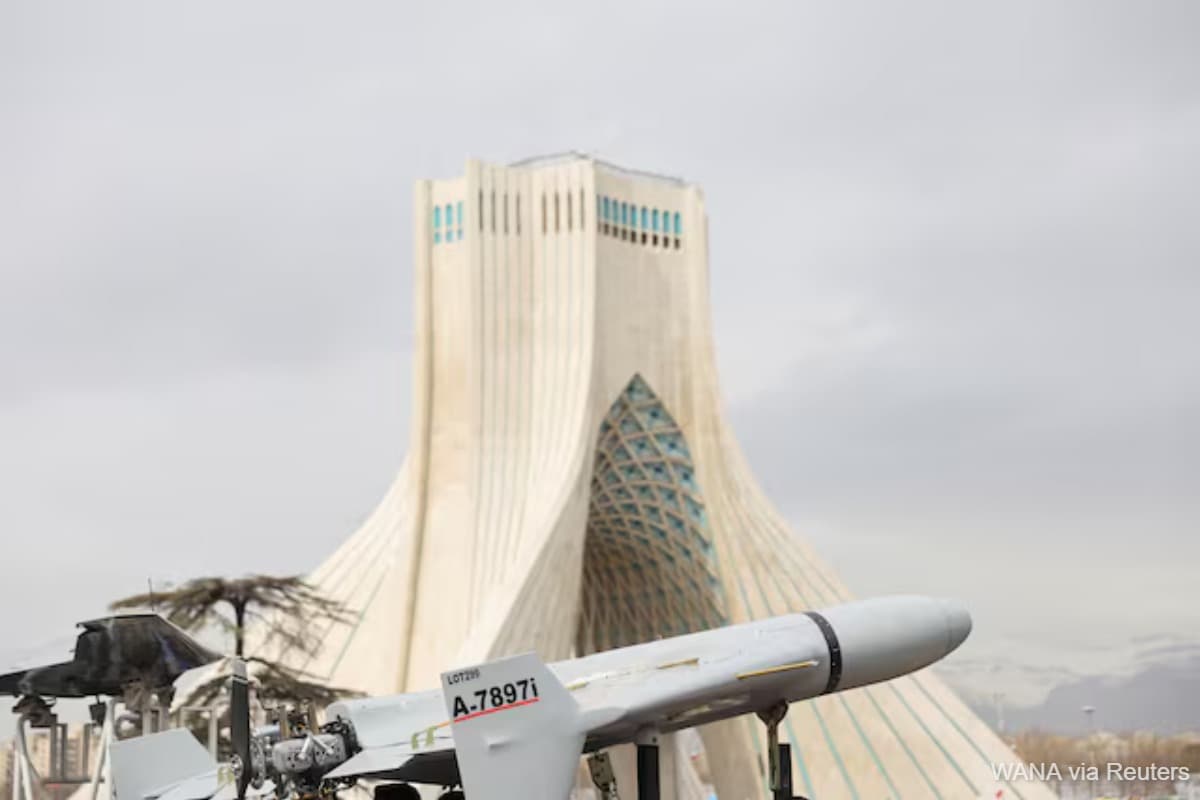
The Kuwaiti military warned residents on Saturday that any explosions they heard were the result of air defence systems engaging the Iranian drones.
The attacks came hours after the Wall Street Journal reported Friday, citing unnamed US officials, that Trump had ordered the military to carry out a new attack on Iran as soon as this weekend to convince Tehran to surrender.
Earlier on Friday, Trump cast doubt on continued negotiations with Iran, repeating threats to retaliate forcibly after an attack on a US base in Jordan.
“We’ll be hitting them very hard,” the president said during a Cabinet meeting. “And at some point they’ll say we just can’t take it anymore.”
CBS reported separately that the US is considering striking energy infrastructure, including oil refineries and power plants, which would mark a major escalation in the military campaign. Deliberate bombing of civilian targets could be considered a war crime, according to advocacy groups.
The US and Iran had paused an exchange of strikes at the end of last week to give diplomacy a chance to end the war. That lull ended Tuesday night when Tehran carried out what Trump called a surprise attack, firing multiple ballistic missiles at an American military base in Jordan.
The US also continues to enforce a blockade against Iran, which is primarily aimed at preventing the Islamic Republic from exporting oil and products.
White House Press Secretary Karoline Leavitt did not directly address reports about an impending assault, but said in a statement that “Iran will continue to pay until they come to the table in, what President Trump deems, a meaningful way.”
The president has frequently threatened sweeping escalation only to shift his stance soon afterward. At the same time, the war has depleted US munitions, particularly air defence interceptors crucial to stopping attacks on bases.
Energy prices have climbed since the latest round of hostilities began this week.
The war, which began on Feb 28 with massive US and Israeli airstrikes, has reverberated well beyond the battlefield. Iran effectively sealed off the Strait of Hormuz, a key shipping lane for oil, natural gas and fertiliser exports. Although its military was no match for US forces, Tehran’s drone and missile attacks on Persian Gulf neighbours disrupted business and daily life across the region.
Just this week, Egypt was drawn into the fray when two ships carrying liquefied natural gas were struck by drones at the port of Damietta.
Overnight, a vessel was hit in the Strait of Hormuz off the Omani coast, while a nearby tanker reported a near miss, according to the UK Maritime Trade Operations, which said no environmental impact had been reported.
Mohammad Bagher Zolghadr, secretary of Iran’s Supreme National Security Council, warned on Saturday that a continued US naval blockade and escalation would not only tighten the lock on the Strait of Hormuz but also close other strategic chokepoints.
Oil prices have shot up with each round of clashes, and Americans who were already frustrated about the cost of food, housing and other items now pay significantly more for gasoline. With control of Congress at stake in November’s midterm elections, polls show that voters by a wide margin disapprove of Trump’s management of the war — and the economy.
Uploaded by Liza Shireen Koshy