

This article first appeared in City & Country, The Edge Malaysia Weekly on August 3, 2026 - August 9, 2026

A shopping mall does not hold its relevance by standing still. Equipment breaks or ages, systems fall behind and therein lies the risk of missing ever evolving customer expectations. Twenty years since its opening on Dec 1, 2006, Queensbay Mall has stayed ahead of the competition.
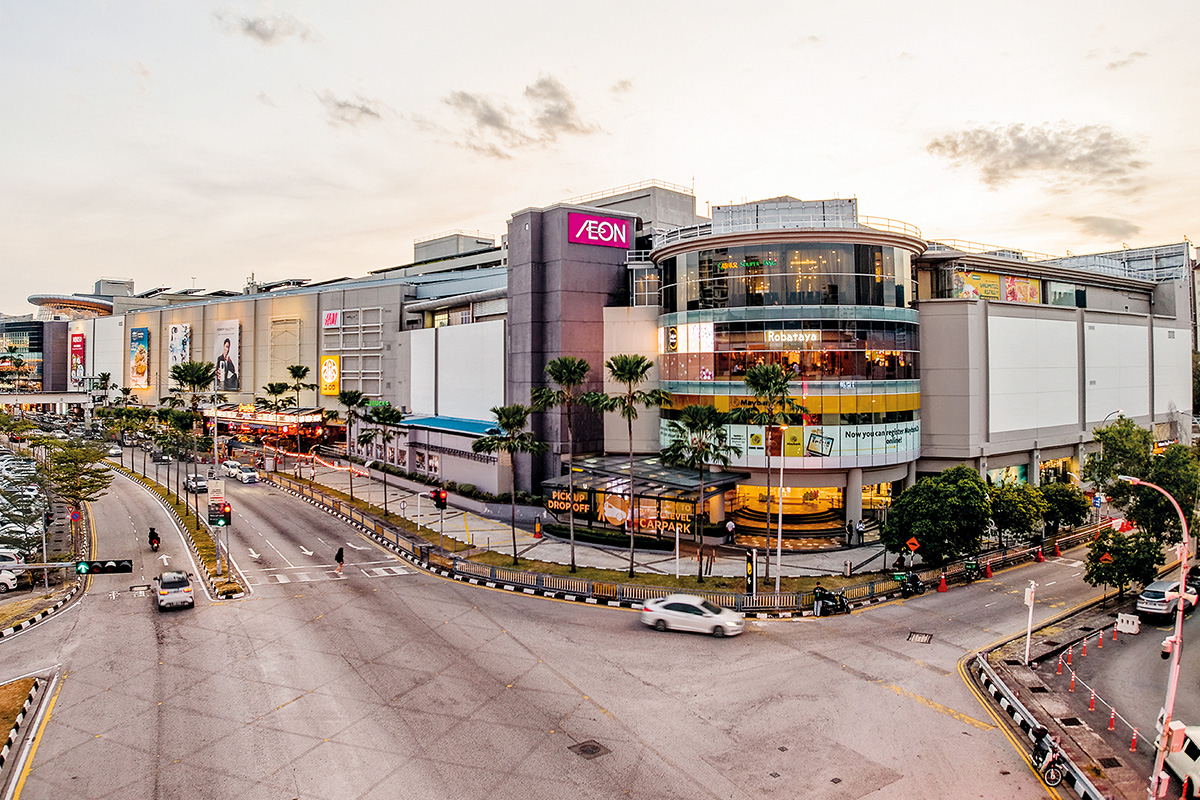
It remains one of Penang’s main shopping destinations. The mall in Bayan Lepas faces the southeastern shorefront of Penang island in the heart of the high-tech Free Industrial Zone, which is a short drive from George Town and the Penang International Airport.
As one of the largest malls in the state, it spans nine storeys with five floors of retail space and a net lettable area (NLA) of more than one million sq ft with 592 strata units. Its occupancy rate is 99.9% as at December 2025.
To Penangites, Queensbay Mall is the quintessential family mall. Its mid- to mid-upper offerings span every major retail category, with anchors such as AEON, Harvey Norman and Golden Screen Cinemas. It also has 400 local and international tenants with food and beverage (F&B) accounting for 23% of the mix.
To the management corporation (MC), managing the mature asset has been a continuous balancing act — addressing the structural needs of the building while constantly upgrading the shopper experience. The mall is managed by PPC International (Penang) Sdn Bhd.

For Queensbay Mall Management Corp senior manager of operations David Raj S Kolandesamy, it is a perpetual challenge in execution.
“The primary complexity lies in ensuring that the ageing infrastructure keeps pace with evolving retail standards without causing disruption to long-term business operations. Managing a mature asset requires maintaining a delicate balance between property continuity and continuous modernisation,” he says.
Over the years, the combination of its age and sea-facing location has accelerated façade decay, posing distinct structural challenges for the MC alongside the need to maintain its retail relevancy.
Queensbay Mall is a third-time winner of The Edge Malaysia Best Managed & Sustainable Property Awards, having clinched Silver in the strata commercial category in 2017 and 2018. This year, it took home Silver for the 10 Years and Above — Retail category.

Upgrades and relevancy
The challenges faced by the MC are only increased by the mall’s age. As such, many of the mall’s lifecycle upgrades have taken place, to which the MC notes has improved operational functionality to date.
Water seepage had also caused ageing plaster ceilings in common areas to sag. For safety, replacement works were carried out in stages and the Singapore Green Building Council 4-Tick certified environmentally-friendly materials, specified to BCA Green Mark standards, were utilised.
Upgrades to the external wall plastering for façade strengthening were also completed in September 2025.
Furthermore, a wastewater network that had deteriorated was upgraded, replacing old cast-iron pipes with polypropylene random copolymer material after holes were found forming in the original material. The switch effectively eliminated the risk of leaks, blockages and health hazards for tenants and maintenance staff.
The reporting of such upgrades has been tightened alongside it, with the mall integrating a building management system (BMS) software. A move towards operational transparency and streamlining communication, the software collates all reporting channels, updates and work deployments through an online channel.
The MC has already seen tangible impact, noting better coordination especially during peak hours, faster response times, reduced paperwork and an increased accountability given the timestamping.
Indoor air quality (IAQ) assessments for the mall have also been carried out since 2025. The MC appointed a NIOSH (National Institute for Occupational Safety and Health)-trained and certified IAQ manager to oversee several scheduled preventative maintenance checks and IAQ assessments conducted by certified third-party consultants.
This oversight observes moisture and leak management closely, the same with exhaust system upkeep in the mall’s F&B kitchens, toilets and loading bay areas. Air purging for local exhaust is also scheduled monthly, with the mall basing its fresh air intake optimisation on ASHRAE (American Society of Heating, Refrigerating and Air-Conditioning Engineers) standards.


Beyond life-cycle items, future-proofing the mature asset against rising environmental, social and governance (ESG) expectations, business continuity risks and governance transparency is a top priority.
Five chillers have been replaced since 2019, taking plant room efficiency from 0.78 kW/RT to 0.65 kW/RT. In 2023, LED downlights and AHU cooling coils were upgraded, followed by three cooling tower upgrades in 2024 — a move that resolved long-standing air conditioning system short-circuit issues and lowered condenser water temperature from 30°C to 28°C. As a result, the mall’s electricity consumption fell from 22.06 million kWh in 2019 to 18.13 million kWh in 2025, a reduction of 17.81%.
Upgrades were also implemented to the mall’s food court, named Queens Hall food court, which underwent major refurbishment works with air-conditioning upgrades, dishwasher installation, a redesigned handwash area, alongside enhanced wastewater piping.
In 2025, the mall’s water storage tank was upgraded and is now able to sustain up to 24 hours of uninterrupted water supply independently, reducing operational downtime. Additionally, upgrades to kitchen exhaust systems have improved hygiene and comfort, improving leasing opportunities and operations.
Thirteen sets of toilets were also overhauled, with plumbing and sanitary systems fully replaced and water-efficient fittings installed with the next phase scheduled for 2028.
Enhancements to the mall’s car park have also improved safety and wayfinding. These included repainting of the indoor car park for better visibility, adding new entrance canopies, redesigning directional signage and brightening lobby entrances.
These upgrades have also streamlined the visitor journey; cashless parking was introduced in 2019, followed by a ticketless system in 2024.
None of these initiatives are treated as a one-off, rather pointing to the logic that a structurally sound, well-functioning mall naturally creates a high-quality retail environment.
As David puts it, “Resource efficiency is integrated into daily operations through preventive maintenance, system monitoring, and strong coordination between engineering and operations teams. This approach ensures consistent mall performance while supporting a seamless and comfortable experience for both shoppers and tenants.”
Navigating strata structure
While strata malls are becoming less common due to the challenges of multiple ownership, Queensbay Mall proves that such a set-up is no barrier to frictionless management.
The mall’s retail space is sectioned into 592 strata parcels. While CapitaLand Malaysia Trust (CLMT) holds about 92% of them, the balance sits with individual parcel owners who source their own tenants. The MC’s position is that the mall cannot perform without these minority owners and that regular engagement is a necessity.

“Fair representation is managed through the established MC framework, which operates under statutory guidelines to ensure transparent governance and clear communication with all owners. Under this framework, collective decisions are structurally guided by the common interest of the property,” says David.
To maintain standards, the MC issues a set of by-laws and occupant guidelines that all tenants must comply with. While individual parcel owners source their own tenants, the tenant type must align with the mall’s zoning guidelines.
“While leasing and renewal terms are managed individually within the stratified property, data-driven insights are used to maintain a balanced and cohesive environment across the mall. We enable this through regular operational reviews, prudent utilities tracking and strategic vendor management,” says David.
“By analysing overall shopper footfall patterns and market trends, guidelines are established for general tenant mix zoning. When new tenancies are submitted for operational approval, these high-level guidelines are referenced to ensure new fit-outs complement shopper traffic flow and uphold property standards.”
On the financial front, accounts are kept separate, with the MC holding its own funds, sustained primarily by service charges and ensuring they neither overspend nor underspend on the building’s upkeep.
Since CLMT’s acquisition in 2023, Queensbay Mall has tracked a 20.4% growth in value in 2025. Collections stood at 97.1% over the past 12 months, with it being closely monitored by the MC’s Credit Control department and in close communication with tenants and parcel owners.
Managing the shopper experience
Fifteen million shoppers pass through the mall in a year. The way the MC sees it, whatever is essential to upholding the building is what holds on to them.
“The most impactful touchpoints are often the fundamentals, cleanliness, washrooms, wayfinding, parking convenience, accessibility and safety,” says David. “Through routine, these elements strongly influence shopper comfort, confidence and repeat visits, making them critical to sustaining overall experience and loyalty.”
Many of the recent enhancements focus on these details.
Luggage lockers sit near the entrances for travellers coming off the nearby airport road while interactive digital directories stand in every zone of every floor for self-service wayfinding. Wheelchairs and strollers are also kept ready by customer service assistants.
Given the mall’s large-scale operations, the team must adapt accordingly.

“Managing high footfall requires consistent execution across traffic flow, parking, cleanliness and safety. With shopper expectations evolving towards greater comfort and convenience, we continuously refine operations to deliver a seamless experience,” says David.
He adds that by leveraging data-driven marketing campaigns and maintaining operational standards, footfall and shopper engagement are consistently supported.
“Over the past five years, Queensbay Mall’s tenant mix has evolved alongside changing consumer preferences and retail trends, with stronger emphasis on lifestyle, experiential concepts and brands that enhance the overall destination appeal of the mall,” says David.
“Complementing this is an active year-round programme of marketing campaigns, events and shopper engagement initiatives that drive footfall and reinforce Queensbay Mall’s position as a preferred destination for both local residents and visitors.”
The mall’s scale also makes it Penang’s preferred venue for numerous community events, having hosted multiple brand launches, activations and fundraiser events, such as a Charity Green Parade with Penang Adventist Hospital and L’Occitane’s Race for Vision for the St Nicholas’ Home, Penang.
A World Diabetes Day campaign, also in partnership with Penang Adventist Hospital, entered the Malaysia Book of Records for conducting the highest number of glucose tests in a single day. Additionally, the mall serves as the annual venue for St John Ambulance Penang’s CPR-AED training.
Emergency readiness is proactively trained for rather than assumed. The on-site emergency response team consists of 50 management staff and term contractors, most of whom have over a decade of experience with the asset.
Looking ahead over the next five years, David envisions a continued focus on strengthening operational resilience, elevating the shopper experience and maintaining asset competitiveness.
“This will be achieved through ongoing system optimisation, ESG initiatives, selective technological enhancements and continuous tenant mix refinement — all underpinned by a disciplined approach to asset enhancement,” he says.
Save by subscribing to us for your print and/or digital copy.
P/S: The Edge is also available on Apple's App Store and Android's Google Play.