

This article first appeared in City & Country, The Edge Malaysia Weekly on August 3, 2026 - August 9, 2026

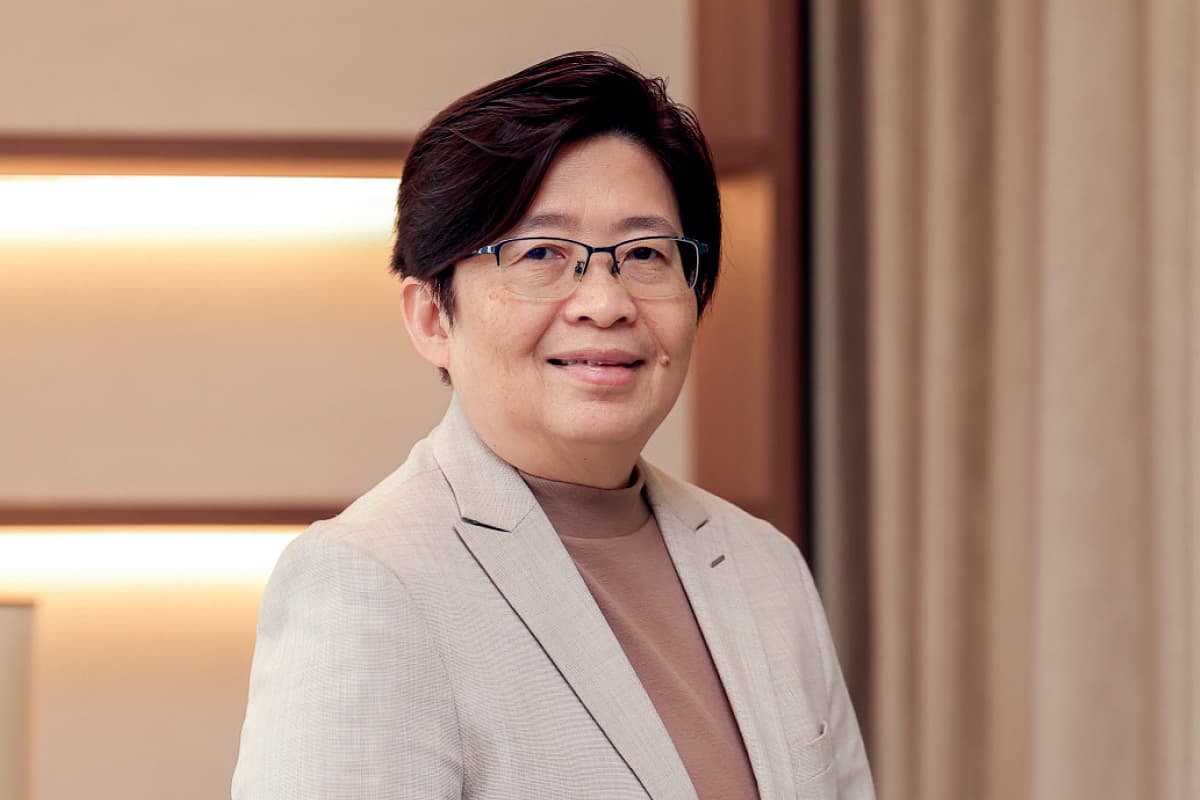
For Datuk Angie Ng Wai Sam, property management is not just the responsibility of the property managers or developers. Owners, particularly those who serve on a management corporation (MC) or joint management body (JMB), also have a role to play.
It is a responsibility Ng has taken seriously for some 30 years. Having served more than 15 terms as chairman of the JMB/MC of eight projects in Kuala Lumpur, she has addressed financial and management issues at some developments and worked with property managers to improve their operations.
Ng is currently the MC chairman of Pavilion Ceylon Hill, a 52-storey luxury residential project at Jalan Bukit Ceylon, Kuala Lumpur, with 629 serviced apartment units. She is also on the MC committee for the Pavilion Embassy mixed-use project at Jalan Ampang.
Her vast experience includes serving on the board of directors of Tourism Malaysia, as president of the Malaysia Inbound Chinese Association and as group chairman of EZT Group, which has business interests spanning property development, management and investment, as well as Malaysia My Second Home (MM2H) services. This has given her a broad perspective on the stewardship of properties and the interests of their owners.
Why does she devote so much time and effort to this? Her answer is simple.
“Trust is very important. People trust you, especially the investors I helped bring into Malaysia. My attitude is that I cannot see something wrong and just leave it. I cannot see a good building in your hands become badly managed,” says Ng.
It is this sense of responsibility that has shaped Ng’s involvement in MCs and earned her the Exemplary Contribution to Management Corporations award, under The Edge Malaysia Best Managed & Sustainable Property Awards 2026. She is also the recipient of the Editors’ Choice award.

Where it all began
Ng’s involvement in MCs was not part of a grand plan. In fact, it began because she felt she had little choice but to step in.
Her first serious encounter with an MC occurred about two decades ago at a high-end condominium in Kuala Lumpur, where she had invested in a unit and helped draw many foreign investors. The building’s management account was in deficit and she was unhappy with how the property was being managed.
“The location is so good and the building’s nice, but it was not well maintained and well managed. It wasn’t good for my investors and myself as a unit owner,” she recalls.
Many of the Chinese investors had purchased through her and trusted her to look after their interests in Malaysia.
To rectify the issues, Ng attended the annual general meeting with legal advisers, raised her concerns with the owners and eventually helped usher in a new committee.
“That was the first time I really changed the whole committee,” she says.
The turnaround took some time, but Ng says the management account returned to profitability within the first three years. Today, she adds, the property has accumulated about RM14 million in fixed deposits. Its financial position has enabled the MC to offer maintenance fee rebates to owners on several occasions, and the monthly maintenance rate has been reduced from 50 sen to 45 sen psf.
The experience set the tone for Ng’s subsequent involvement in other MCs, including properties facing financial and operational challenges.

Managing with discipline and focus
Ng approaches an MC in much the same way she would a company. The funds belong to the owners, she stresses, and the committee’s decisions can have long-term implications for the property.
“An MC is a big project. We are managing public funds. It must be professional,” she says.
In cases where the project is facing financial challenges, her first priority is usually cost control, followed by assembling a committee with the right expertise.
“You need people who know accounting. You need engineers. You need people with professional backgrounds,” says Ng, adding that finding the right people can be difficult as many have their own careers and businesses, but it is crucial for the smooth management of the property.
At meetings, she prefers discussions to be focused. “I keep the meetings straight to the point,” she says. Ng adds that her firm handling of such issues is not about imposing her views but ensuring decisions are made efficiently.
She takes the same approach in managing the property managers. MCs, she says, must work closely with their appointed property managers and be sufficiently informed to be able to question and make recommendations when necessary.
“For a high-end project, you need a professional team to manage it. You cannot simply choose a property manager because it is cheap,” says Ng.
The details matter
Ng’s attention is not confined to the balance sheet. Security is also among her priorities, followed by cleanliness and the technical team’s competence.
“We don’t compromise on safety. When the building has good security, owners have confidence,” she says. This, she adds, is because security personnel are often among the first people residents and visitors encounter, and should therefore reflect the development’s image.
To Ng, the condition of carpets, the appearance of a lobby and quality of service all influence how a property is perceived. A well-designed development can quickly deteriorate without disciplined management and maintenance.
Her experience in China has also shaped her expectations. Having spent a significant amount of time in the country on business, she has noticed the widespread adoption of technology in property management there.
Hence the establishment of her company EZT Group, which manages more than 2,000 property units — many of which belong to overseas investors — and has developed smartphone applications that allow owners to monitor bills, rental payments, maintenance charges and repair requests.
Ng believes local property managers must invest more aggressively in technology. Too much operational information, she says, remains scattered across WhatsApp groups or is dependent on individual building managers.
“All this is the power of data. When you have the data, you can inform your next decision. If you want to become a world-class property manager or agent, you have to invest in technology.”
Building the next generation
Ng is preparing successors to carry on her legacy in property management. She has begun relinquishing chairmanships and allowing younger committee members to take the lead. At one development, her successor is in the early thirties.
“I have a mission to train successors to take up a voluntary job. It is not easy,” she says.
Despite that, Ng remains a committee member or adviser for certain projects, giving her successors room to lead while offering guidance when needed.
“You cannot keep depending on one person. If this person steps down and another person comes in and does everything differently, what you planned can all go to waste,” she says.
Ultimately, it is her tenacity and commitment that have helped turn around struggling properties, strengthen management committees and ensure buildings remain well managed long after she steps aside — a legacy of exemplary contributions to MCs.
Save by subscribing to us for your print and/or digital copy.
P/S: The Edge is also available on Apple's App Store and Android's Google Play.