


This article first appeared in The Edge Malaysia Weekly on July 27, 2026 - August 2, 2026
LABUAN International Business and Financial Centre (Labuan IBFC) has seen enquiries from the Middle East rise sharply following the US-Iran war, with investors from the region now accounting for nearly a fifth of its total intake since the start of the conflict.
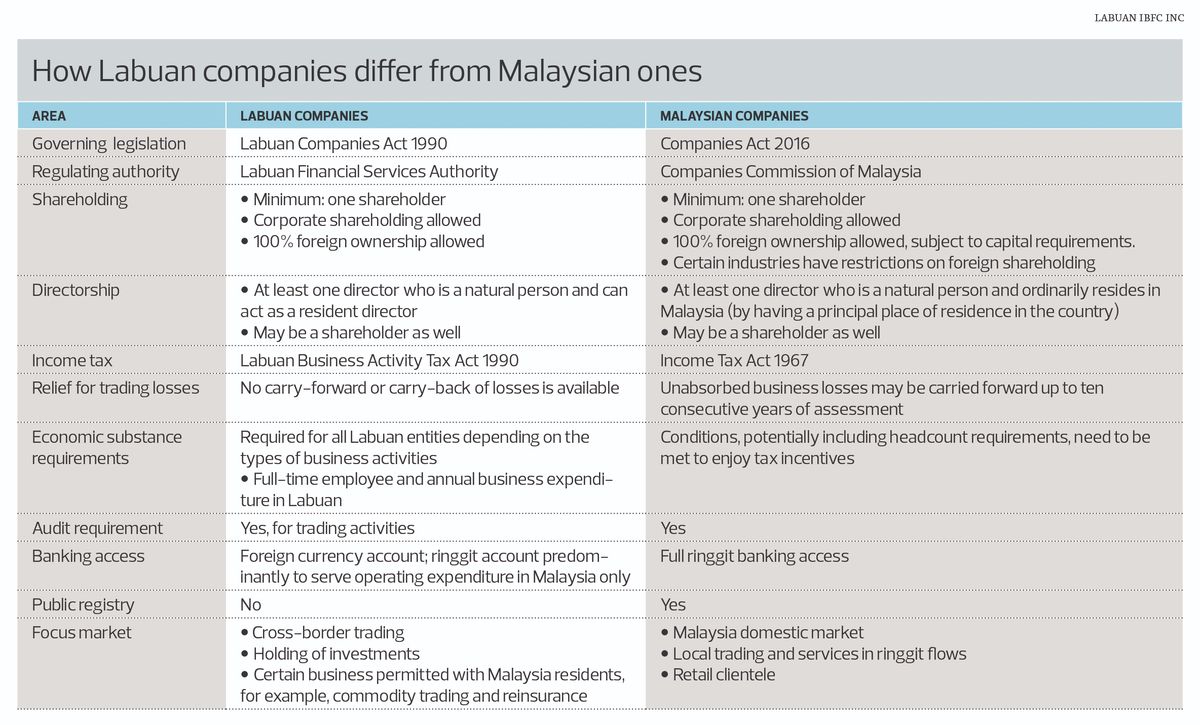
As Malaysia’s international financial centre, Labuan IBFC hosts banks, insurers, leasing firms, trusts, foundations and investment funds serving cross-border clients.
“Since the outbreak of the conflict in the Middle East, online and phone enquiries from the region have risen sharply and now account for almost 20% of our total enquiries. More importantly, this interest is expected to translate into tangible business activity, including fund structuring, company incorporations and the establishment of trusts and foundations,” says Ben Quah, CEO of Labuan IBFC Inc Sdn Bhd, the agency responsible for promoting the financial centre globally.
The regional conflict has created new opportunities for Labuan, Quah tells The Edge in an interview.According to him, Middle Eastern investors are using Labuan’s Islamic finance ecosystem to establish shariah-compliant investment funds while companies are leveraging the jurisdiction as a base to expand into Asia — attracted by its “100% foreign ownership policy, competitive tax framework and access to Malaysia’s extensive network of double taxation agreements”.
“We are also seeing growing demand from high-net-worth individuals and families seeking wealth preservation and succession planning through Labuan’s trust and foundation structures,” Quah says.
The increased interest from the Middle East region underscores the appeal of Labuan IBFC’s regulatory framework and breadth of offerings, he says. “Let’s be honest — they have plenty of options around the world. But, because of the extensive range of solutions that we offer, especially in Islamic finance, as well as Malaysia’s stability, Labuan — as a mid-shore [jurisdiction] — becomes a very strong contender for them to park their money, to invest.”
Labuan IBFC focuses on five key areas, namely banking, wealth management, insurance (including captive insurance), digital financial services and Islamic finance. Notably, it is the second-largest captive insurance domicile in Asia, with more than 70 licensees, just behind Singapore with over 80.
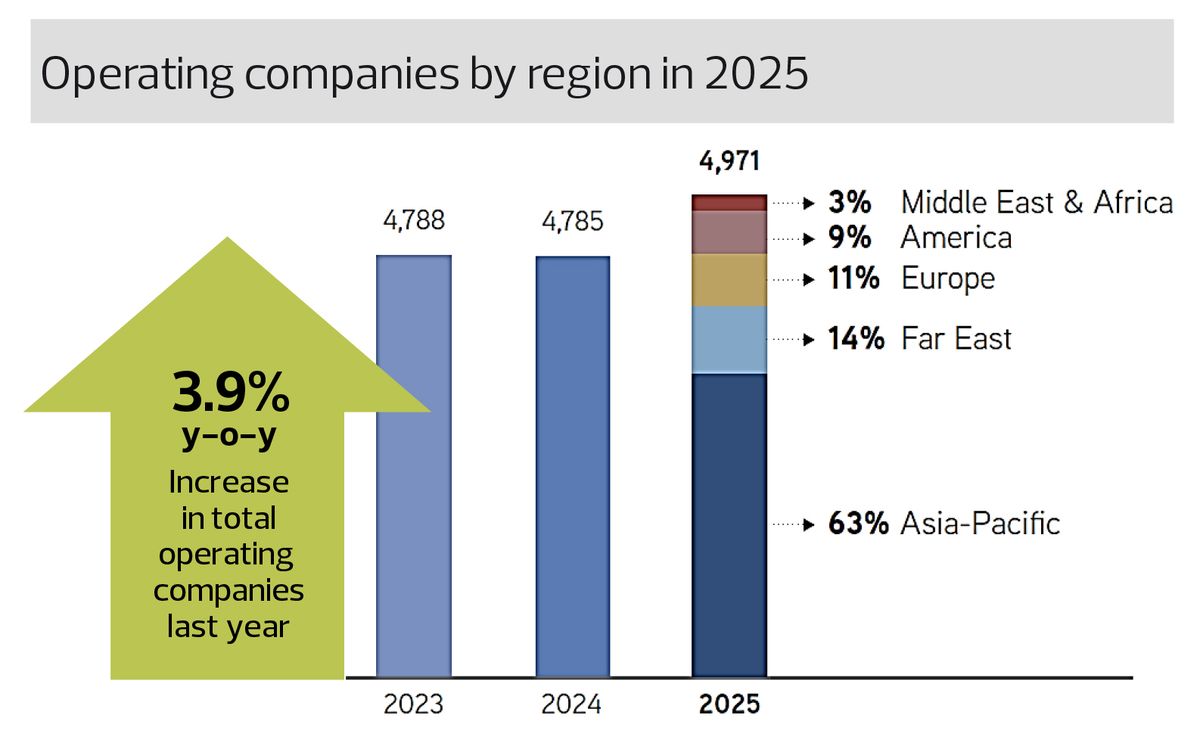
As at end-2025, Labuan IBFC was home to 808 licensed entities and 4,971 operating companies. Last year, 41 new licences were issued across various sectors.
“The main markets that we look at [in promoting Labuan IBFC] are Hong Kong, Singapore, China, Japan, even Malaysia — mainly Asia-Pacific countries and, beyond that, also the Middle East,” Quah says.
“We’re seeing an uptick in terms of new licences [issued]. I think there is growing demand, partly because of our [marketing] push. We’ve done quite a fair bit of engagement in a few countries, especially for fintech and digital financial services. And we also do online marketing, events, webinars, articles and so on. So, the push is there.
“We leverage our established strengths in Islamic finance, captive insurance and reinsurance, wealth management, and digital financial services,” he says.
In Labuan IBFC’s fintech space alone, there were 96 digital financial services providers, spanning digital banks, investment banks, money brokers, payment operators, digital exchanges, credit token businesses and fund managers as at end-2025. It has four digital financial exchanges that facilitate the issuance, listing and trading of security tokens, including shariah-compliant security tokens.
According to Quah, Labuan IBFC’s growth strategy is focused on four priorities, the first being to strengthen its position in Islamic finance. The idea is to position Labuan as a gateway for innovative Islamic financial solutions.
The second is to grow its wealth management and family office business to support Asia’s expanding affluent and ultra-high-net-worth population. Demand has been rising, with the number of new Labuan foundations increasing 29% year on year (y-o-y) in 2025 while assets under management (AUM) climbed 12% y-o-y to US$802 million.
The third is to further develop the insurance and captive insurance ecosystem and, fourth, to accelerate the development of digital and sustainable finance through initiatives such as its blockchain masterplan, digital financial services framework, tokenisation projects and green capital market products.
“Our ambition is to deliver sustainable growth across key indicators, including industry assets, AUM, licensing activities, high-value business establishments and cross-border investment flows. Equally important, we want that growth to be underpinned by greater economic substance, stronger governance and higher-quality international participation,” he says.
One of Labuan IBFC Inc’s main challenges is combating the stigma around offshore centres, particularly in relation to issues such as anti-money laundering, transparency and governance. In fact, in 2013, Labuan rebranded itself a “midshore” rather than an offshore jurisdiction in a bid to move away from that stigma.
Quah shares that some investors tend to have questions about regulatory standards when comparing Labuan with onshore financial centres, even though the jurisdiction complies with international standards. He highlights that Labuan’s regulatory framework is backed by benchmarks and positive assessment from global bodies such as the Financial Action Task Force — the global standard-setting body for anti-money laundering and combating financing of terrorism — and the Organisation for Economic Co-operation and Development (OECD).
“It’s a matter of perception and we are addressing it through what we are doing in terms of our marketing push. That’s the main challenge,” he says.
Another challenge is helping potential clients better understand the breadth of services available within Labuan’s ecosystem. He said businesses that enter through one segment often expand into others. The focus now is on communicating more effectively how the different parts of Labuan’s financial ecosystem can work together to meet clients’ needs, he says.
Earlier this year, Labuan IBFC improved its global standing, ranking 55th out of 120 financial centres in the Global Financial Centres Index (GFCI), up from 60th previously. Additionally, it was ranked the second-leading fintech centre in Asean, behind Singapore.
Beyond that, the GFCI — a globally recognised benchmark for assessing the competitiveness of financial centres — recognised Labuan IBFC as one of the top 15 financial centres with a “reputational advantage”.
Save by subscribing to us for your print and/or digital copy.
P/S: The Edge is also available on Apple's App Store and Android's Google Play.