

MILANO (July 30): Leonardo Del Vecchio built one of Europe’s great business fortunes and tried to ensure it would survive him intact. Instead, family turmoil threatens to unravel his more than €40 billion (US$46 billion or RM186.31 billion) legacy.
The founder of EssilorLuxottica SA designated eight heirs and entrusted a handful of longtime advisers to oversee the eyewear empire after his death. What he didn’t foresee was four years of feuding between the newly minted multi-billionaires, the disagreements among lieutenants — or the ill-fated attempt to break the logjam by his namesake son, Leonardo Maria Del Vecchio, an entrepreneur and occasional DJ who hosts rappers like 50 Cent and French Montana at his Twiga nightclubs.
The discord has led to a governance crisis at one of Italy’s most important corporate players. Family holding company Delfin Sarl is the biggest shareholder in both EssilorLuxottica and the world’s oldest bank, Banca Monte dei Paschi di Siena SpA. Discussions to settle Del Vecchio’s estate could lead the family to separate its ownership of the eyewear powerhouse from its financial holdings, according to people familiar with the matter, but the bickering raises the risk of a messy breakup.
“A heightened conflict between heirs within Delfin could jeopardize Leonardo Del Vecchio's estate and his industrial legacy,” said Roberta Crivellaro, managing partner of law firm Withers in Italy who is focused on succession planning and family buyouts. In hindsight, she said, putting all the heirs on the same level, despite different interests and a wide gap in ages, “was a mistake”.
Earlier this year, the tangle of disputes seemed headed towards a resolution. Leonardo Maria, the eyewear magnate’s fourth of six children, offered to buy out two siblings, Luca and Paola. The €10 billion plan would have given Leonardo Maria a 37.5% stake in the family firm, and cleared a path towards wrapping up his father’s estate. It was approved by a family vote in April, but from there the proposal faltered.

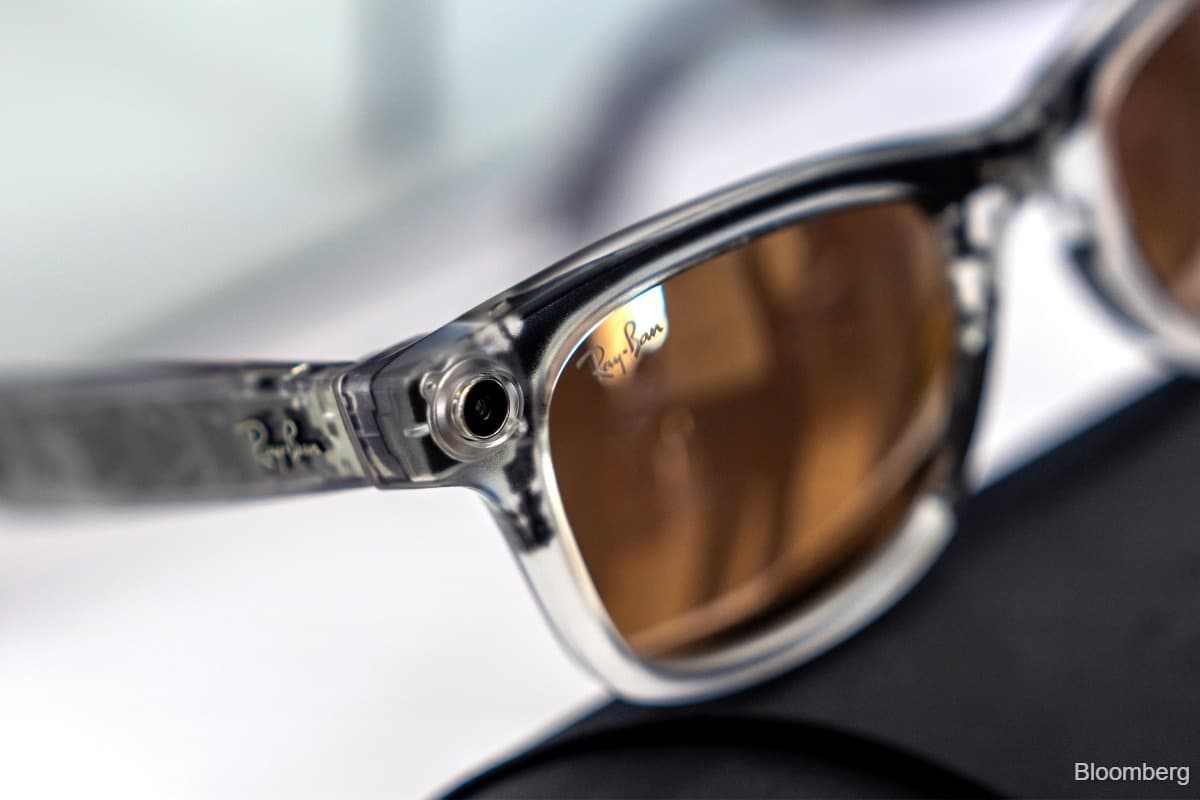
A drop in the shares of EssilorLuxottica — the Ray-Ban owner and Meta Platforms Inc’s partner on AI smartglasses — complicated the financing effort by lowering the value of the Delfin assets. Leonardo Maria, 31, also sought to include some €1 billion of his existing debt in the package, and Delfin’s divided board wouldn’t commit to backstop the transaction if Leonardo Maria defaulted.
Shares of EssilorLuxottica, which fell 2.1% on Wednesday after the company reported second-quarter sales that missed analysts’ estimates, sit 49% below a high reached in November, when investor optimism about its AI glasses partnership was at a peak. The drop in market value translates into a €23.4 billion decrease in the biggest single element in the Del Vecchio family’s portfolio.
After expressing bitterness with Delfin’s board, Leonardo Maria has regrouped. He revamped management at his LMDV Capital and is working on a €1.1 billion refinancing with Apollo Global Management Inc. Under terms being discussed, the facility could potentially be expanded to €10 billion in the future, providing him with liquidity for any options that emerge, people familiar with the matter said.
Talks continue on an alternative idea — separating the core eyewear stake from the banking and insurance shares that could be sold to raise cash for family members or to reorganise Delfin.
This approach was proposed by Leonardo Maria’s half-brother Rocco Basilico, but there’s internal resistance to selling any of Delfin’s financial investments while Italy’s banking sector is going through a consolidation wave, the people said. The family is looking to hire a seasoned external adviser to help mediate and find an agreement, the people said.
“A potential solution to the controversies could be Delfin buying back the stakes of those seeking an exit to go ahead with their respective family offices,” said Crivellaro.
Delfin’s around €16 billion in financial holdings give the family influence that extends from business into Italy’s economy and politics. The crown jewel is its stake in Assicurazioni Generali SpA, one of Europe's largest insurers, alongside investments in Unicredit SpA and Monte Paschi, the lender at the center of Italy's latest round of bank dealmaking.

Leonardo Del Vecchio founded Luxottica in 1961 and turned it into the world’s largest producer of glasses and frames. He merged the Italian company with French optical giant Essilor in 2018, creating a vertically integrated group spanning development, design, manufacturing and retail outlets like LensCrafters.
His will was intended to maintain unity between his heirs — six children born to three mothers, who now range in age from 22 to 69; his widow Nicoletta Zampillo, 68; and Basilico, her son from a separate marriage.
Each received a 12.5% stake in Delfin, but none was left in charge. Del Vecchio’s closest aide, Francesco Milleri, became chairman and chief executive officer of EssilorLuxottica and chairman of Delfin, with Romolo Bardin remaining CEO of the family holding company.
A requirement for near-unanimity on important decisions created a stumbling block for the divided family members, and their advisers have also sometimes disagreed. Delfin declined to comment for this story.
“The structure he left behind forces the heirs to seek consensus without giving them a clear way out if consensus fails,” said Alessandro Minichilli, professor of corporate governance and family business at Bocconi University in Milan. “Equal decision-making power in a company can easily become veto power.”
The Del Vecchios’ saga has gripped Italy along with a handful of other high-profile inheritance battles among the country’s industrial royalty. Stellantis NV chairman John Elkann has been in a long-running legal dispute with his mother, Margherita Agnelli, over succession issues at the Fiat-founding family.
Among the biggest obstacles to restructuring Delfin have been restrictions on sales of individual stakes that were put in place to keep the family’s holdings together, and a cap on dividends limiting payouts to 10% of Delfin’s profit, which totaled €1.5 billion last year.
At the annual meeting in June, a proposal to lift the dividend rule — a key element of Leonardo Maria’s plan to buy out his two siblings — fell short of the backing needed for approval, people familiar with the meeting said then.
EssilorLuxottica’s results, while light on sales growth, showed the company making progress toward protecting profit margins as volumes ramp up for higher-cost smartglasses. The company is also rolling out product innovations in areas such as audio-enhanced frames. Lower-priced, Meta-branded smartglasses which debuted in June helped the partners build a moat against rivals like Apple Inc and Alphabet Inc that are preparing their own wearables for sale.
“The company is relatively well placed as it still holds a first-mover advantage,” said Margherita Strazzari, an investment analyst at Sempione SIM. Family discord is also playing a role in the stock’s performance, she added.
The family’s financial investments have increased since Del Vecchio’s death. Milleri built a stake in Monte dei Paschi, added to an existing holding in Mediobanca, and backed Paschi’s takeover bid for Mediobanca last year. Milan prosecutors are investigating Milleri’s alleged coordination in the deal with another powerful investor, Italian billionaire Francesco Gaetano Caltagirone. Both have denied wrongdoing.
Delfin has a 17.5% stake in Monte Paschi, which has risen 23% this year as Intesa Sanpaolo SpA and Banco BPM SpA pursue rival plans to combine with the Siena-based bank.
The financial investments have created value for the Del Vecchio family, said Fabio Caldato, portfolio manager at Italian asset manager AcomeA. “However, I believe quite strong differences of opinion between the Del Vecchio heirs could be even more exacerbated by those good investments because they could be complex to liquidate in the short-term.”
The chief antagonists within the family have been Leonardo Maria and his half-brother Basilico, 36. Leonardo Maria is chief strategy officer at EssilorLuxottica, while Basilico, who lives in Los Angeles, was chief wearables officer and head of the Oliver Peoples brand before exiting the company earlier this year. He gets credit for putting Leonardo Del Vecchio in contact with Meta CEO Mark Zuckerberg, leading to the AI glasses alliance.
Leonardo Maria has assembled a clutch of luxury, tech and media investments, including Acqua Fiuggi bottled water, Leone Film Group SpA and newspaper chain QN Media.
He is being investigated over a 2025 crash of his Ferrari Purosangue in Milan, with prosecutors examining whether another person presented himself as the driver. Del Vecchio has denied wrongdoing, saying in a televised interview that he left the scene only after making sure no one was hurt and that police were on their way. His representatives declined further comment on the incident and declined to comment on the friction with his brother.
Basilico has challenged the April resolution that led to the approval of his brother’s plan; Leonardo Maria has called Basilico’s alternate proposal to sell off Delfin’s financial stakes at a discount “inappropriate and illogical”. He has also challenged Basilico’s ability to exercise voting rights at Delfin.
Zampillo, who is mother to them both, waived her so-called usufruct — the right to use an asset under Italian law — over the 12.5% Delfin stake left to Rocco by the elder Del Vecchio. She later sought to rescind the move.
A representative for Basilico declined to comment. Zampillo declined to comment.
Until decisions can be reached under the family structure, any moves will be subject to court approvals in Luxembourg, where Delfin is based. At least five of the eight heirs have served so-called transfer notices seeking to move individually owned stakes to personal holding companies. This could open a path toward family transactions or a restructuring, people familiar with the matter say.
Finding a way for siblings Luca and Paola to sell could also save Leonardo Maria €500 million — that’s the penalty if he fails to ultimately deliver on buying them out, according to one of the people. Leonardo Maria has the resources to pay the fee if necessary, a person familiar with the matter said.
Succession has become an important topic for family businesses in Italy. Generational transitions are projected to occur at more than one-third of family-owned companies in the decade through 2034, according to family business lobby Aidaf.
One patriarch who managed to avoid controversy is Silvio Berlusconi, the flamboyant ex-premier who died in 2023. He put his two eldest children, Marina and Pier Silvio, in charge of his business dealings and the family agreed to freeze their stakes for a period of time.
It’s an example of a successful transition, Leonardo Maria said in an interview with La7 TV in January. With reference to the Del Vecchios, “I should, however, point out that the age gap and three different groups add a layer of complexity.”
Uploaded by Chng Shear Lane