

This article first appeared in The Edge Malaysia Weekly on July 27, 2026 - August 2, 2026
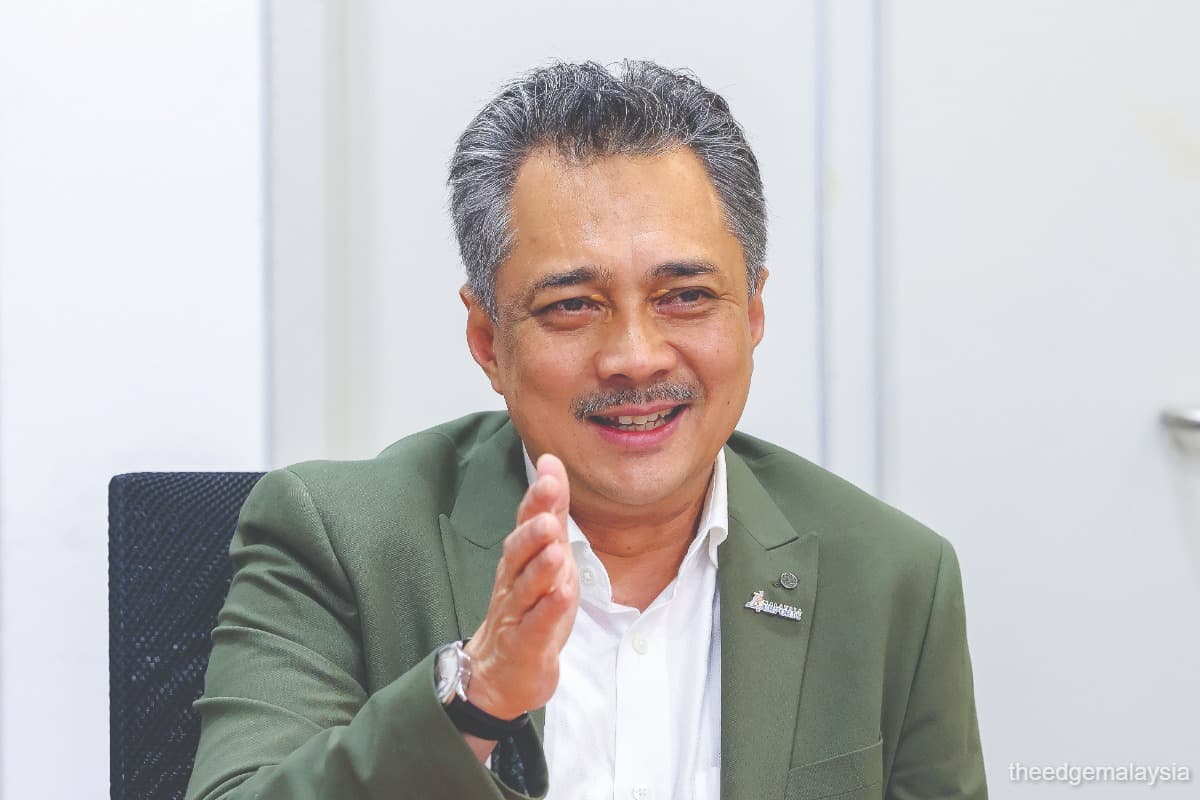
DATUK Mohd Izani Ghani is in a race against the clock. Returning for a second stint as managing director of Malaysia Airports Holdings Bhd (MAHB), he is wasting no time in picking up where he left off in the transformation of the airport operator after years of relative underinvestment.
Since taking the helm in August 2024, Mohd Izani has overseen one of the biggest turning points in MAHB’s history — the group’s privatisation in February 2025 — and is now tasked with delivering on an ambitious agenda built around three priorities: service excellence, growth and capacity.
Earlier this month, the Minister of Finance Inc approved a two-year extension to his contract, keeping the 58-year-old at the helm until end-July 2028. The renewed mandate comes with fresh financial backing: MAHB has earmarked RM11.5 billion in capital expenditure (capex) over five years (2026 to 2030), giving him the resources to push ahead with long-delayed upgrades.
“I think it’s important for us to complete as much as we can. The team and I are in a hurry. There are many things that need to be done over the next two years. By the end of 2028, you’ll see many of the deadlines coming due,” he tells The Edge in an interview.
His reappointment also brings a measure of stability to MAHB after a turbulent decade that saw five CEOs or managing directors rotate through the organisation.
For Mohd Izani, the transformation is already beginning to bear fruit. “We’re starting to see tangible results,” he declares.
One of the biggest governance reforms introduced under Mohd Izani is a stricter investment approval framework known internally as the “tollgate process”. The idea was borrowed from his time at sovereign wealth fund Khazanah Nasional Bhd, where major investments were subjected to multiple rounds of challenge before committing capital.

“At Khazanah, we used to call it the ‘seven gates to heaven’,” he laughs. “Every investment has to be challenged: Is this the best option? Is there another way of doing it? It forces people to ask difficult questions before projects proceed.”
More importantly, the process has broken down long-standing organisational silos.
“Projects are interconnected. People now understand the dependencies across departments. It wasn’t easy initially because there was much more documentation and preparation before every gate review. But today the team is familiar with it. It’s becoming part of the way we work,” says Mohd Izani.
The second pillar of the transformation is MAHB’s target operating model (TOM), which examines whether employees’ skills match their roles while reviewing long-established work processes.
“In many cases, some of our airport processes have existed since the beginning. The industry has changed. It’s time to ask whether those processes are still relevant,” stresses Mohd Izani.
Procurement has also undergone an overhaul, with greater automation and a broader contractor base aimed at improving competition.
“Our registered contractor database has grown from about 1,800 to more than 3,300 companies. Hopefully, that translates into better competition and better tender outcomes.”
Last year, Mohd Izani told the bipartisan Public Accounts Committee (PAC) that contractor cartels had hampered work at several airports.
Asked whether the problem has been resolved, he remains cautious. “It remains to be seen. But recent tenders have attracted much better participation, partly because we’ve expanded the vendor pool.”
The group has also tightened its screening process and introduced vendor performance evaluations. “Our team is much more vigilant now when assessing bidders,” he says, pointing out that performance no longer ends when contracts are awarded. “We also carry out vendor performance evaluations. Contractors who don’t meet our expectations will face the consequences.”
Capacity drive gathers pace
The largest share of MAHB’s RM11.5 billion capex programme will go towards upgrading and expanding some of the 39 airports it manages in Malaysia.
About RM4.1 billion has been earmarked for asset replacement at the Kuala Lumpur International Airport (KLIA) Terminal 1 (T1) and Terminal 2 (T2), including critical systems such as the baggage handling system (BHS), escalators, lifts and walkalators. Another RM1.4 billion will fund the expansion of the Penang International Airport (PIA), while around RM500 million has been allocated to the Kota Kinabalu International Airport (KKIA).
Around RM500 million has also been set aside for non-airport investments, including KLIA Aeropolis and MAHB’s other subsidiaries. The remaining funds will be spent on upgrading airports across the network, including replacing ageing aerobridges.
The programme will be funded through a mix of internally generated cash and borrowings, which are backed by MAHB’s strong credit profile, with an “A3” rating by Moody’s Ratings and an “AAA” rating by RAM Ratings, says Mohd Izani.
His immediate priority, however, is ensuring that the long-awaited expansions of PIA and KKIA are completed by end-2028. PIA’s redevelopment — to be carried out in three phases — will almost double annual passenger capacity to 12 million from 6.5 million.
“The first two phases focus on the airside works, such as resurfacing. The third phase is the terminal expansion. The tender will be issued soon and we’re targeting completion of the entire expansion by the end of 2028,” he says.
PIA will become the first airport in the country to operate a remote digital virtual tower (RDVT), replacing the conventional air traffic control tower with a camera-based system that allows air traffic controllers to manage aircraft movements remotely.
Given that the technology is being deployed for the first time in the country, MAHB is taking a cautious approach.
“We agreed not to take unnecessary risks. The existing control tower will remain in operation while controllers familiarise themselves with the new system. Only when everyone is fully comfortable will we demolish the old tower,” says Mohd Izani.
Ultimately, MAHB hopes to consolidate air traffic management further. “The long-term plan is to have one remote tower serving Peninsular Malaysia, one for Sabah and another for Sarawak,” he says.
KKIA’s expansion will follow a similar approach. Its annual capacity will increase from nine million passengers to 12 million, with airside works preceding terminal expansion.
“The target is also 2028. We expect to call for tenders [for the terminal expansion] before the end of this year,” says Mohd Izani.
Still, among the most technically demanding projects is the replacement of the BHS at KLIA T1. The upgrade is about 60% complete and remains on track for completion by the end of 2028.
“This is something we have to manage very carefully. There are many contingency plans because the airport must continue operating throughout the works. We’re working closely with the contractor and hope to keep to schedule,” he says.
Awarded in October 2022 to the VL T7 Global consortium, comprising T7 Global Bhd (KL:T7GLOBAL) and Vanderlande Logistics Pte Ltd, the BHS upgrade was initially due for completion in December 2025. The project has been delayed by three years and is now targeted for completion in the fourth quarter of 2028.
Running airports as businesses
Mohd Izani says all five of MAHB’s international gateways, comprising KLIA, PIA, KKIA, Langkawi International Airport and Kuching International Airport are profitable.
“Several airports in Sarawak such as Miri are in the black too. The Sultan Ismail Petra Airport in Kota Bharu, Kelantan, used to be profitable. But after we expanded the airport, operating expenses went up significantly,” he says.
“We need time to stabilise operations. That’s why I always tell my airport managers, ‘Run your airport like a CEO’.”
For Mohd Izani, profitability is closely tied to international connectivity.
Kota Bharu now serves international destinations such as Singapore and Jakarta, but attracting more overseas services remains key because international passengers generate much higher passenger service charges (PSCs) than domestic travellers.
“For domestic passengers, the PSC is RM11. For international passengers, it’s RM73. That’s where the margins are,” he says.
Winning more international routes, however, requires more than persuading airlines. “It has to be a joint effort between the airlines, the state government and the tourism industry,” says Mohd Izani.
Not every airport, however, can realistically aspire to become a passenger hub.
“Take the airports in Melaka and Kelantan, for example. Their proximity to KLIA makes them less viable. But that doesn’t mean they can’t play other roles,” says Mohd Izani, pointing to Melaka’s potential as a maintenance, repair and overhaul (MRO) hub. “We’re supportive. We have land around the airport that can accommodate those kinds of activities.”
Sultan Abdul Aziz Shah Airport or Subang Airport is also profitable, although Mohd Izani says further expansion should be guided by demand rather than ambition. Jet operations returned to Subang Airport after a 26-year hiatus in August 2024. However, they have yet to prove commercially viable due to the airport’s current limitations, which include shortage of aircraft bays, restricted operational hours and capped jet frequencies at one jet per hour.
“The government’s RM22 million spending to double Subang Airport’s annual passenger capacity from 1.5 million to three million is sufficient for now. Until that threshold is reached, then we can talk about expanding capacity to five million, and eventually eight million. Passenger traffic remains below that level, while operational constraints continue to limit growth. But other investments, such as the Subang Airport Regeneration Plan, will continue,” he says.
Traffic holds up despite global headwinds
MAHB’s Malaysian airports handled 51 million passengers in the first half of 2026 (1H2026), up 1.8% from 50.1 million a year earlier. The increase was driven by resilient international travel, which offset softer domestic traffic as airlines adjusted capacity in response to the conflict in the Middle East. During the period, the number of destinations served rose to 123, from 119 a year earlier, while airlines operating across MAHB’s network increased from 72 to 80.
KLIA alone handled 31.7 million passengers, up 5.4% year on year (y-o-y) from 30.1 million. Whether the airport can surpass the 63.4 million passengers recorded in 2025 remains to be seen.
“I really hope we can sustain the momentum. But as long as the crisis in the Middle East continues, nothing is guaranteed,” says Mohd Izani.
The renewed tensions between the US and Iran have added another layer of uncertainty.
“I thought the situation would have stabilised by now. But if the conflict escalates again over the next few weeks, airlines may reduce capacity once more,” he says.
Nevertheless, Mohd Izani is encouraged that Emirates and Qatar Airways are expected to restore services to pre-crisis levels, while additional Chinese carriers are entering the Malaysian market. Domestic airlines remain more cautious.
“Fuel prices are still high, so they’re consolidating capacity. That’s beyond our control,” he says.
MAHB’s role is to ensure airports remain reliable and attractive to airlines, he adds. “We continue to improve operational reliability and have a stronger airline network. As long as airlines keep flying here, that’s good for us.”
That strategy appears to be paying off. KLIA was ranked the world’s fourth most internationally connected airport, behind London Heathrow, Amsterdam Schiphol and Istanbul Airport, in OAG Aviation Worldwide Ltd’s Megahubs 2025 report. It was also the highest-ranked airport in Asia-Pacific.
Separately, Airports Council International ranked KLIA as the world’s 20th busiest airport in 2026, up six places from the previous year. The performance stands out against a weaker global backdrop.
According to the International Air Transport Association (IATA), global passenger demand, measured in revenue passenger kilometres (RPK), fell 2.2% y-o-y in May as the Middle East conflict disrupted travel. Asia-Pacific airlines carried 31.7 million international passengers during the month, down 1.1%, according to the Association of Asia Pacific Airlines.
Despite those headwinds, KLIA recorded a 2% y-o-y increase in passenger movements to 4.9 million in May.
Mohd Izani credits the resilience partly to the government’s coordinated response.
“As soon as the crisis began, Minister of Transport Anthony Loke chaired a task force involving airports, airlines and fuel suppliers. The objective was simple: keep Malaysian airlines flying,” he says.
He also urged airlines to keep fares competitive, noting: “Our thinking was that passengers who would normally transit through Dubai might instead choose KL. If they try KLIA and have a good experience, they may continue using us as their hub.”
That strategy, together with the expansion of Chinese airline services and preparations for Visit Malaysia 2026 — now extended into 2027 — has helped sustain passenger growth. Further boosts are expected.
Germany’s Lufthansa is scheduled to return to KL after nearly a decade, launching five weekly flights to Frankfurt from Oct 25. Saudi Arabia’s Riyadh Air is also expected to begin services to KL, although no launch date has been confirmed. “The conflict has increased the urgency for them to enter this market,” says Mohd Izani.
Rethinking the passenger journey
For passengers, the most visible changes over the next few years will be at KLIA itself. Beyond expanding capacity, MAHB is looking to remove friction from the passenger journey through new technology, redesigned security screening and upgraded transport links between terminals.
One of its biggest initiatives is the introduction of centralised security screening at KLIA T2.
In January, MAHB completed a proof of concept for the new system, which will move security screening from individual departure piers to a single checkpoint immediately after immigration.
“Once passengers clear immigration, they’ll be free to move around the terminal. T2 was designed with a clear separation between arriving and departing passengers, so it’s well suited to this model,” says Mohd Izani.
The move should improve passenger flow while allowing travellers more time to use the terminal’s retail and dining facilities. “It also gives us an opportunity to showcase T2 as a more efficient airport and attract more airlines to operate there,” he says.
To ease congestion at KLIA T1, MAHB is encouraging more airlines to operate from T2. But carriers have long resisted relocating because of longer minimum connecting times between the two terminals and T1’s superior service levels.
MAHB is now evaluating two suppliers for the new security screening equipment: China’s Nuctech and Europe’s Smiths Detection.
“The assessment is underway. Once we decide on the right system, implementation will begin in stages next year,” says Mohd Izani.
If successful, he believes the new arrangement will significantly increase passenger throughput. “It will be a game changer for T2.”
Introducing the same concept at T1 is proving more difficult. Unlike T2, the terminal was never designed for centralised screening or for separating arriving and departing passengers after immigration.
“We’re looking at different options to separate arriving and departing passengers, but are limited by the existing design and the space available,” he explains.
Retrofitting the building could require major structural alterations.
“If the infrastructure costs are too high, it may not be worth doing. We’ll have to carry out a proper cost-benefit analysis,” says Mohd Izani.
Meanwhile, another long-running issue — the aerotrain — has largely been resolved. The service now operates around the clock.
“During off-peak hours, between midnight and about five or six in the morning, we only need one train in service. That allows the other train to undergo maintenance. So far, everything has been running smoothly,” he says.
Changing the culture
The hardest part of transforming MAHB may not be the billions of ringgit being spent on infrastructure, but changing the way the organisation thinks and works.
Mohd Izani says the shift has already begun. From his first town hall meeting with employees two years ago, he made it clear that MAHB could no longer operate as it had in the past.
The message he delivered was simple: incremental improvement would not be enough. “If we continue walking the way we walk, we’ll never catch up. We have to run now,” he said.
Mohd Izani believes employees have responded positively because they can see tangible changes taking place across the organisation and at the airports.
“People get excited when they see the work delivered on the ground. Of course, with a workforce of 10,000, there will always be some employees who resist change. But I think the majority are with us. They are willing to change and deliver better results,” he says.
A recent report by the PAC drew comparisons between the challenges facing MAHB and those previously faced by Malaysia Airlines, with former Malaysian Aviation Group Bhd group managing director Datuk Captain Izham Ismail describing the old culture at the national carrier as one of entitlement that needed to evolve into a more performance-driven environment.
Mohd Izani says MAHB has already made progress, but acknowledges that cultural change cannot happen overnight.
“That’s why TOM is important. It has to be done holistically, including reviewing all the processes that we have,” he says.
Another area being addressed is the lack of consistency across MAHB’s airport network.
“For example, Kota Bharu Airport’s standard operating procedures (SOPs) are not the same as Terengganu’s. But they should be the same, right? We are running an airport,” says Mohd Izani.
Consultants are now reviewing processes across the network, identifying areas where standards can be improved.
For Mohd Izani, the biggest cultural shift is giving airport managers greater ownership. They should no longer wait for instructions from headquarters but take responsibility for running their own airports.
“I always tell the team: the airport manager has to be like the CEO of the airport. That means understanding not only the daily operations, but also the commercial side of the business, including the airport’s profit and loss, airline relationships and growth opportunities,” he says.
On the progress of the airside interlining between KLIA T1 and T2, Mohd Izani says MAHB is still working with the Ministry of Transport to allow passengers without check-in baggage to move between the two terminals without needing to exit and re-enter through security checkpoints by year end.
“We are still targeting that. There are two phases. Phase 1 is without check-in luggage. If we do this, we need to provide proper lounges for passengers. Hopefully, with the support of immigration and customs, we can get it done,” he says.
The second phase, which involves passengers with checked baggage, will be more complex as it requires closer coordination among airlines through an inter-terminal transfer system.
“The airlines have to have agreements among themselves. On top of that, they need arrangements for baggage. That one is complicated, so I cannot promise a definite timeline because it is not entirely within our control,” says Mohd Izani.
Save by subscribing to us for your print and/or digital copy.
P/S: The Edge is also available on Apple's App Store and Android's Google Play.