

This article first appeared in The Edge Malaysia Weekly on July 27, 2026 - August 2, 2026
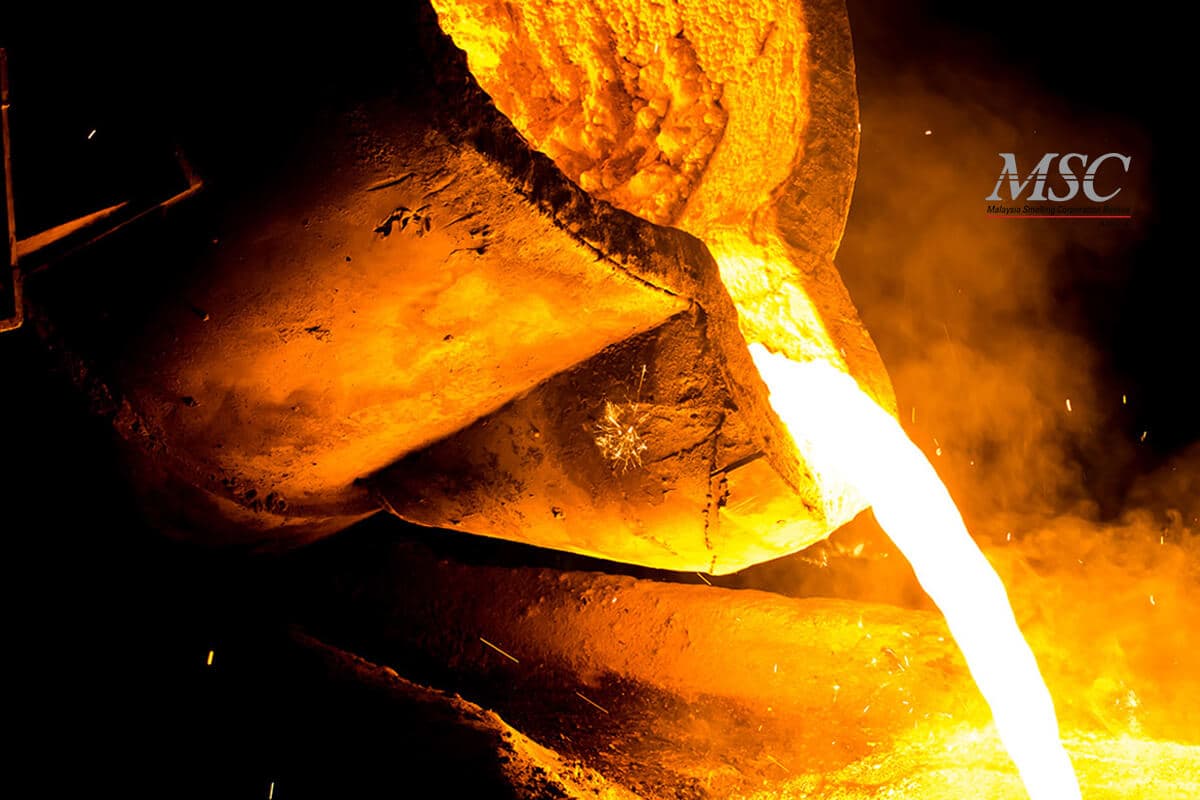
WITH tin prices surging to record levels, Malaysia Smelting Corp Bhd (KL:MSC) is looking to expand its mining footprint in Malaysia as the century-old tin producer seeks to secure more ore domestically for its smelting operations and reduce its reliance on feedstock from overseas.
The group, which operates its flagship Rahman Hydraulic Tin mine in Klian Intan, Perak, and a smaller operation in Sungai Lembing, Pahang, is exploring potential joint ventures involving new mines and state governments, says co-group CEO Lam Hoi Khong.
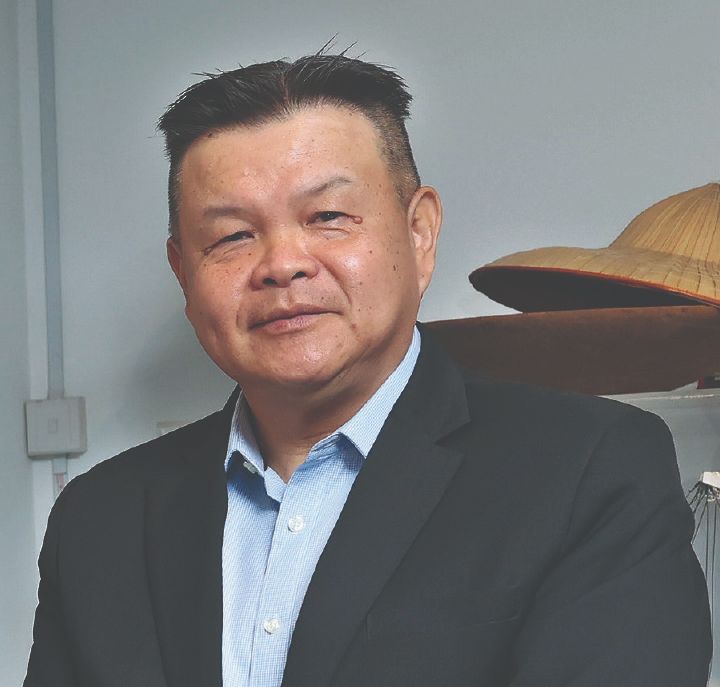
“If there’s any opportunity out there, we are also looking at potential joint ventures with any new mines or [other] state governments to mine in the country itself,” he tells The Edge in an exclusive interview, alongside fellow co-group CEO Nicolas Chen Seong Lee, in their first interview since taking the helm in January.
The duo, previously group chief financial officer and deputy CEO respectively, were promoted to the top job following the retirement of Datuk Dr Patrick Yong Mian Thong, who stepped down as group CEO on Dec 31, 2025, after nine years in the role. Yong remains on MSC’s board as executive director and continues to support the group in an advisory capacity.
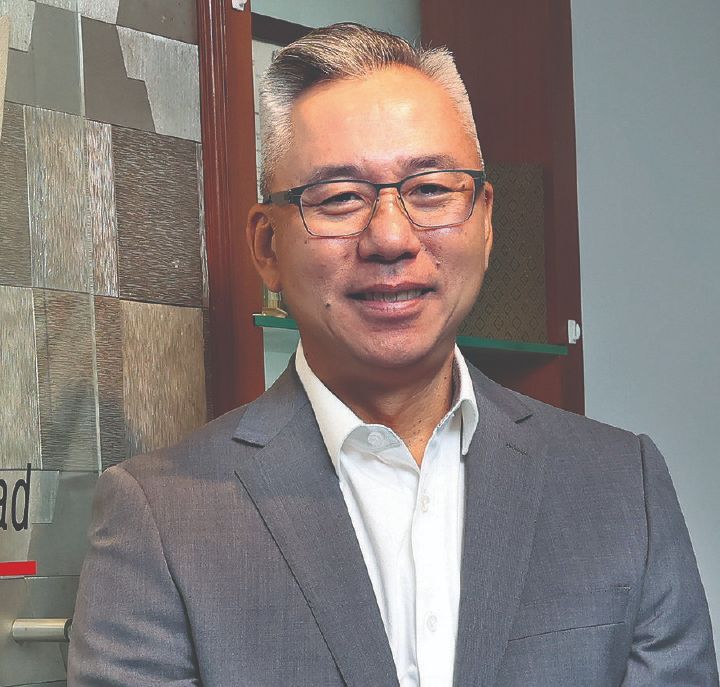
“It’s not public information yet, so I think we will announce it at the appropriate time,” says Chen when asked whether discussions are already underway. “But we are exploring [opportunities],” he adds.
The domestic push comes as tin enjoys one of its strongest runs in years, fuelled by supply constraints and growing demand from sectors such as semiconductors, artificial intelligence (AI), data centres and those involved in energy transition.
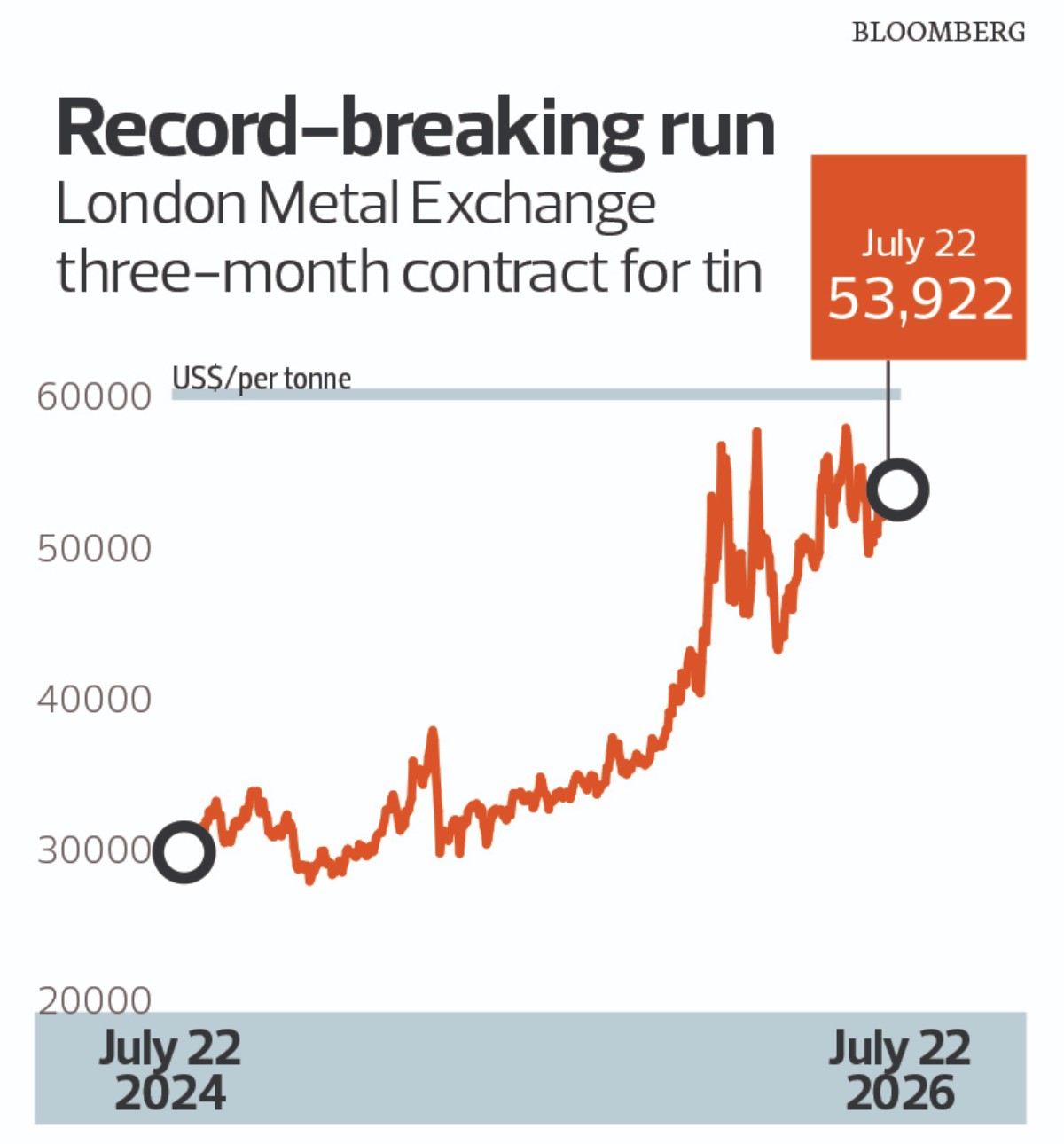
The London Metal Exchange’s three-month tin contract, the global benchmark for the metal, surged to an all-time high of US$59,040 a tonne during the frenzied cross-metals rally in January and was trading at around US$54,000 at the time of writing. Lam believes prices could remain at about US$50,000 to US$55,000 in the near term.
“We feel that the tin price will still be at that kind of level because of the strong demand, especially now with AI and data centre applications, where tin plays a vital role. There is also growing demand from electric vehicles (EVs) while, in solar panels, we are hearing that tin oxide could replace iridium in certain applications. These are all new sources of demand for tin moving forward,” says Lam.
The stronger tin cycle has put MSC in a better financial position to pursue its expansion plans. MSC’s revenue rose 4% to a record RM1.76 billion for the financial year ended Dec 31, 2025 (FY2025), while net profit increased to RM82 million from RM79.4 million.
FY2026 is off to a stronger start, with first-quarter net profit surging more than fivefold to RM42.93 million — its highest quarterly net profit in four years — as higher tin prices lifted both its mining and smelting operations.
As at end-March 2026, the group had cash and bank balances of RM194.64 million against borrowings of RM459.65 million while its net gearing stood at 0.54 times.
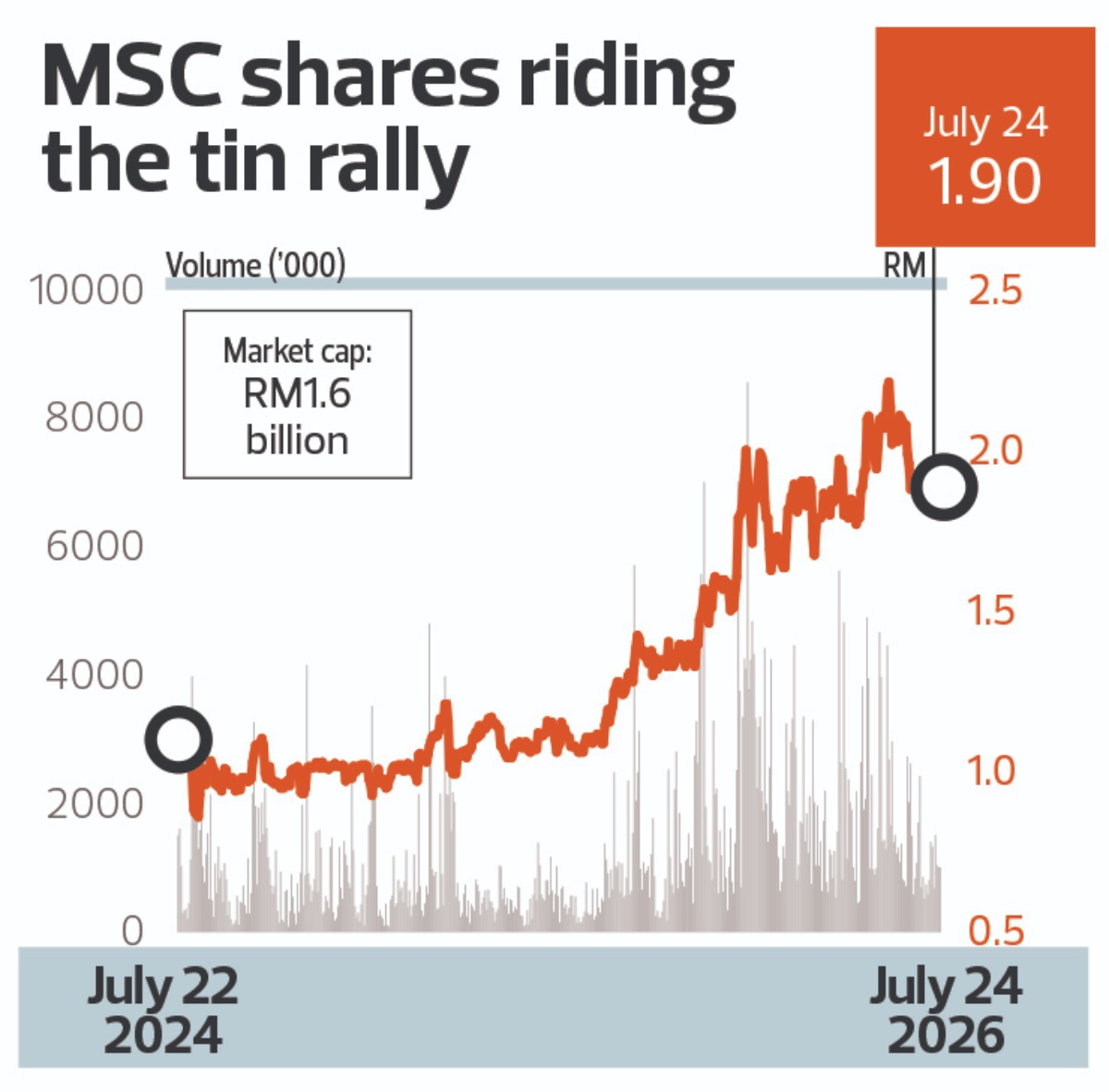
MSC’s share price touched a new intra-day high of RM2.287 on June 4, following which analysts raised their earnings forecasts against the backdrop of elevated tin prices. Of the four analysts covering the stock, three have “buy” recommendations while one has a “hold”, with a consensus target price of RM2.72.
The stock had risen 20.98% year to date to RM1.90 last Friday, valuing the company at RM1.6 billion.
Securing more ore in Malaysia
For MSC, expanding its domestic mining operations is also about securing the raw material needed to keep its smelter in Pulau Indah, Selangor, running consistently.
The company, which traces its roots back to 1887, operates an integrated tin business, spanning mining, smelting and refining. Its 80%-owned subsidiary Rahman Hydraulic Tin Sdn Bhd operates the Klian Intan mine, which is Malaysia’s largest hard-rock open-pit tin mine. MSC is the world’s largest custom toll smelter, processing ore from its own mine as well as that of third-party miners and traders.
The group, which was listed on the Kuala Lumpur Stock Exchange in 1994, became a subsidiary of Singapore-listed The Straits Trading Co Ltd following a corporate takeover in 2005. Straits Trading currently holds a controlling 52% stake in the tin producer. MSC subsequently obtained a secondary listing on the Singapore Exchange in 2011.
Rahman Hydraulic Tin supplied 19.6% of MSC’s smelting feed in 2025, with the remainder sourced from artisanal miners, international ore traders and mines outside Malaysia.
“What we would like to achieve is to supply a larger percentage of our smelting capacity requirements from Malaysia, so that we don’t have to rely as much on overseas supply, where we are subjected to geopolitical risks, supply disruptions and competitive demand from other smelters,” says Chen.
When asked to what extent MSC wants to raise the domestic contribution, he replies: “As much as possible.”
Rahman Hydraulic Tin’s latest mineral resource estimate under the Australasian Joint Ore Reserves Committee (JORC) reporting standards puts its contained tin resources at 39,783 tonnes, based only on areas explored so far. Management says significant parts of the mine remain unexplored.
Reviving Malaysia’s ‘sunset industry’
Despite tin’s resurgence and growing importance to technology-related industries, the government’s policy on the sector has yet to be substantially revisited since the industry’s collapse in the late 1980s, says Chen.
It is a far cry from Malaysia’s former dominance of the global tin trade. British Malaya was the world’s largest tin exporter for much of the late 19th and early 20th centuries, accounting for more than half of global supply by 1904. The origins of the London Metal Exchange’s benchmark three-month contract are said to be from that era, when tin shipments from Malaya took roughly three months to reach Britain.
The industry’s fortunes reversed after the tin market crash in the 1980s, when plunging prices rendered many mines uneconomic and prompted operations across Malaysia to shut, leaving MSC as the country’s only surviving major integrated tin miner and smelter today.
Tin mining subsequently lost prominence and came to be regarded as a sunset industry, resulting in fewer incentives and less policy attention, says Chen. “Unfortunately, even with the recent resurgence in tin prices and demand, the policy has not changed,” he points out.
Chen believes Malaysia still has plentiful resources but developing these would require greater investment and exploration.
“The low-hanging fruit, the easily reachable tin, has been mined up,” he says. “But there’s still tin beyond what has already been mined. It’s just access to it — it’s going to be more difficult, more costly.”
For Malaysia to capitalise on tin’s renewed prospects, MSC is calling for greater policy support to draw fresh investment to the industry.
“We would like to see [the sector revitalised] but it needs encouragement, perhaps through government policies to encourage people to come back to the tin mining industry,” says Chen.
“It’s not like an on-off switch. Once people have exited the business, they can’t just come back and start again. It can be a very expensive and risky exercise,” he adds.
“Building a smelter can cost up to RM400 million and it takes years to put together a plant from greenfield. Mining requires exploration before you get to commercialisation and all of that costs money.”
Cautious about going abroad
While MSC is seeking to expand its footprint in Malaysia, management remains cautious about venturing overseas again. After operating in Indonesia for more than a decade, the group exited the country in 2013 after the authorities there terminated its tin mining contract.
For now, management has little appetite to go abroad.
“Going overseas is tricky. You’re talking about a natural resource of another country, which is subject to all kinds of risks, including compulsory acquisitions,” says Chen.
“We will be extremely careful about exploring overseas. We would rather focus on Malaysia.”
“It is a case of once bitten, twice shy,” Lam laughs.
Still, the co-CEOs do not rule out overseas investments altogether but insist that there are sufficient opportunities at home for MSC to pursue before looking further afield.
Rare earths on the radar
Beyond tin, MSC has found rare earth elements at its existing mining sites and is now studying whether the deposits are substantial enough to warrant commercial extraction.
“We are in the process of ascertaining the type and the quantity, whether it’s worth pursuing further,” says Chen.
Any move into rare earths, however, would have to clear both environmental and regulatory hurdles. Lam says any extraction would have to be carried out responsibly, given the environmental concerns about conventional techniques such as in-situ leaching. “We are now finding ways to do it responsibly,” he adds.
On top of that, regulatory certainty will weigh on any investment decision. Chen says clearer government direction on rare earth processing and exports will be needed before MSC can commit substantial capital.
For now, rare earths remain at the exploratory stage rather than an established growth pillar for the company. But if the resources prove commercially viable and the regulatory framework becomes clearer, the group is prepared to invest.
“The whole world is looking into this. So definitely, there is an opportunity,” says Chen.
Save by subscribing to us for your print and/or digital copy.
P/S: The Edge is also available on Apple's App Store and Android's Google Play.