

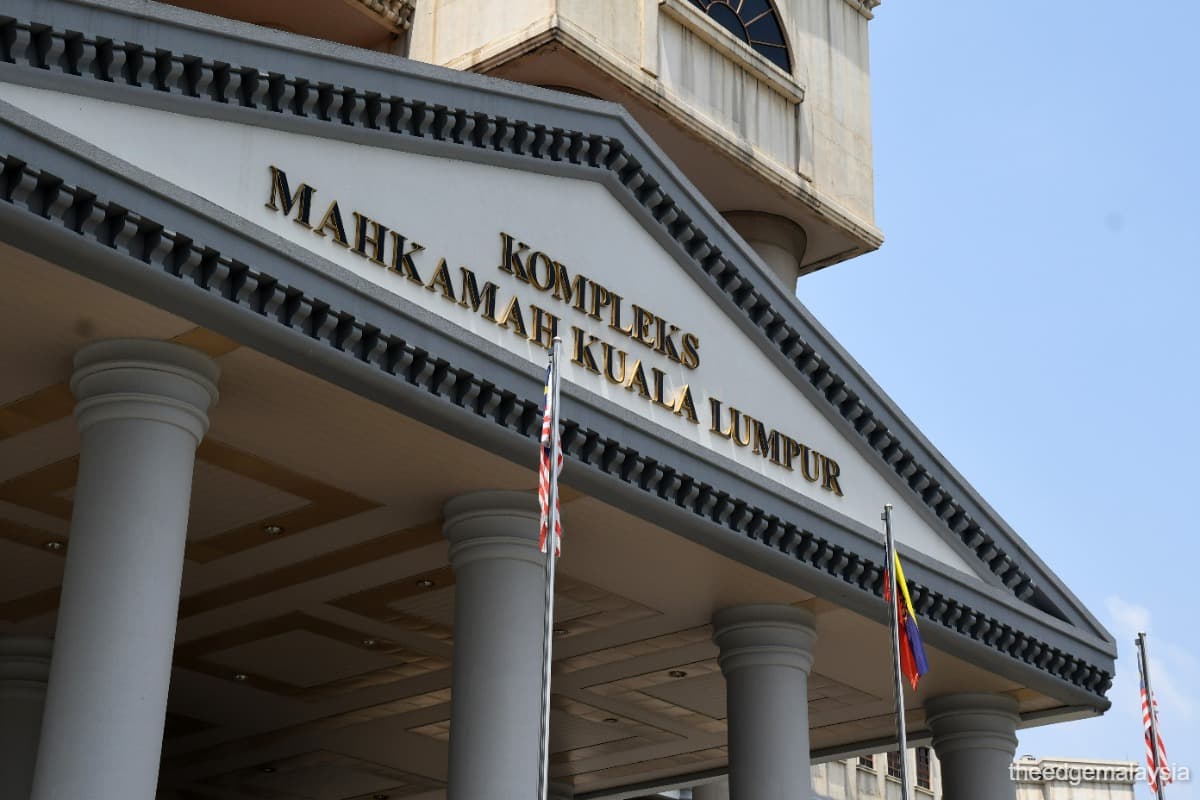
KUALA LUMPUR (July 30): The High Court on Thursday has upheld the 2024 decision of the Special Commissioner of Income Tax (SCIT), that held that Maybank’s expenditure of RM221.968 million in upgrading its computer software and system amounted to capital expenditure, and dismissed the appeal by the director general of the Inland Revenue Board (IRB) which disputed this.
High Court judge Datuk Azizan Md Arshad, in his broad grounds in dismissing IRB’s appeal, said that based on the principles of the case, the court concluded that the banking software and system are vital for Maybank’s operations.
“They handle essential functions like processing customer transactions, maintaining accounts, ensuring regulatory compliance, managing risks, and providing other key banking services. Removing these systems would hinder effective banking operations.”
The court noted that Maybank had submitted that the upgrading and development costs of the software are necessary expenditures.
“The SCIT in its grounds found that Maybank is allowed to claim additional capital allowance for upgrading computer software under Schedule 3 of the Income Tax Act (ITA).
“This court found no error on the part of the SCIT in making the finding that, based on the foregoing explanation and the analysis regarding the first issue, expenditure incurred on the development of computer software and expenditure on upgrading existing software qualify for a claim for capital allowance under Schedule 3 of the ITA,” Azizan said.
The judge said SCIT found that upgrading computer software, along with the software licence constitute it to be considered as a plant (factory) under the ITA.
“Therefore, costs for providing the software should be treated as a whole. Additionally, Paragraph 2(1)(a) of Schedule 3 of the ITA states that costs related to the installation of the plant are qualifying expenses.
“The customisation of computer software is important in Maybank’s banking system as, without which, the computer software will not be usable and fully functional. As such, the expenditure on developing the customised computer software is necessary expenditure incidental to the purchase of the computer software,” the court ruled.
Capital allowance claimed for 2014-2017
Prior to this, the IRB had not allowed the bank to claim capital allowance for four years — namely RM10.792 million (2014), RM119.062 million (2015), RM75.383 million (2016), and RM16.730 million (2017) — totalling RM221.968 million as capital expenditure and additional capital expenditure, and had imposed additional tax and penalty on the bank in 2019.
The bank appealed to the SCIT, and in 2024, the SCIT allowed Maybank’s appeal.
Following that, the IRB director general appealed the SCIT’s decision, resulting in Thursday’s court verdict.
Azizan further ruled that the SCIT was right to also set aside the earlier penalty imposed on Maybank, as the court also agreed with the decision, as the imposition of a penalty is a matter of discretion.
“Based on the facts of the case, the SCIT has set aside the penalty imposed under Section 113(2) of ITA on the basis that the taxpayer had acted in good faith, taken professional advice, made full disclosure at all material times, and that the matter in dispute arose as a result of a technical adjustment.
“This court agrees with the SCIT’s findings because, based on the facts of the case, there was no intention on the part of Maybank to provide incorrect or untrue information. Since the SCIT has so decided, the penalty should appropriately be set aside,” he said in upholding the SCIT decision.
Azizan made no order as to costs in Thursday’s decision.
The IRB was represented by IRB revenue counsel Abdul Aziz Harun, Nur Zahirah Zamhuri, and Anis Afiqah Che Rahim; while Datuk S Saravana Kumar, Nur Hanina Mohd Azham, and Dharshini Sharma of Messrs Rosli Dahlan Saravana Partnership appeared for Maybank.