

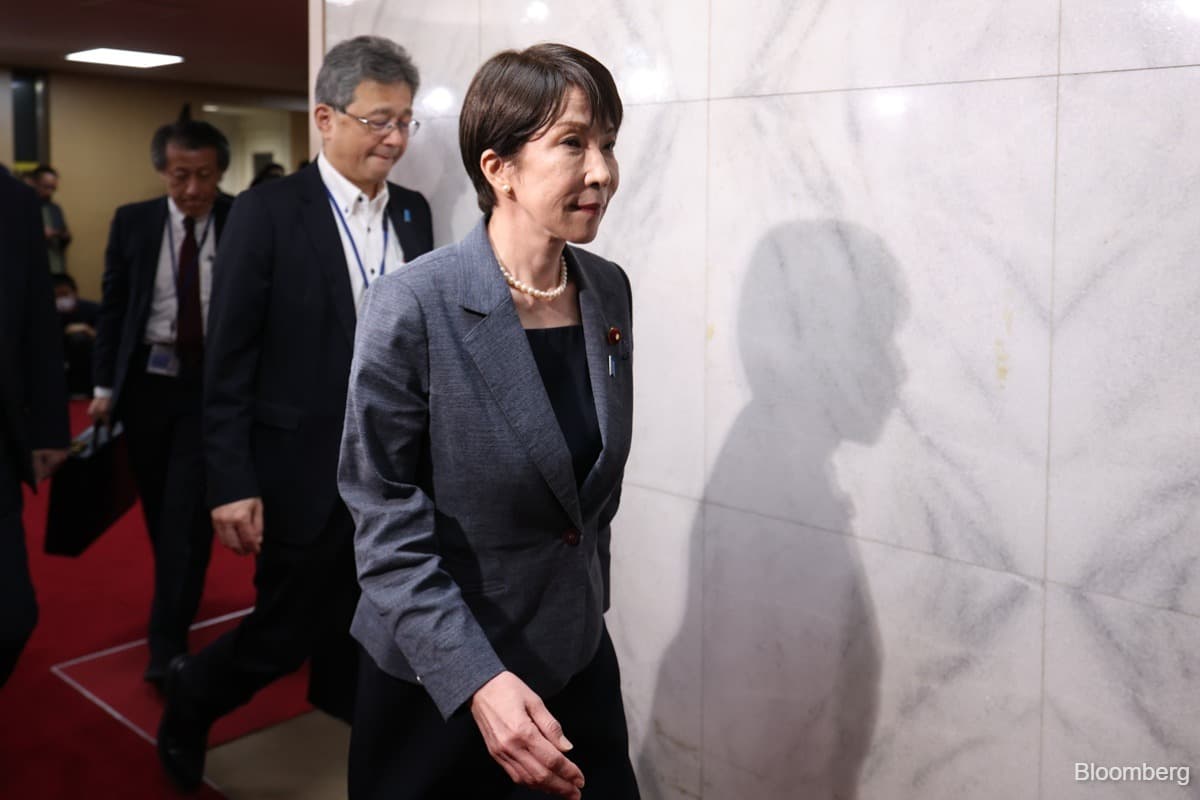
TOKYO (July 30): Japanese Prime Minister Sanae Takaichi announced on Thursday her intention to proceed with a two-year cut on a sales tax of 8% on food items, a move set to strain the country's worsening finances.
The decision came amid a slump in approval ratings for Takaichi's administration, with households facing rising living costs from a weak yen currency and the Middle East war-induced energy shock.
"We will lower the sales tax on food items to 1% for two years from April next year," Takaichi told reporters after ordering ruling party executives to prepare for the cut.
"We will not rely on debt issuance to maintain market trust in Japan's finances," she said. "I will be responsible to make sure the tax rate goes back up after two years."
To fund the tax cut, the government will seek to tap non-tax revenues, such as proceeds from state funds and foreign reserves as well as spending reforms, Takaichi said.
The government is likely to finalise the tax cut plan at a cabinet meeting in early August, and submit relevant legislation in a parliament session set to begin in autumn.
Thursday's news helped drive up the benchmark 10-year Japanese government bond (JGB) yield by 5.5 basis points to 2.800% as investors saw prospects of more debt issuance.
The yen impact was muted, as investors awaited the Bank of Japan's policy meeting concluding on Friday.
Doubts over effect
Japan levies a consumption tax of 8% on food, with a rate of 10% on other goods and services, providing key funding for rising social welfare costs amid its rapidly ageing population.
If adopted, the measure would be Japan's first time lowering the sales tax since it was introduced in 1989.
Takaichi delivered a historic election win for her ruling party in February with a pledge to ease household living costs by suspending for two years the sales tax of 8% on food.
After much wrangling among ruling and opposition parties, Takaichi decided to proceed with a cut to 1%, instead of a suspension, to avoid the lengthy time needed to fix cash register systems to recognise a zero tax rate.
The move will be a temporary step towards introducing a new payout system targeting low and middle-income households, as part of measures to cushion the blow from rising living costs.
The tax cut idea has drawn pushback even from ruling party lawmakers due to concerns over the impact on Japan's worsening finances, as the administration has not explained how it plans to fill the revenue shortfall.
About a quarter of Japan's record 2026 budget of ¥122 trillion (US$746 billion or RM3 trillion) is funded by debt issuance and nearly 22% by the consumption tax, the biggest tax revenue source.
Despite Takaichi's assurances, there are also questions over whether the tax rate could be moved back up to 8% in 2029, months before an expected upper house election in the summer of 2028.
Some analysts warn the tax cut will do little to ease the burden on households as companies, already keen to pass on rising raw material costs, could exploit it to raise prices.
The tax cut could also accelerate inflation by increasing households' purchasing power, running counter to efforts by the Bank of Japan to tame price pressures, said Tsutomu Watanabe, emeritus economics professor at the University of Tokyo.
"The one thing that could cause too-high inflation in Japan would be fiscal policy," he said.
Uploaded by Magessan Varatharaja