

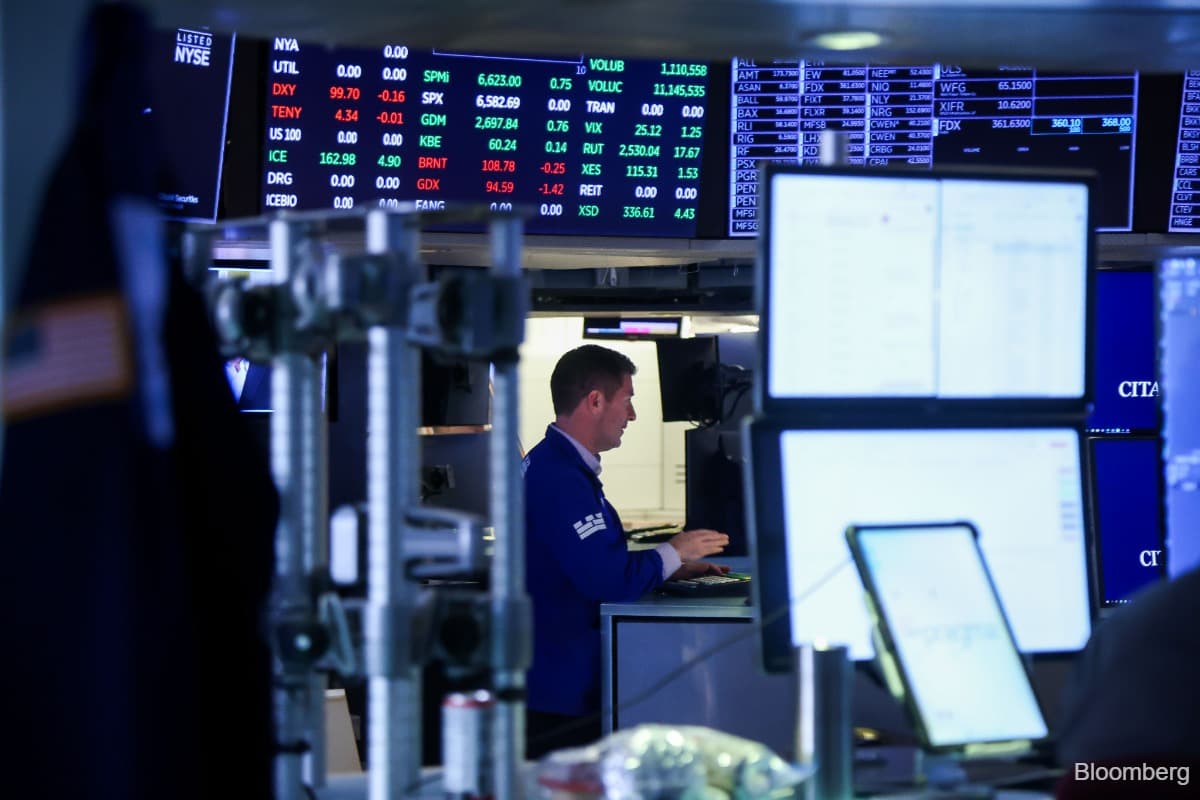
(July 30): Stocks ended sharply lower as concerns about inflation drove longer-dated bond yields to an almost two-decade high after the Federal Reserve (Fed) left rates steady despite a resurgence in oil prices.
The S&P 500 fell 1.5%, with the gauge also pummeled by a rout in chipmakers. The Nasdaq 100 entered a technical correction, extending a slide from a record to 11%. Treasury 30-year yields hit the highest since 2007. Brent crude topped US$90. In late hours, Meta Platforms Inc gave a lackluster forecast. Microsoft Corp’s cloud unit grew at the fastest pace in four years.
Fed Chairman Kevin Warsh insisted policymakers’ decision to leave interest rates unchanged wasn’t a sign of inertia at the central bank, which he reiterated is committed to tackling price pressures.
He added markets will be freer to chart their own course based on economic signals. With guidance curtailed, “participants are learning to play the ball and not the referee,” he said, noting a tightening in financial conditions since the last meeting “provided us some comfort that we’ve got the ability and capability to deliver” on inflation.
The absence of explicit forecasts — and Warsh’s nods to market autonomy — may have spurred volatility in bond rates.
Apollo Global Management’s Torsten Slok said the Fed’s abandonment of guidance is fueling historic bond market volatility, sending Treasury yields swinging “up and down like a yo-yo.”
“There is very little to hang your head on in the markets,” Slok told Bloomberg Television. “It was also a little bit complicated to figure out what was the basis of the decision today.”
“Not that I thought hiking to establish credibility was the reason to do a hike, but instead of hiking to establish credibility, Warsh held, said we are in a period of watchful thinking and squandered some credibility,” said Neil Dutta at Renaissance Macro Research.
Warsh’s press conference statements, which emphasized the Fed’s commitment to price stability, resilient economic growth and persistently above target inflation, suggested that some policy firming may still be warranted, although maybe not as imminently as the markets had priced, according to Tiffany Wilding at Pacific Investment Management Co.
“Warsh said nothing to signal that a hike could come as soon as September,” she added.
Warsh indicated that one of the key questions debated is how effective interest-rate changes are in combating economic shocks, and also how economic shocks translate into intermediate-term inflationary pressures, according to Josh Jamner at ClearBridge Investments.
“However, consistent with his stated preference to provide less guidance to financial markets, Warsh offered precious few clues as to his current thinking on these key questions,” he said.
Uploaded by Isabelle Francis