

PUTRAJAYA (July 29): The apex court has canned Datin Seri Rosmah Mansor's leave (permission) application to recuse the trial judge in her concluded solar graft case while seeking a retrial.
In a unanimous decision, a three-member review panel, led by Chief Judge of Sabah and Sarawak Datuk Azizah Nawawi, said that Rosmah's application did not satisfy the high threshold required by law.
"The applicant did not pass the threshold, and the appeal is therefore dismissed," the judge said.
Azizah noted that although the court had powers to review its own decision, that power had to be exercised cautiously, and cannot be used as a general right of appeal. She also emphasised that there had to be finality in litigation.
Federal Court judges Datuk Lee Swee Seng and Datuk P Ravinthran also sat on the panel on Wednesday.
Rosmah had been seeking permission to review an earlier apex court decision, which had dismissed her final bid to recuse trial judge Datuk Mohamed Zaini Mazlan, in the case related to a solar hybrid project for 369 rural schools in Sarawak.
In the March decision, senior apex court judge Datuk Nordin Hassan, who had led that court’s three-member panel, found that Rosmah had failed to establish a real danger of bias by Zaini.
Rosmah's appeal centred around the two draft notes or "judgement" which leaked at the 11th hour before Zaini, now an appellate court judge, delivered his decision on Sept 1, 2022.
Rosmah alleged that these notes or drafts, which were prepared by the KL High Court's research team, were akin to a judgement, and even contained a "guilty" verdict which may have influenced the trial judge.
That apex court panel, which also consisted of Datuk Che Ruzima Ghazali and Datuk Azimah Omar, affirmed the Court of Appeal’s (COA) decision in this case, noting that the COA also found that the prepared notes and draft differed from Zaini's actual written judgement.
Rosmah had also been seeking a review of her recusal application against Nordin and Che Ruzima. The apex court panel had dismissed this application at that time.
Rosmah contended that both these judges had heard appeals related to the solar case and therefore should recuse themselves as there was a real danger of bias.
On Wednesday, the review panel found that there was no quorum failure as argued by Rosmah's lawyers.
Azizah noted that quorum failure was specific and narrow, where, for example, two out of three judges were not present.
The judge noted that that was not the case in Rosmah's matter, as all three judges were present and fully capable of fulfilling their duties.
Azizah also said that there was no real danger of bias, as both Nordin and Che Ruzima had heard applications linked to Rosmah's judicial reviews and had not gone into the merits of the solar case.
Although the Federal Court is the final avenue for some appeals, on rare occasions, disgruntled parties can apply for a review of the decision made by an earlier bench.
A different panel of judges will then preside over the review hearing. However, one must first seek leave (permission) before the case is heard substantially.
In the solar case, Rosmah, the wife of former prime minister Datuk Seri Najib Razak, was found guilty on all three counts of graft, and was sentenced to 10 years’ imprisonment and fined a whopping RM970 million — the largest amount ever imposed by the High Court for a graft case.
Rosmah's main appeal against the conviction and sentence can now finally proceed. The appeal has been on hold until the full disposal of this application.
The COA is set to hear the appeal in September.
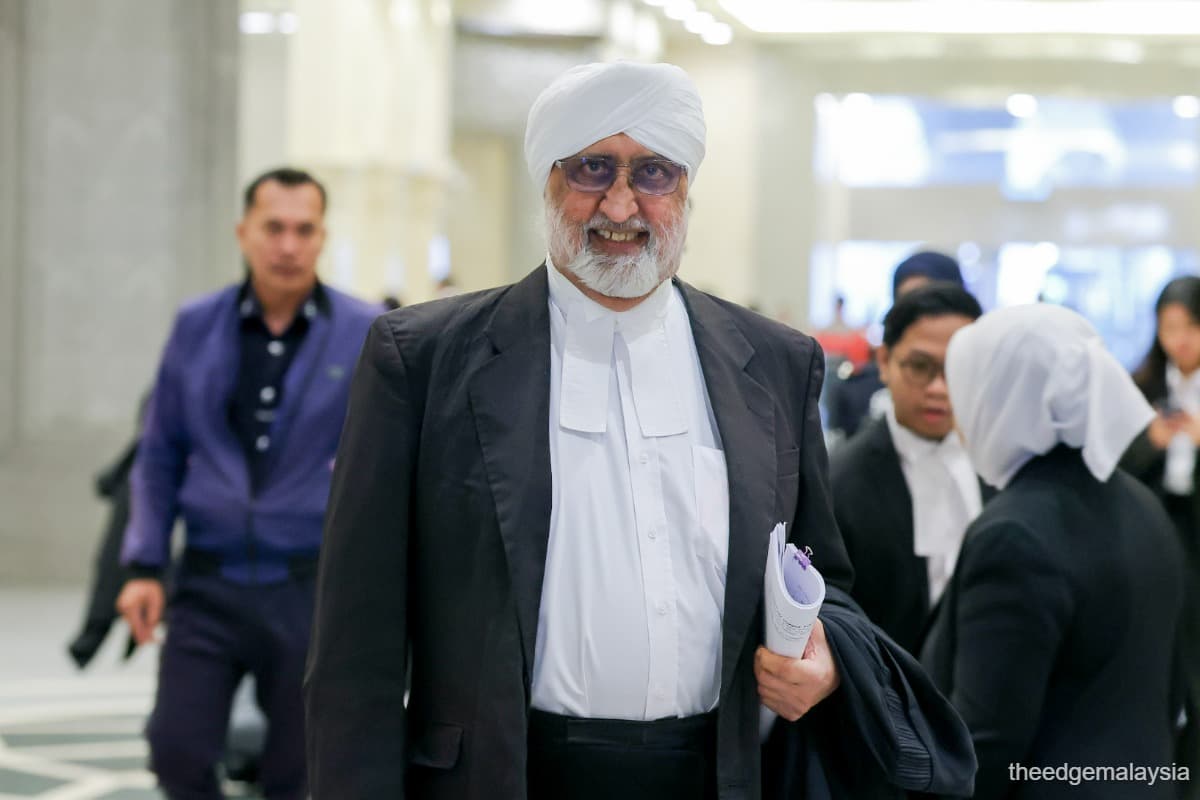
On Wednesday, Rosmah was represented by lawyers Datuk Jagjit Singh, Datuk Akberdin Abdul Kader, Azrul Zulkifli Stork, Datuk Firoz Hussein Ahmad Jamaluddin, and Datuk Amer Hamzah Arshad.
The prosecution was led by deputy public prosecutors K Mangaiarkarasi and Mohd Asnawi Abu Hanipah, who are the Trial and Appellate Division's appeals unit head and trials unit heads, respectively, at the Attorney General's Chambers.