

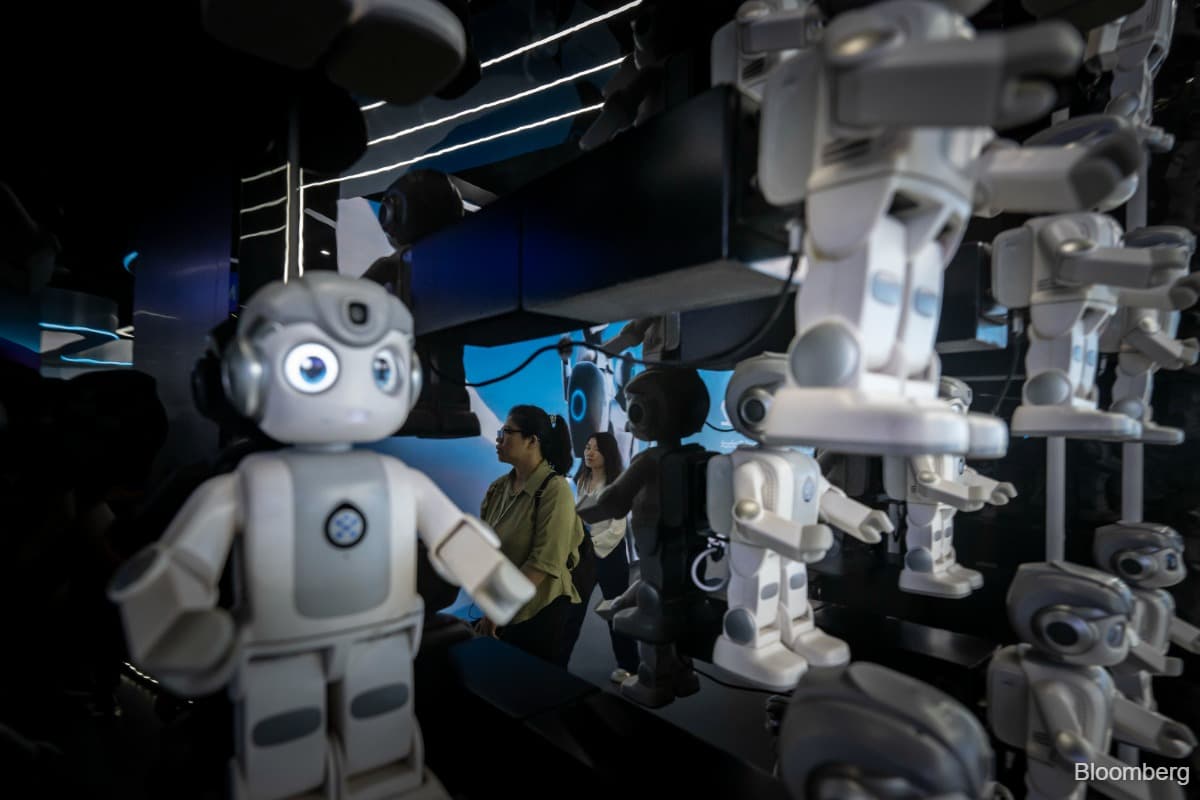
(June 29): Washington tightened curbs on some foreign-made robots and inverters, vital components of solar-powered electricity, in a sweeping move that risks widening its tech confrontation with Beijing less than two months before a meeting between the countries’ leaders.
Citing possible “supply chain vulnerabilities” identified by national security officials, the Federal Communications Commission said on Tuesday it was adding “advanced robotic devices” and connected inverters to its registry of communications-related items it considers posing an “unacceptable risk".
The announcement didn’t mention Beijing directly, saying only the curbs apply to foreign-made products. However, given China’s dominance in robotics and inverters, which convert solar and battery power into usable electricity, the move is effectively a targeted ban.
Companies can seek exemptions from the Department of Defense or Department of Homeland Security, the FCC said.
China responded on Wednesday by saying it opposed the use of the concept of national security to target Chinese companies. Beijing will take “all necessary measures” to defend its firms, Foreign Ministry spokesperson Mao Ning said at a regular press briefing.
Washington’s move will likely add to tension between the economic superpowers even as officials try to maintain a fragile trade truce before US President Donald Trump and Chinese counterpart Xi Jinping meet again in September.
On Monday, the Commerce Ministry in Beijing warned Washington against sanctioning Chinese artificial intelligence companies. The FCC earlier targeted drones — another industry in which China leads. It said in December last year that it would ban foreign-made drones along with critical components for unmanned aircraft systems.
Chris McGuire, a senior fellow at the Council on Foreign Relations who served in the Trump and Biden administrations, said in a post on X that the move could be “transformational” for the US robotics industry by incentivising reshoring of robotics supply chains while preventing China from flooding the US market with cheap robots that also pose national security risks.
“This is a very, very big deal,” McGuire wrote. “Moving forward, new Chinese robots won’t be able to be sold in America.”
The picture may be less positive for solar power, where US capacity addition will likely slow, even though China’s dominant producers will suffer in the near term.
Last year, according to BloombergNEF, Chinese companies accounted for 91% of the world’s production of inverters, components which convert the direct current electricity produced by solar panels and batteries into alternating current used in power grids and appliances.
Shares of some Chinese inverter makers slid on the news. Heavyweight Sungrow Power Supply Co fell 5%. It had dropped 14% on July 1 when news of a potential ban surfaced, while GoodWe Technologies Co lost 1.5%.
Sungrow is particularly reliant on international markets, with 60% of its revenue generated outside China last year. Some 30% to 40% of its gross profit from inverter sales came from the US in 2025, according to an estimate by Citigroup Inc.
Chinese robotics firms largely shrugged off the news. The Solactive China Humanoid Robotics Index rose 1%. UBTech Robotics Corp rose 1.7%.
UBTech Robotics, which has sales deals with Texas Instruments Inc, didn’t immediately respond to a request for comment. Unitree Robotics, which provides robots used for research at universities, also didn’t respond to a request for comment.
Uploaded by Arion Yeow