


This article first appeared in Wealth, The Edge Malaysia Weekly on July 27, 2026 - August 2, 2026
Intrinsic SEA Sdn Bhd, a cross-border technology advisory and investment firm, is launching a US$50 million (RM204.35 million) Malaysia-based fund to help established overseas technology companies — particularly from China — set up a presence in Southeast Asia.
The firm aims to launch the fund by mid-2027. It is applying for the VC Golden Pass, a programme under the KL20 Action Plan aimed at propelling Kuala Lumpur into the ranks of the top 20 global start-up hubs by 2030.
Under the programme, eligible VC firms with at least US$100 million in global assets under management must establish a physical office in Malaysia and maintain at least two locally based investment professionals.
In return, the VC Golden Pass provides an expedited registration process with the Securities Commission of Malaysia (SC), cutting the approval timeline from six weeks to two — subject to complete documentation and the SC’s requirements.
Other forms of support include facilitation of subsidised office rental at established start-up hubs through the Malaysian Research Accelerator for Technology & Innovation (MRANTI), and visa support for founders and senior officers of VC firms through Malaysia Digital Economy Corporation.
Intrinsic SEA is a subsidiary of the Canada-based Intrinsic Group. Its founder Alec Wang is the CEO and co-founder of Canada-based technology firm ClickDishes Inc, according to his LinkedIn profile.
At the helm of Intrinsic SEA is CEO Ravenna Chen, a Chinese national from Kunming, the capital of Yunnan province. She has studied and lived in Malaysia since 2014. She is a former director of Asia-Pacific operations at Tsinghua University’s TusStar, one of China’s largest technology incubator networks and innovation platforms.
The Intrinsic Group is a strategic partner of TusStar.
Intrinsic SEA has recently come under the spotlight as it is the only firm that has formally announced it is applying for the VC Golden Pass.
A total of 12 global VC firms signed letters of intent to establish offices in Kuala Lumpur during the KL20 Summit, held in April 2024 at the Kuala Lumpur Convention Centre. The VC Golden Pass programme was announced during the summit. Among the 12 VC firms, London-based Nordstar and GP Bullhound have established their presence locally, but it is not clear whether they are participating in the programme.
In an interview with Wealth, the 31-year-old Chen says Intrinsic Group and Intrinsic SEA position themselves as professional investors that welcome limited partners (LPs) globally, and that they have no direct ties to the Chinese government or its agencies.
According to Chen, she grew up as an only child under the country’s one-child policy, with her father serving as a judge and her mother working as an electrical engineer at a state-linked company.
She intended to study in the US, but came to Malaysia in 2014 after receiving a scholarship from HELP University following her participation in a Model United Nations competition.
According to her LinkedIn profile, Chen graduated from HELP University with a degree in accounting and a Master of Business Administration (MBA). She also went through the Malaysia Business Leaders Executive Programme at Tsinghua University and the International Technology Transfer Programme at the Georgia Institute of Technology, among others.
She spent five years leading the Malaysian operations and Asia-Pacific partnerships of TusStar, a role that enabled her to build relationships with Chinese technology companies and the wider Tsinghua ecosystem.
Intrinsic Group and TusStar later established a joint accelerator to help Canadian and Chinese technology companies enter each other’s markets. Chen joined Intrinsic Group as an international adviser through that collaboration, subsequently became a shareholder and now leads Intrinsic SEA.
She is also the chairperson of the Asean Technology Cooperation and Development Summit.
Why does she remain interested in applying for the VC Golden Pass, despite no successful applicants having been announced in the two years since its launch?
Chen explains that she sees strategic value in the programme, as Intrinsic SEA requires government support to help overseas technology companies enter regulated industries locally.
“For instance, having a Malaysian government-linked fund participate as an LP would provide not only capital, but recognition, policy alignment and stronger support for technology localisation and regional expansion.
“It would also allow us to move beyond being an intermediary and become a long-term investor and growth partner to the companies we support,” she says.
Drawing on resources from China
Intrinsic SEA’s parent company, Intrinsic Group, plans to commit 40% of the capital for the upcoming fund. The remainder of the US$50 million fund will be raised from strategic LPs, with several discussions ongoing.
The firm is targeting Malaysian institutional and strategic investors, as well as family capital from Hong Kong and Macao. The participation of Malaysian corporations as LPs would be valuable, not only for their capital but also for their customer base, pilot sites and opportunities for wider commercial deployment, says Chen.
So, how does the investment work? Chen says Intrinsic SEA would identify an established overseas technology company seeking to enter Malaysia and work with it to build a local business. The company could establish a Malaysian subsidiary or form a joint venture with a local partner, depending on the project.
Intrinsic SEA would guide the company through the establishment process, including obtaining approvals, meeting local regulatory and data-governance requirements, and identifying local partners and customers.
Once the Malaysian business demonstrates its commercial viability, Intrinsic SEA’s fund could take a minority stake in the company to finance its growth in Malaysia and expansion into other markets.
“The investee company’s valuation can increase as its business grows. Investors may ultimately realise returns through multiple exit channels, including an IPO, merger or acquisition, annual dividend distributions or a strategic share sale,” says Chen.
Much of Intrinsic SEA’s initial project pipeline comes from Chen’s network in China, though companies from other markets will also be considered.
The firm is drawing on those relationships to identify Chinese technology companies prepared to establish operations in Malaysia and use the country as a base for expansion into regional and global markets.
Chen says its current reliance on China reflects commercial realities rather than political preference. She argues that China has invested heavily in research and manufacturing over several decades and now offers technologies with a combination of price and capability that is difficult to find elsewhere.
“It’s not that we only chose China; at this stage, we don’t have many other choices for certain technologies. From a purely business perspective, the Chinese providers offered the best combination of price and quality,” she explains.
Malaysia was selected as the base because it combines an established industrial sector with access to the wider Southeast Asian market. Its relationships with China and Western economies also make it a relatively neutral landing point for overseas companies seeking regional expansion.
“As the company enters more countries, builds a broader customer base and develops stronger international capabilities, its overall enterprise value can increase further. When new strategic shareholders or institutional investors enter at a higher valuation, we may also partially or fully exit our investment at a premium to the company’s market value,” says Chen.
Building a pipeline of investable companies
Intrinsic SEA is now building a pipeline of overseas technology companies that can establish operations and prove their commercial potential in Malaysia before capital is deployed from the proposed US$50 million fund.
“I don’t worry about our ability to raise money. But I do worry that after we raise money, we don’t have enough good projects to invest in. So, we are working on both sides at the same time,” says Chen.
The first three companies in that pipeline are China-based Maimai Technology, Kangma Biotech and Honesort (see “The three companies entering Malaysia”).
Intrinsic SEA has signed consulting agreements with all three and is currently acting as their market-entry adviser. Chen says the companies are in the first month of an initial six-month process to establish their Malaysian operations, obtain regulatory approvals, identify local partners and customers, and test commercial demand.
All three are also considering local research or laboratory facilities and are open to joint ventures or other forms of collaboration with Malaysian partners.
Following the initial six-month market-entry phase, Intrinsic SEA would assess each Malaysian business for potential investment. Chen says it would look for evidence of commercial progress, such as sales or significant customer contracts.
If a company meets those milestones, Intrinsic SEA could deploy capital through the proposed fund, which would acquire a minority stake in its Malaysian operating business.
The capital would be used to build the company’s operations in Malaysia. Depending on the business, this could involve purchasing machinery or setting up laboratories. It could also support local research and hiring.
As the company grows, the funding would provide working capital and finance its expansion into other Southeast Asian markets.
Post-investments, the foreign technology company could continue to control the business, with a Malaysian partner joining as a shareholder, or a Malaysian partner owning and operating the business while the foreign company supplies the products.
Intrinsic SEA hopes to expand this initial pipeline from three to 10 overseas technology companies, says Chen.
Another route for bringing overseas technology companies into Malaysia begins with a Malaysian corporate customer willing to test their solutions. In this regard, Intrinsic SEA is working with Malaysian solar developer Itramas Corp Sdn Bhd to identify overseas technologies that could address problems across its operations.
Intrinsic SEA spent more than four months working with Itramas to define those needs. It then assessed technologies from 20 to 30 overseas companies and Itramas shortlisted six providers for potential pilot projects.
Products and services from the six providers include solar site-monitoring systems, smart helmets, nano-coatings, solar-panel-cleaning robots, battery energy-storage systems and ground-surveillance robots.
The pilot projects would test whether these technologies can meet Itramas’ needs. If successful, Chen says they would be deployed across a 4,000-acre solar development, which would give the providers a major Malaysian customer and a reference project.
With this track record, the foreign tech providers could then establish a subsidiary or joint venture in Malaysia to serve Itramas and also pursue other customers. Intrinsic SEA would help establish the local operation and assess its commercial progress. And once the business has demonstrated demand and requires capital to expand, the proposed fund could take a minority stake.
The subsidiary or joint venture established in Malaysia could later serve as the technology provider’s regional base. It could supply equipment and manage contracts across Southeast Asia.
Chen says Intrinsic SEA is also developing a broader pipeline through the Southeast Asia Advanced Manufacturing & Technology Council (Seamat).
The council was officially established this year through a formal joint partnership between Intrinsic SEA and the Guangdong Semiconductor Equipment and Components Society, according to online information.
Through Seamat, Intrinsic SEA is collaborating with a leading Chinese laboratory whose network comprises about 400 companies involved in advanced manufacturing and semiconductor equipment.
“A large number of these semiconductor companies are looking to establish a presence or overseas arm in Malaysia, so they also represent a strong pipeline for us. This is one of the key reasons we’re confident that we can attract high-quality companies for investment and long-term collaboration,” says Chen.
The three companies entering Malaysia
Intrinsic SEA is guiding the first three Chinese technology companies in its pipeline through a six-month market-entry process. It is helping them establish Malaysian operations, obtain regulatory approvals and identify customers.
It is also exploring partnerships with local businesses, universities and research institutions. Here are the companies and their plans for Malaysia:

1. Maimai Technology brings in automation
Maimai Technology develops artificial intelligence-enabled farming systems and agricultural robots. Its first planned application in Malaysia is a rubber-tapping robot. Rubber tapping is typically carried out late at night in difficult conditions, while plantations also face labour shortages.
Intrinsic SEA CEO Ravenna Chen says automation could allow latex to be collected and transported faster. This would reduce the risk of it drying before reaching buyers. Maimai also has systems that analyse agricultural data and determine how much water, fertiliser and sunlight different crops require.
Maimai has incorporated a Malaysian entity and opened an office here. Intrinsic is helping it identify plantations, customers, government agencies, and potential research and corporate partners. It is also assessing applications in rubber, oil palm, durian, cocoa, coconut and pineapple.
The rubber-tapping robots will require Malaysian approvals before they can be deployed. Maimai also plans to develop local research capabilities through partnerships with Malaysian universities or research institutions.
A machinery company could purchase the robots and lease them to plantations. This would allow farms to use the equipment without paying the full purchase price. Chen says each robot costs between RMB200,000 (RM120,653) and RMB1.5 million.
Maimai plans to prove its robot-leasing and agricultural-data models in Malaysia before taking them to Indonesia and other agricultural markets in Asean.

2. Kangma Biotech applies biotechnology in agriculture
Kangma Biotech has developed a DNA-to-protein platform that produces proteins in a laboratory without using living cells. Chen says the company was introduced to Intrinsic SEA through the Hainan government.
Its initial focus in Malaysia will be agriculture. Kangma has developed a type of potting soil that it says can improve plant growth and crop yields. Potential applications include jackfruit and other crops grown in Malaysia.
Kangma must obtain the relevant agricultural and biotechnology approvals before selling its products locally. Intrinsic SEA is helping it identify regulators, research partners and customers to test and commercialise the technology.
Intrinsic SEA is also discussing a potential collaboration with Universiti Malaya. “At the moment, the focus is on agricultural applications, although Kangma’s core technology is in the biotech field,” says Chen.
3. Honesort uses X-ray to sort ore
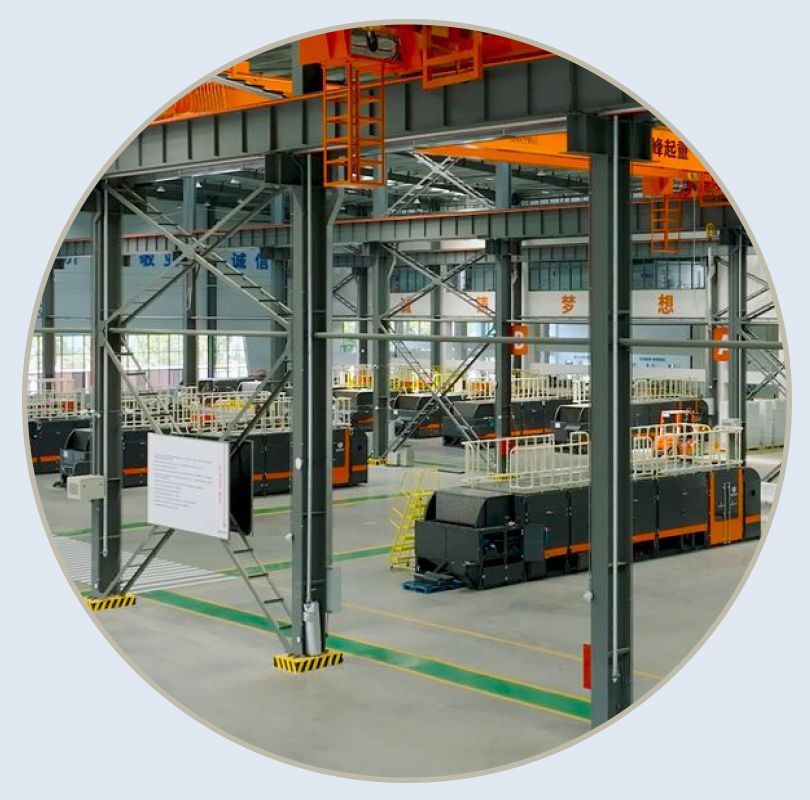
Honesort provides intelligent ore-sorting systems that use X-ray transmission technology to separate valuable minerals from waste material. The systems scan mined material before it is transported for further processing.
This could reduce transport and processing costs. It could also allow miners to sell higher-grade material. Intrinsic SEA is helping Honesort map Malaysia’s mining industry and identify potential customers.
Chen says Intrinsic SEA has begun speaking to potential customers in the mining sector in Terengganu and Pahang.
Samples from Malaysian mines currently have to be sent to China because Honesort has no laboratory here. “But in the future, we do want to set up our test laboratory in Malaysia,” she says.
The planned facility would allow Malaysian mining operators to test whether Honesort’s equipment is suitable for their ore. It could eventually serve mining customers from elsewhere in the region.
Chen says the machines cost between RMB1 million and RMB4 million each. Honesort could sell them directly or provide them under a revenue-sharing arrangement.
Under the revenue-sharing model, a mining company would not have to purchase the equipment upfront. Honesort would instead receive a share of the additional value generated by recovering and selling higher-grade minerals.
Save by subscribing to us for your print and/or digital copy.
P/S: The Edge is also available on Apple's App Store and Android's Google Play.