

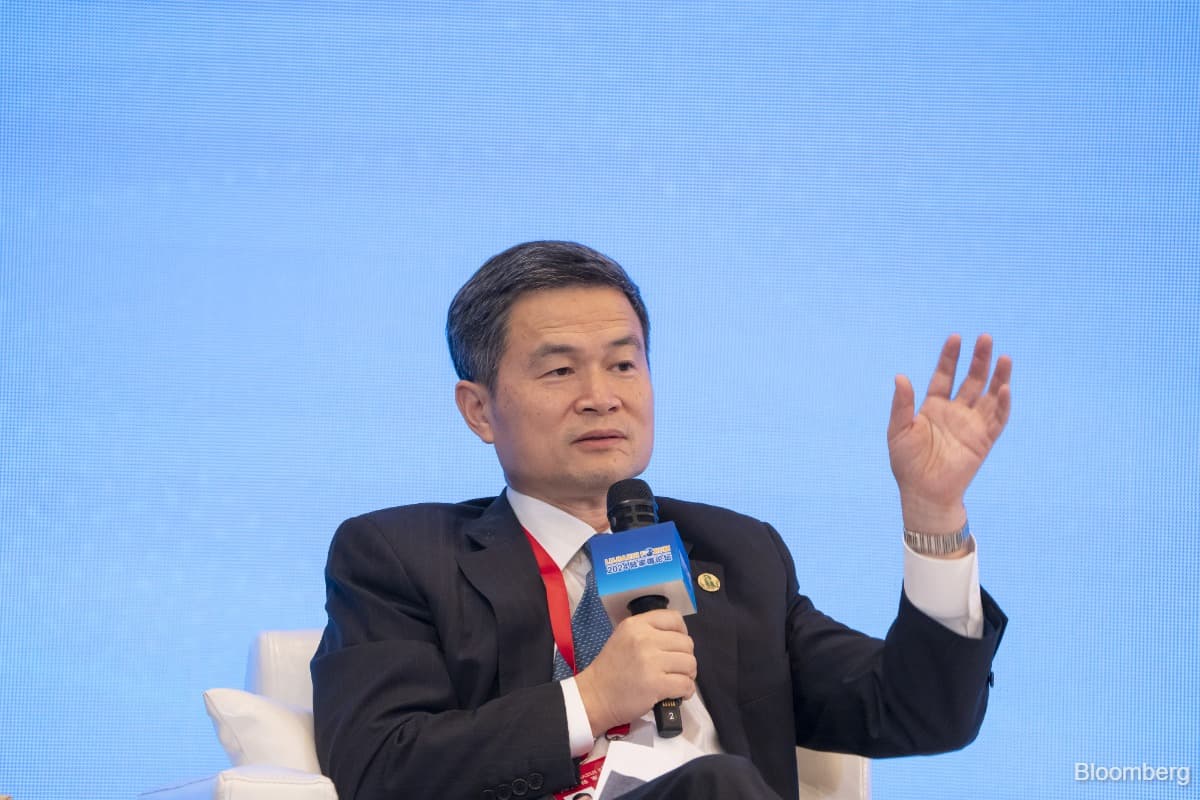
(July 27): China’s investigation into former securities regulator Fang Xinghai has pushed the number of financial-sector officials and executives ensnared in the country’s anti-corruption campaign to more than 400 since 2021.
Fang, a former vice chairman of the China Securities Regulatory Commission (CSRC) who played a pivotal role in opening the country’s capital markets to foreign investors, last week became the latest high-profile financial official to come under investigation for alleged “serious law and discipline violations.”
The number of financial-sector personnel disciplined or being probed this year alone has reached about 50, underscoring President Xi Jinping’s continued determination to maintain a firm grip on the country’s 556 trillion yuan (RM335.5 trillion) financial system, even as the pace of new cases moderates.
More than 400 officials and executives across banks, insurers, securities firms and financial regulators have been investigated or disciplined since 2021, according to data compiled by Bloomberg based on public disclosures from local government websites and the Central Commission for Discipline Inspection.
The news of Fang’s downfall still came as a surprise to some close observers, given his influence within the international community.
“I almost fell off my chair,” Daniel Senger, managing partner at Wilton Partners said when he heard the news on Friday night. Senger, who came in contact with Fang in 2006 when trying to help build UBS Group AG’s onshore operation, added that Fang’s absence leaves a void, with no obvious successor to champion financial-sector modernisation or serve as an effective conduit for foreign financial institutions seeking to navigate the country’s policymaking process.
Beijing has moved to centralise oversight of the financial industry while simultaneously waging a campaign against the “hedonistic” lifestyles associated with elite bankers.
The anti-corruption drive unleashed in 2021 has sent shockwaves through the sector and has gradually shifted focus. While the initial phase of the campaign concentrated on executives at state-owned banks, trust companies and financial conglomerates, authorities have increasingly turned their attention to regulators and officials responsible for supervising the industry.
Fang’s investigation follows the March probe into former National Financial Regulatory Administration Vice Minister Zhou Liang. Earlier this year, former CSRC chairman Yi Huiman was expelled from the Communist Party, while the watchdog’s former disciplinary chief Wang Huimin was charged for accepting bribes.
China also set up the Central Financial Discipline Inspection and Supervision Work Committee, a move that strengthened Xi’s influence over the sector.
This year’s cases have largely centred on officials overseeing corporate lending, credit approvals, asset management and provincial branches of major state-owned banks. Former executives from China Development Bank and the Agricultural Development Bank of China have also come under investigation, alongside officials from Industrial & Commercial Bank of China Ltd, Agricultural Bank of China Ltd, Bank of China Ltd, China Construction Bank Corp and Bank of Communications Co.
The pattern mirrors Beijing’s broader efforts to reduce financial risks after years of aggressive lending to property developers and local government financing vehicles. Chinese banks are now contending with weak credit demand, record-low profitability and rising consumer bad loans. Xi has repeatedly described finance as the “lifeblood” of the economy and financial security as part of national security.
Uploaded by Evelyn Chan