

This article first appeared in City & Country, The Edge Malaysia Weekly on July 27, 2026 - August 2, 2026
It has been more than seven years since City & Country last sat down with Parkwood Holdings Bhd (KL:PARKWD). Back then, it was preparing to launch Utamara Boutique Residences, a low-density development in the established neighbourhood of Jalan Melati, PJU6A, Petaling Jaya.
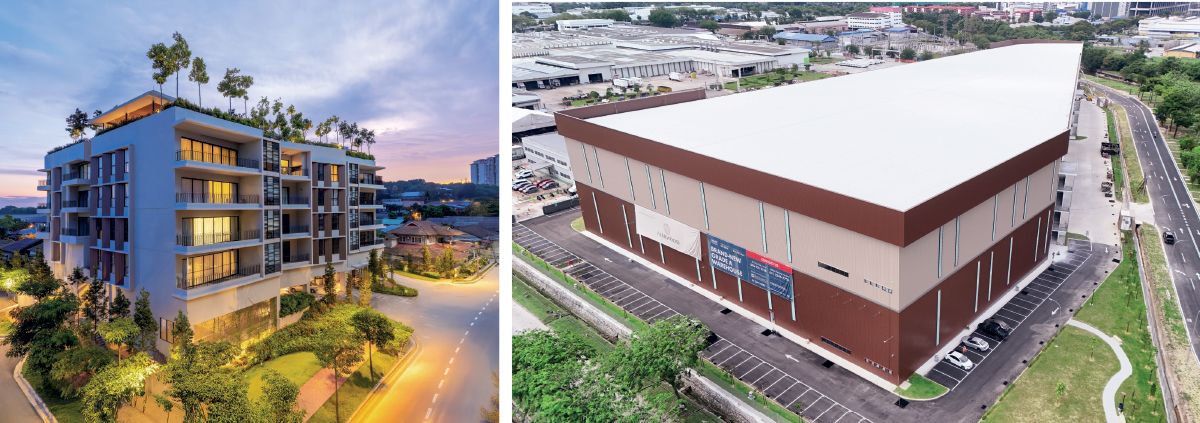
It was Parkwood’s maiden residential project, completed in September 2023, and much has changed since then. The 82-unit boutique development has achieved full take-up while garnering accolades such as the Fiabci Malaysia Property Award, the MLAA Landscape Design Award and the PAM Award.
The company itself has been busy with a development pipeline of more than RM680 million worth of projects over the next 20 months, spanning residential and mixed-use properties across the Klang Valley.
The journey has hardly been straightforward. Like many developers, Parkwood found its momentum interrupted by the Covid-19 pandemic, which slowed construction activity, delayed approvals and lengthened what was already an extensive development process.
“Property development has a very long gestation period. From the day we acquire the land, we have to go through planning approvals, conceptual design, submissions and land matters before we can even start building,” says Parkwood executive chairman Lim Chin Sean.
During the pandemic, the company deliberately chose caution over expansion, he says. Rather than pressing ahead with new launches amid an uncertain market, Parkwood concentrated on completing Utamara while conserving resources and preparing its next wave of developments.
“We kind of held on to the projects, knowing that during the pandemic, anything could go wrong. We focused on delivering Utamara first,” he recalls.
That patience has begun to bear fruit. Today, Parkwood has several key developments either completed or moving through various stages of execution, with additional projects taking shape further down the pipeline.
The intervening years also marked an important milestone for the company itself.
Following the divestment of its steel trading operations in 2020, Parkwood — formerly known as Amalgamated Industrial Steel Bhd (AISB) — focused exclusively on property development. Bursa Malaysia subsequently reclassified the business as being in the property sector, from the industrial products and services sector previously, before shareholders approved the change of name to Parkwood Holdings Bhd in early 2021, to reflect its principal business.
Lim points out that the company’s ambitions have never been measured purely by the size of its land bank or the number of projects under development.
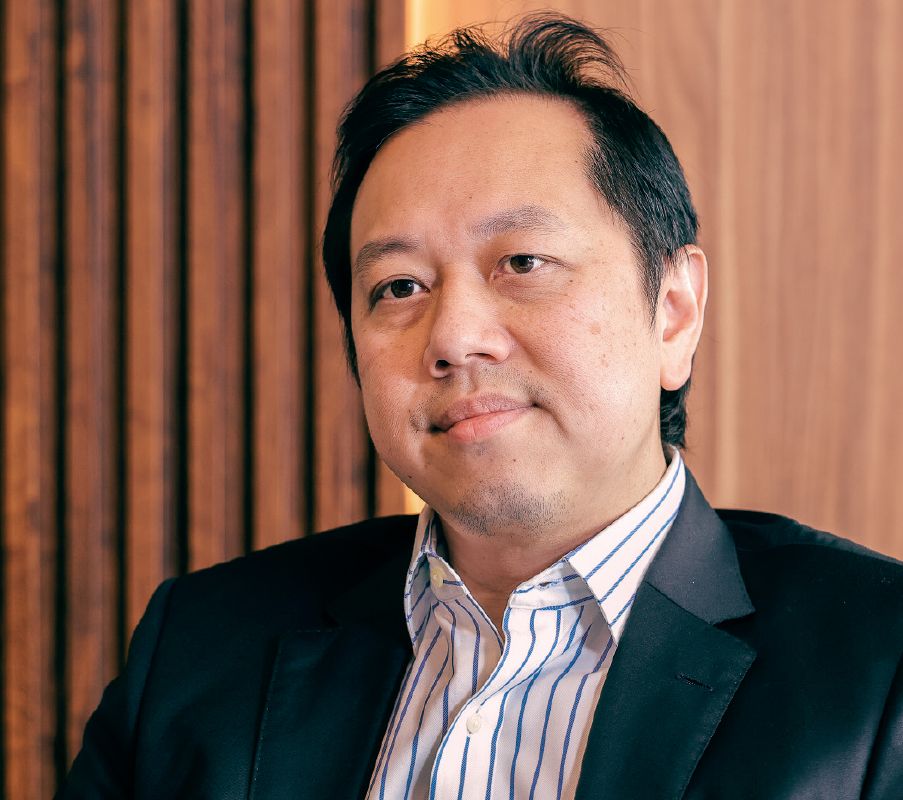
“We don’t want to be overcommitted. We want consistent turnover and value while managing projects that match our financial strength and resources,” he says.
That measured approach continues to shape Parkwood’s growth today. Although it remains focused on the Klang Valley, its portfolio today spans multiple asset classes, each responding to different market needs.
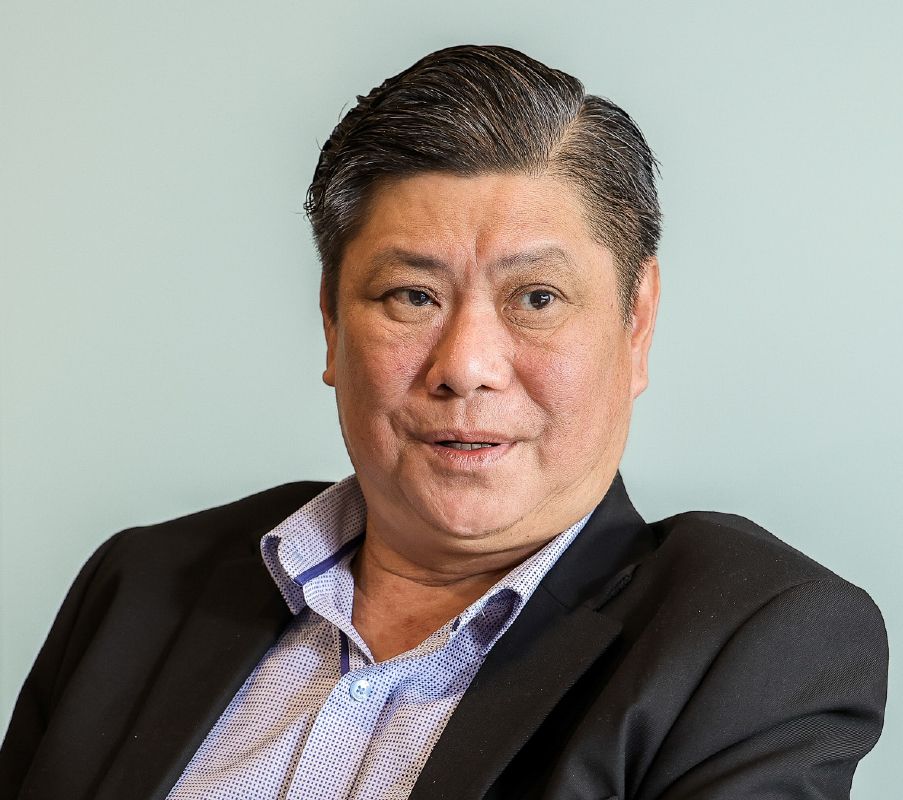
Parkwood chief operating officer Chan Keen Wai says the pipeline’s diversity is intentional. Rather than replicating the same formula from one development to the next, each project begins with an assessment of its location, surrounding catchment and prospective buyers.
“You can see that all our projects are quite different. It took us a while before the right sites emerged,” he says.
That is why the company expanded into industrial, landed residential and mixed-use developments rather than concentrating on a single product type, he adds.
Mixed-use development in Damansara Damai
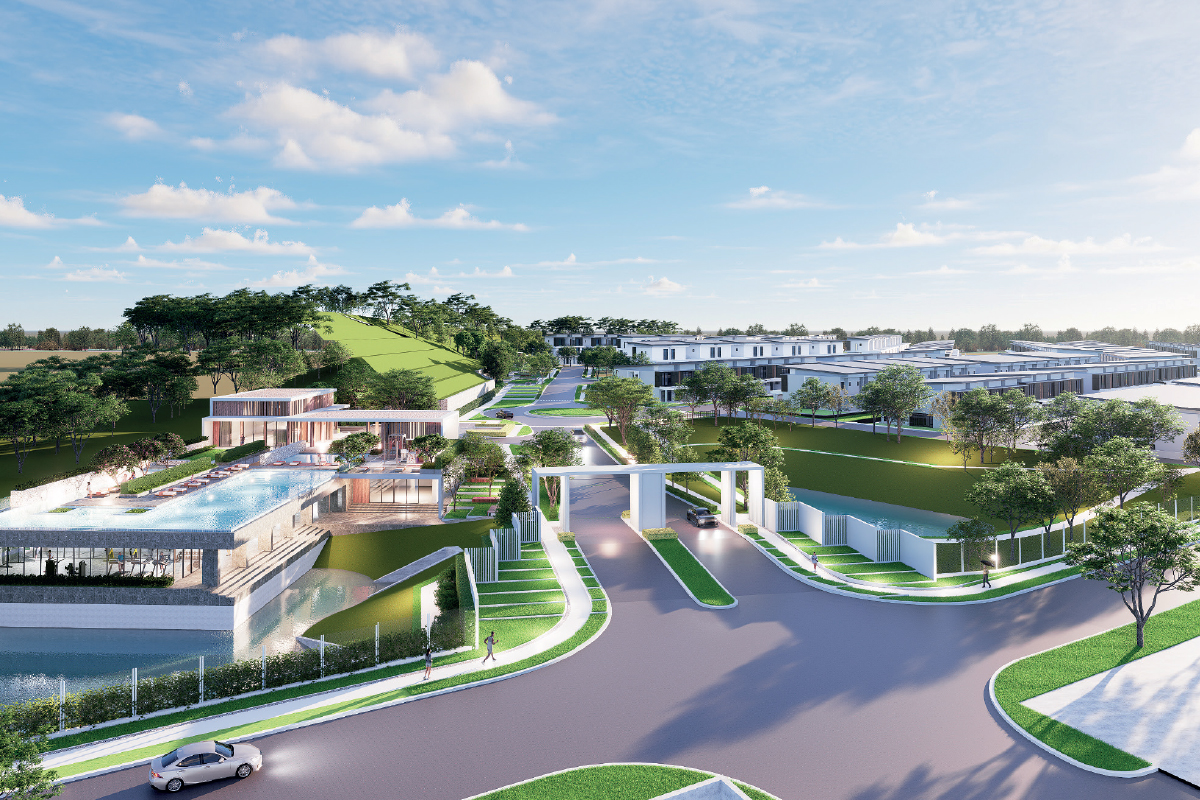
In Damansara Damai, Selangor, Parkwood is introducing a RM409 million mixed-use development called ParkWest Petaling Jaya.
The project will comprise 714 serviced apartments across two towers above an 11-unit retail podium on a 3.52-acre leasehold site, about 800m away from the Damansara Damai MRT station. The project will be launched in 1Q2027, with the indicative price starting from RM660,000, and slated for completion by 3Q2029.
Lim notes that ParkWest Petaling Jaya has been designed to appeal to a broad spectrum of buyers, from young professionals and first-time homeowners to growing families and investors.
The developer has introduced a range of layouts, from 550 sq ft 1+1 bedroom units to 4-bedroom homes measuring 1,140 sq ft. Meanwhile, the retail component is intended to provide convenience-based offerings that support the residents’ daily needs.
Chan says the surrounding catchment was a key consideration when planning the project.
“The area has a sizeable commuting population, whether they’re working in the surrounding industrial areas or elsewhere in the Klang Valley. That’s why we designed a mix of unit types,” he adds.
The development’s facilities were planned with the different generations in mind. “Whether they are younger families, older residents or children, everyone should have their own space in the residential community,” says Chan.
At ParkWest Petaling Jaya, the facilities will include swimming pools, indoor and outdoor gyms, a rooftop deck and a children’s playground, among others.
According to Lim, developments such as ParkWest reinforce a broader principle. “Every project has to suit the location. We don’t build the same thing everywhere,” he notes.
Landed homes in the pipeline
Parkwood’s pipeline includes a stratified landed property with a gross development value (GDV) of RM271 million in Rawang, Selangor.
Planned on a 32.3-acre freehold site, the project will comprise 273 units of 2-storey and 2½-storey terraced houses with a land area of 20ft by 70ft. The 2-storey houses will have an average built-up of 1,980 sq ft, while the 2½-storey ones will have an average built-up of 2,500 sq ft. Scheduled for launch in 1Q2028, the units have an indicative selling price from RM900,000.
Residents will have access to a clubhouse, swimming pool, gymnasium and multipurpose hall, among others.
For Chan, one of the site’s biggest attractions lies beyond the development itself. “It’s surrounded by greenery and forest reserves. When you’re standing there, you will really appreciate the surroundings,” he says.
In addition to the landed units, the project will feature a Rumah Selangorku affordable housing development, comprising 117 units with built-ups of 750 and 900 sq ft in a single 13-storey block. The entire project is slated for completion by 2Q2030.
Maiden industrial project
Before Utamara and the other developments, Parkwood’s first project was Avant Industrial Park in Shah Alam’s Seksyen 15. The space was previously used as AISB’s manufacturing facility.
Scheduled for completion in September this year, the RM208 million Phase 1 will comprise four 2-storey warehouses of about 58,800 sq ft to more than 97,000 sq ft on a 6.8-acre leasehold site. Instead of building conventional 1-storey warehouses, Parkwood opted for the 2-storey configuration that maximises land efficiency while incorporating features such as electric vehicle charging points, rainwater harvesting, LED lighting and natural ventilation.
According to Lim, three contracts for the warehouses are currently under negotiation.
“As a testament to our commitment to sustainable development, Avant Industrial Park is thoughtfully designed and developed in accordance with stringent GreenRE standards, incorporating best practices in energy and water efficiency, environmental sustainability, resource conservation, indoor environmental quality and green innovation to deliver a more efficient, environmentally responsible and future-ready industrial environment,” says Chan, adding that Parkwood is aiming for a GreenRE Silver certification for the project, while targeting to obtain a provisional certification by end-July.
He notes that the decision to opt for 2-storey warehouses reflects the changing industrial landscape. “Land in mature industrial locations has become increasingly scarce. A 2-storey warehouse allows occupiers to maximise land efficiency while providing flexibility for either a single tenant or multiple users,” he explains.
The project will incorporate landscaped open spaces and modern workplace amenities, reflecting a growing emphasis on creating more comfortable environments.
The broader LGB Group
While Parkwood’s immediate focus remains on the Klang Valley, the listed developer operates as part of the wider LGB Group, whose property interests span Malaysia and several overseas markets.
LGB Group is a diversified Malaysian conglomerate with businesses in public utilities, infrastructure, engineering and construction, property development and waste management, among others.
According to Lim, the group’s property business has evolved over the years into distinct platforms serving different roles. He is also a director of LGB Group and a director and major shareholder of Bellworth Developments Sdn Bhd, the property arm of LGB Group.
Parkwood was acquired by AISB from LGB Holdings Sdn Bhd and CS Lim Holdings Sdn Bhd in 2017. LGB Holdings is an indirect substantial shareholder of Parkwood through Telaxis Sdn Bhd, while LGB Group continues to undertake property developments through Bellworth Developments.
Bellworth Developments undertakes a broad range of projects, from commercial and mixed-use developments to hospitality developments in Malaysia and abroad. Local projects include its flagship commercial property Menara LGB and residential development The Greens in Taman Tun Dr Ismail, Kuala Lumpur.
Among its completed overseas projects is Lancer Square in Kensington, London, a luxury mixed-use development that is near Hyde Park and Kensington Palace. The property is now substantially occupied, with retail and office components also nearing full occupancy, according to Lim.
The group took a different approach in Hokkaido, Japan. Rather than developing a new property from the ground up, it acquired an ageing five-storey hotel during the pandemic, redesigned it and repositioned it as Nozo Hotel in Furano. Construction was completed in two years, and the hotel now anchors the group’s hospitality presence in the popular ski destination.
Adjacent to the hotel, Lyra by Nozo is currently under construction as a 20-unit condominium-hotel development that combines private ownership with professionally managed hospitality services. According to Lim, both projects reflect the group’s preference for markets that offer long-term stability while complementing its broader investment strategy.
A similar philosophy underpins the group’s investment in Australia. The group has established a presence Down Under through Quentin Square in Claremont, Perth. The boutique mixed-use development comprises luxury apartments and retail space in the established St Quentin lifestyle precinct.
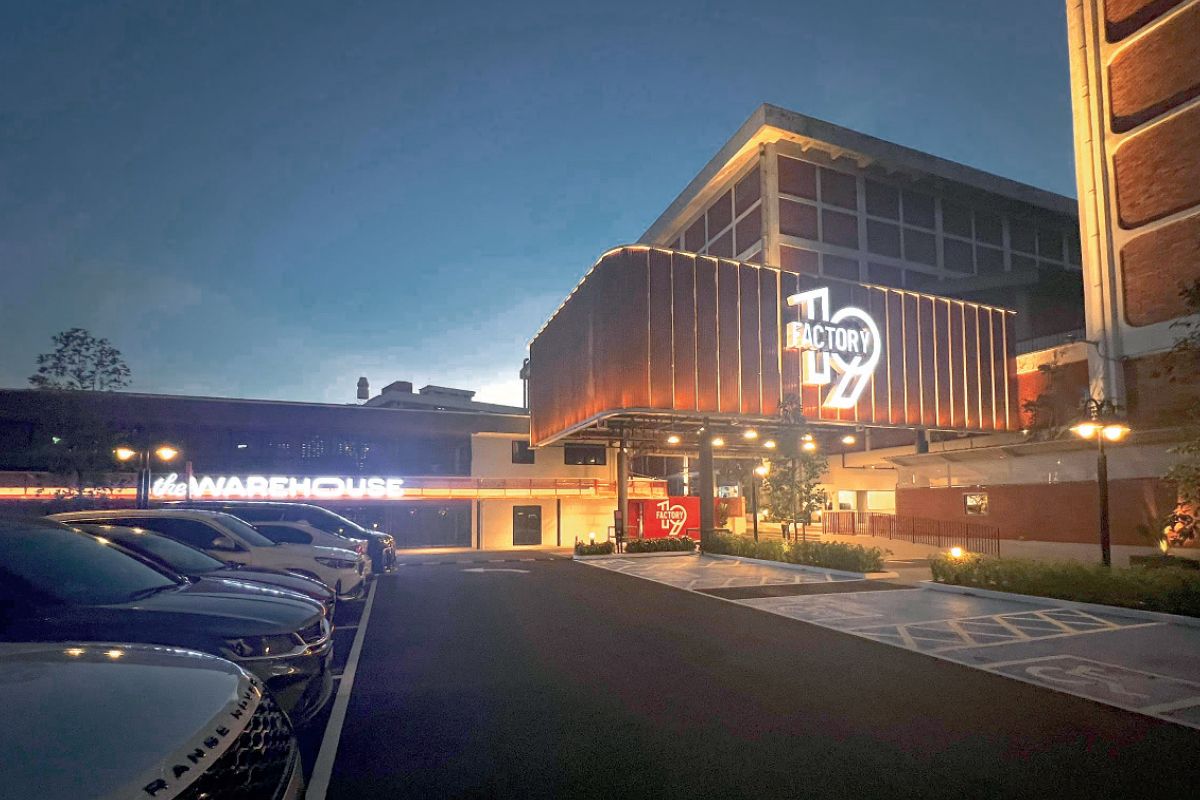
Back home, one of LGB Group’s more distinctive initiatives is Factory 19 in Petaling Jaya’s Section 19. Developed under Bellworth Developments, the project repurposed part of the former British American Tobacco (Malaysia) Bhd (KL:BAT) site into a lifestyle destination rather than demolishing the existing industrial buildings outright. Today, the development accommodates a growing mix of food and beverage operators, pickleball courts, wellness providers and community events, while retaining much of the site’s industrial character.
Lim says the adaptive reuse project reflects the group’s willingness to look beyond conventional property development.
“If you look around the world, many old factories have been repurposed. We have spent more time looking at how these places can create value rather than simply building something new,” he adds.
Factory 19 represents the first phase of the wider redevelopment of the former BAT site. The developer’s plans include commercial, retail, office and residential components that will gradually transform the site in the coming years.
A new addition to Taman Sea in PJ
According to Lim, LGB Group is planning a mixed-use development called West End Taman Sea in Petaling Jaya, Selangor. Located adjacent to Taman Megah, the 6.09-acre freehold site was previously occupied by used-car dealerships and automotive workshops.
With a combined GDV of RM1.07 billion, West End Taman Sea has been planned as a two-phase project. The first phase, Highstreet @ West End (GDV: RM126 million), will occupy 1.73 acres, while the second phase, West End Residences (GDV: RM944 million), will take up the remaining 4.36 acres.
Highstreet will comprise 16 units of four-storey shopoffices with built-ups of 7,025 to 12,615 sq ft, the indicative price of which starts from RM9 million. This phase is expected to be launched by 4Q2026, with completion anticipated by 1Q2029.
Meanwhile, West End Residences is slated to be launched in 4Q2027, with the indicative price starting from RM700,000. This residential component is expected to be completed by 3Q2031.
Lim says the first phase of shopoffices is aimed at establishing an active commercial address that serves both the surrounding community and businesses seeking a presence in the mature neighbourhood. He adds that building the commercial component first was a deliberate decision in its efforts to draw in the crowd before introducing the residential component.
As the neighbourhoods have evolved beyond purely residential enclaves, he observes that residents increasingly expect access to cafés, retail outlets, healthcare services and workplaces closer to home, making a new mixed-use development an attractive proposition.
In terms of accessibility, West End Taman Sea is within easy reach of the Damansara-Puchong Expressway and the nearby Kelana Jaya and Taman Bahagia LRT stations. Its proximity to commercial areas and Megah Rise Mall also enhances the project’s appeal.
Looking ahead
For Parkwood, the months ahead will see several projects move from planning to execution, marking another milestone in a journey that began with a single boutique residential development more than seven years ago.
While each project — whether industrial property, mixed-use development or landed housing — serves a different market, Lim believes they share a common philosophy. “It’s always about understanding the location first. Once you understand the site and the market, the product becomes much clearer,” he says.
That measured approach has also shaped the company’s pace of growth. Rather than rushing to build a large land bank, Parkwood has focused on strengthening its track record, completing projects and steadily expanding its pipeline.
“We are very low profile. We wanted to make sure all these milestones were achieved before we started talking about them. We have come to a stage where we have stabilised. Now, we are going for the next stage of growth,” says Lim.
Save by subscribing to us for your print and/or digital copy.
P/S: The Edge is also available on Apple's App Store and Android's Google Play.