

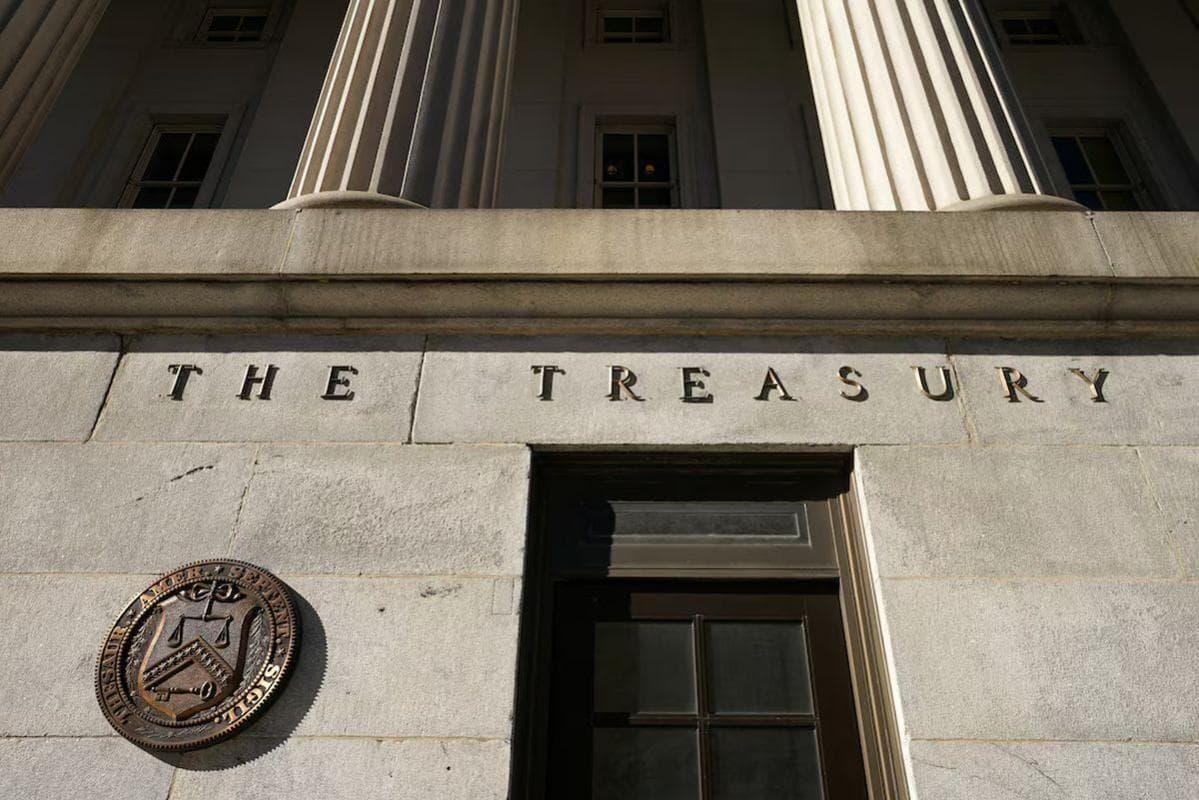
(July 23): The yield on 30-year Treasuries traded above 5% for a 14th straight day on Thursday, the longest such stretch since 2007, potentially hurting mortgage holders and raising the US government's long-term interest-rate bill.
The yield on the 30-year bond, which serves as a benchmark for consumer loans like mortgages, was last up 1.67 basis points at 5.1637%.
The 5% level is seen as critical to the stability of wider financial markets and has acted as a catalyst for major reversals in policy by US President Donald Trump, such as during April 2025's "Liberation Day" turmoil.
The two-year yield, which moves in lockstep with interest rate expectations, edged up 1.3 basis points to 4.315% to trade around 17-month highs.
Two-year Treasuries have risen by 14 bps this week, making them the worst performers among G7 nation bonds, for which yields have risen by an average 8.2 bps in this time.
While shorter-dated Treasury yields ebb and flow with expectations for Federal Reserve policy, the 30-year yield reflects investors' willingness to finance the government's borrowing for decades to come.
Its prolonged stay above 5% suggests investors continue to demand a hefty premium to shoulder the long-term risk, even as geopolitical tensions that would typically send money rushing into the safety of Treasuries have intensified.
Oil prices LCOc1 climbed as much as 4.6% to US$98.42 a barrel, hitting their highest since early June, as tensions flared between the US and Iran, and Yemen's Iran-aligned Houthis threatened to impose a naval blockade against Saudi Arabia in the Red Sea.
"Investors are increasingly concerned about policy unpredictability and are also looking to reduce years of overconcentration in US assets," said Stanislav Polezhaev, CEO of bond trading platform Bondfish, noting that corporate bonds were the most compelling opportunity.
Yields rose across the curve. The benchmark 10-year Treasury yield rose 2.19 bps to 4.679%, while the 20-year added 1.89 bps to trade at 5.189%.
Traders are pricing in a 33.7% chance of a rate hike at the Fed meeting next week, up sharply from 11.8% a week ago, according to the CME FedWatch tool.
The shift reflects the market's struggle to reconcile benign economic data with a more hawkish tone from the Fed and higher oil prices.
While US consumer inflation slowed more than expected in June, policymakers have warned the war could keep oil elevated and push prices higher.
"The muscle memory of recent years has kept many allocators from noticing the merits of fixed income," strategists at PIMCO wrote in a note, referring to the bond selloff in 2022 when the Fed raised rates to contain price pressures stemming from the Covid-19 pandemic and Russia's invasion of Ukraine.
The US government will sell $21 billion in 10-year Treasury Inflation-Protected Securities later on Thursday. Demand for the debt could come under scrutiny, given the concern about inflation.
Barclays strategists said that 10 out of the last 11 10-year TIPS auctions had "tailed", meaning the yield achieved in the sale was higher than where the market had been trading earlier on, a sign of weak demand.
Uploaded by Lam Seng Fatt