

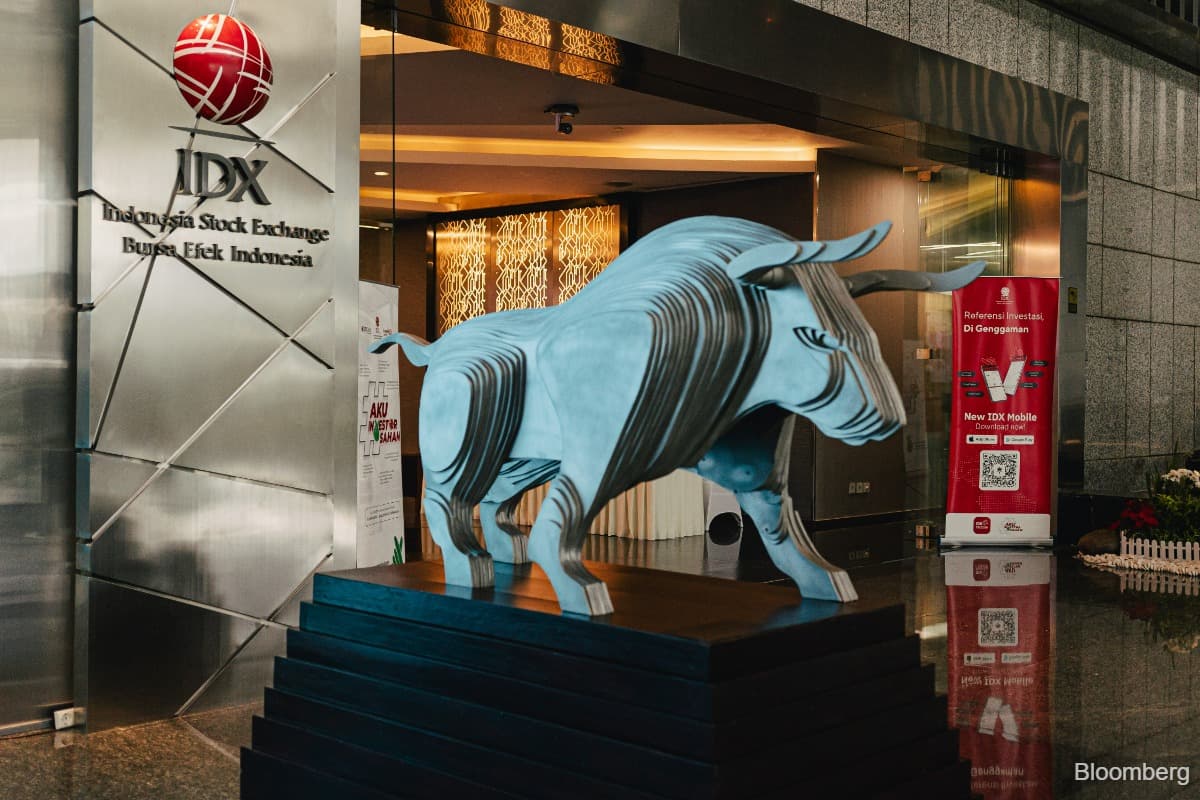
(July 23): A rally in Indonesian stocks put the nation’s benchmark index on track for a bull market, helped by a regional rebound as well as a recent credit-rating announcement.
The Jakarta Composite Index jumped as much as 1.5% on Thursday to 6,430.76 points, extending gains since its early June low to 20%. Commodity heavyweights PT Amman Mineral Internasional and PT Barito Renewables Energy were top point advancers.
Sentiment is on the mend in the world’s worst-performing stock market this year, as recently easing oil prices, Bank Indonesia’s cumulative 50-basis-point interest-rate hikes in June and S&P Global Ratings’s decision to maintain the nation’s rating and outlook helped stabilise markets.
“My view is the June 8 low will hold, as the market is increasingly pricing in stabilisation rather than deterioration now,” said Mohit Mirpuri, a partner at SGMC Capital Pte Ltd in Singapore.
Still, because Indonesia remains an under-owned market, “the cost of being wrong by waiting for the recovery has now become greater than the cost of being selectively early”, he added.

Traders say that a large part of the rally has been driven by government efforts to shore up confidence across Indonesia’s struggling capital markets. Bank Indonesia unexpectedly held its benchmark rate at 5.75% on Wednesday and unveiled a range of incentives aimed at attracting inflows and supporting the rupiah. Meanwhile, officials have stepped up fiscal discipline efforts, including scaling back the country’s ambitious free lunch programme.
The rupiah strengthened by more than 1% on Thursday from its record low in early June, while the 10-year government bond yield slid more than 10 basis points from three-year highs reached later that month. Up 14% this month, the JCI has topped global benchmarks.
Still, questions remain over the sustainability of the rebound. Despite the recent rally, the benchmark is still down some 26% this year as worries about market transparency and the direction of President Prabowo Subianto’s economic agenda persist. MSCI Inc will still need to make a final call on whether to downgrade the nation’s equities to frontier status in November, as does S&P Dow Jones Indices, which has also signalled a possible reclassification.

Fund flows suggest global money managers remain cautious. Foreigners continue to be net sellers of the country’s stocks on a daily, weekly, monthly and annual basis. While they’ve pulled US$161 million (RM657.94 million) this month, selling has eased from June’s more than US$1 billion in outflows.
The market has yet to price in reform measures to stave off any downgrades, with underweight positions from long-only investors “quite huge”, Rajiv Batra, JPMorgan Chase & Co’s co-head for global emerging markets equity strategy, said in an interview with Bloomberg TV.
Once they start pricing in that Indonesia will remain in the emerging-markets benchmark, and MSCI signs off on what policymakers have done, “I think the inflows will start coming back to Indonesia, and the rally will become much more sustainable for Indonesian equities,” he added.
Uploaded by Chng Shear Lane