

GOVERNMENTS around the world are racing to build integrated “mine-to-magnet” rare earth value chains. Billions of dollars are being committed in pursuit of supply chain resilience, industrial competitiveness and national security. The underlying assumption appears self-evident: secure the mine, and the downstream industry will follow.
But what if we have been looking at the value chain from the wrong end?
The debate is often framed as a question of supply. In reality, it is fundamentally a question of markets.
Industrial value chains do not begin with production. They begin with demand.
Viewed through that lens, the rare earth value chain looks very different:

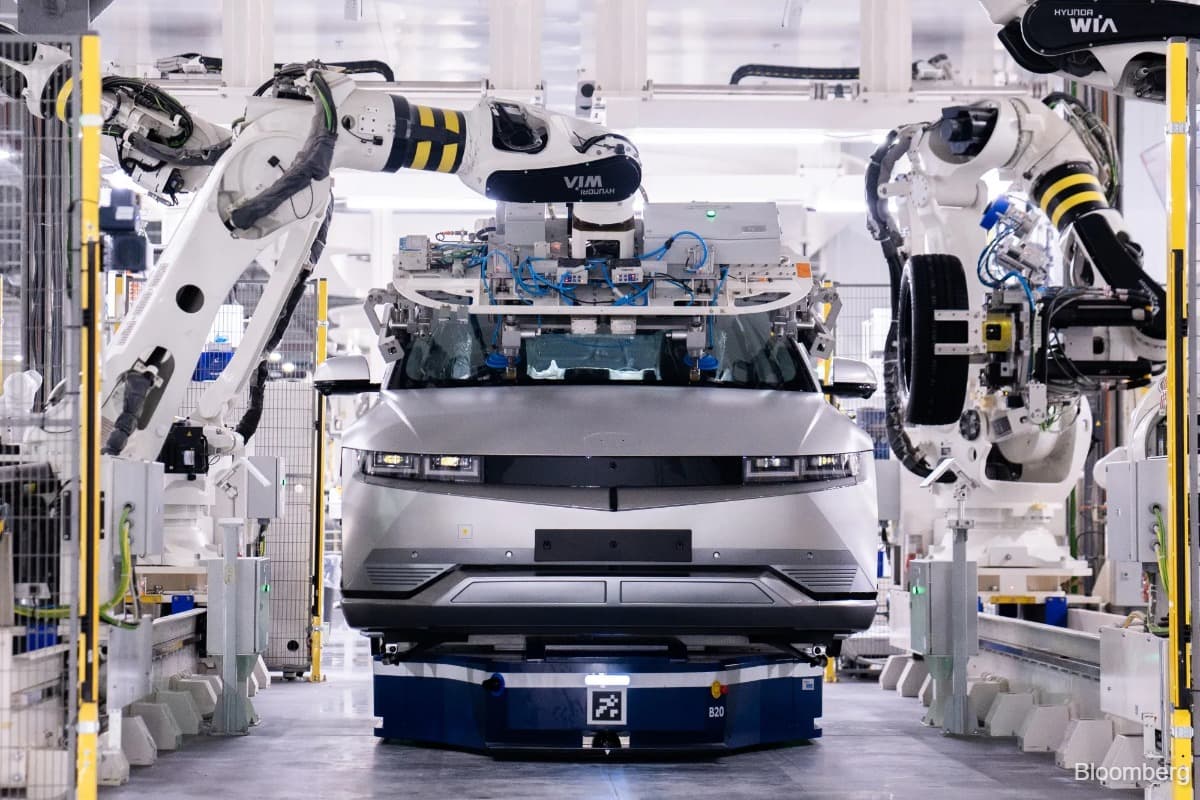
Demand for electric vehicles creates demand for traction motors. Traction motors create demand for permanent magnets. Magnets create demand for neodymium-praseodymium (NdPr), dysprosium and terbium. Only then does demand flow upstream to separation plants and ultimately to mines.
Markets signal demand. Demand attracts investment. Investment creates supply.
This distinction is more than semantics. It has profound implications for how countries should think about industrial strategy.
Rare earths are often discussed as though all elements are equally strategic. They are not.
According to the International Energy Agency (IEA), permanent magnets account for around 95% of total rare earth consumption by value, reflecting their critical role in electric vehicles, wind turbines, robotics, industrial automation and other advanced technologies.
Climate policies, the global energy transition and energy security concerns have fundamentally reshaped demand for these applications. More recently, artificial intelligence, advanced robotics and semiconductor manufacturing are expanding demand for an even broader range of specialised materials.
This also highlights an important consideration for industrial strategy and economic modelling. While geological resources may contain a broad spectrum of rare earth elements, not every element contributes equally to commercial value. The economic potential of a deposit depends not only on what is present, but also on whether individual elements can be separated economically, whether commercially viable downstream applications and markets exist, and whether the additional value generated justifies the cost of further processing. Resource estimates and value chain assessments should therefore distinguish between geological abundance and economically recoverable, marketable value.
In other words, markets determine which rare earth elements become strategically important. While climate policies and the global energy transition have propelled demand for magnet rare earths such as NdPr, the rapid advancement of artificial intelligence, advanced electronics and semiconductor technologies is broadening the strategic importance of other specialised rare earth elements, including yttrium. Markets continuously redefine which elements command greater economic value — and, consequently, where investment and innovation are directed.

The same principle explains why not all rare earth producers are valued equally by investors.
Most listed rare earth companies outside China are mineral-based light rare earth (LREE) producers. Their deposits naturally contain significant quantities of lanthanum (La) and cerium (Ce). While these elements are produced in large volumes, their applications generally generate lower economic value than NdPr. In many cases, the incentive to further separate and refine La and Ce into individual oxides is constrained not by technology, but by market demand.
Consequently, investors seldom value these companies simply on total rare earth production. Instead, they focus on basket value, NdPr production, NdPr recovery, operating cost per kilogram of NdPr and long-term exposure to magnet demand. In effect, the economics of many rare earth projects are disproportionately determined by a relatively small portion of their rare earth basket.
This also explains why two deposits with similar total rare earth grades can command very different market valuations. Investors ultimately price future cash flows, not tonnes of rare earth oxides.
Geology determines what a deposit contains; markets determine what that deposit is worth. Mines produce materials. Markets determine whether those materials matter. Yet markets cannot change geology. They can signal what they need, but they cannot alter the elemental composition of a mineral deposit.
Successful industrial strategies therefore work with — not against — geological reality. The challenge is not simply to respond to markets, but to align market demand with geological endowment, technological capability and commercial economics.
This distinction extends well beyond mining.
A modern electric vehicle weighing nearly two tonnes contains only a few kilograms of permanent magnets. A smartphone contains only grams — or even milligrams — of rare earth materials. Even large offshore wind turbines contain only a small quantity of rare earths relative to their overall mass.
Rare earths therefore punch far above their weight. Their strategic importance lies not in the quantity consumed, but in the functionality they enable.
This also explains why downstream manufacturers rarely choose locations based solely on proximity to mines. Their decisions are more often influenced by proximity to customers, technology ecosystems, skilled talent, logistics, research capabilities and integrated supply chains.
Rare earth industries are often perceived as mineral-centric. In reality, their economics are overwhelmingly market-driven.
This is particularly true for downstream industries such as magnet manufacturing. Magnets do not exist in isolation. They are part of complex industrial ecosystems comprising motor manufacturers, automotive companies, robotics firms, industrial equipment producers, component suppliers, universities, research institutions, testing facilities and advanced manufacturing capabilities. These ecosystems typically evolve over decades and cannot simply be replicated by constructing a single factory.
This has important implications for policymakers.
The objective should not simply be to attract every stage of the rare earth value chain. Rather, it should be to cultivate demand ecosystems that naturally attract investment throughout the supply chain.
For example, policies promoting electric vehicle adoption should not end with vehicle assembly or consumer incentives. Equal attention should be given to attracting traction motor manufacturing, industrial motors, robotics, automation equipment and other magnet-intensive industries. These industries generate sustained commercial demand for permanent magnets, making investment in magnet manufacturing — and eventually upstream processing — economically viable.
Without commercially sustainable downstream demand, upstream integration risks becoming policy-driven rather than market-driven.
A useful analogy can be drawn from export infrastructure. Should a country build export-oriented industrial parks first and then construct a port, or build a port first and hope industries arrive?
Successful examples usually evolve together, anchored by genuine economic activity. A port without cargo remains underutilised. Likewise, supply without enduring demand risks becoming structurally dependent rather than commercially sustainable.
The same logic applies to rare earths.
The current geopolitical environment has reinforced this reality. National security concerns, supply chain resilience and strategic autonomy are encouraging reshoring, friend-shoring and more active industrial policies around the world. Yet even in this changing landscape, one principle remains unchanged:
Reshoring may alter geography, but it does not repeal economics.
Supply can be supported by policy. It can be accelerated by strategic investment. But it can only be sustained by competitive markets.
Looking ahead, technologies will continue to evolve. Alternative motor designs, improved material efficiency and substitute materials may reduce dependence on certain rare earth elements over time. Equally, new technologies may elevate the importance of others. Markets — not mineralogy alone — will continue to determine which materials command investment and which supply chains expand.
Recent analyses by the OECD and United Nations similarly emphasise that critical mineral value creation extends well beyond extraction into processing, refining, manufacturing, recycling and end-use industries, reinforcing that long-term economic value is created across the broader industrial ecosystem rather than at the mine alone.
Perhaps the debate should no longer be framed simply as mine to magnet or magnet to mine. The more fundamental question is whether we understand what truly drives the value chain in the first place.
Markets tell us what matters. Geology defines what is possible. Technology and supply chains determine what is feasible. Industry transforms those possibilities into products. Policymakers create the environment that allows it all to happen. Mines do not create markets. Markets create mines. Countries that understand this interplay will not merely participate in the rare earth economy — they will shape where investment flows, where industries grow and ultimately where value is created.
Lim Wei Hung is an executive director and the chief operating officer of Southern Alliance Mining Ltd.