

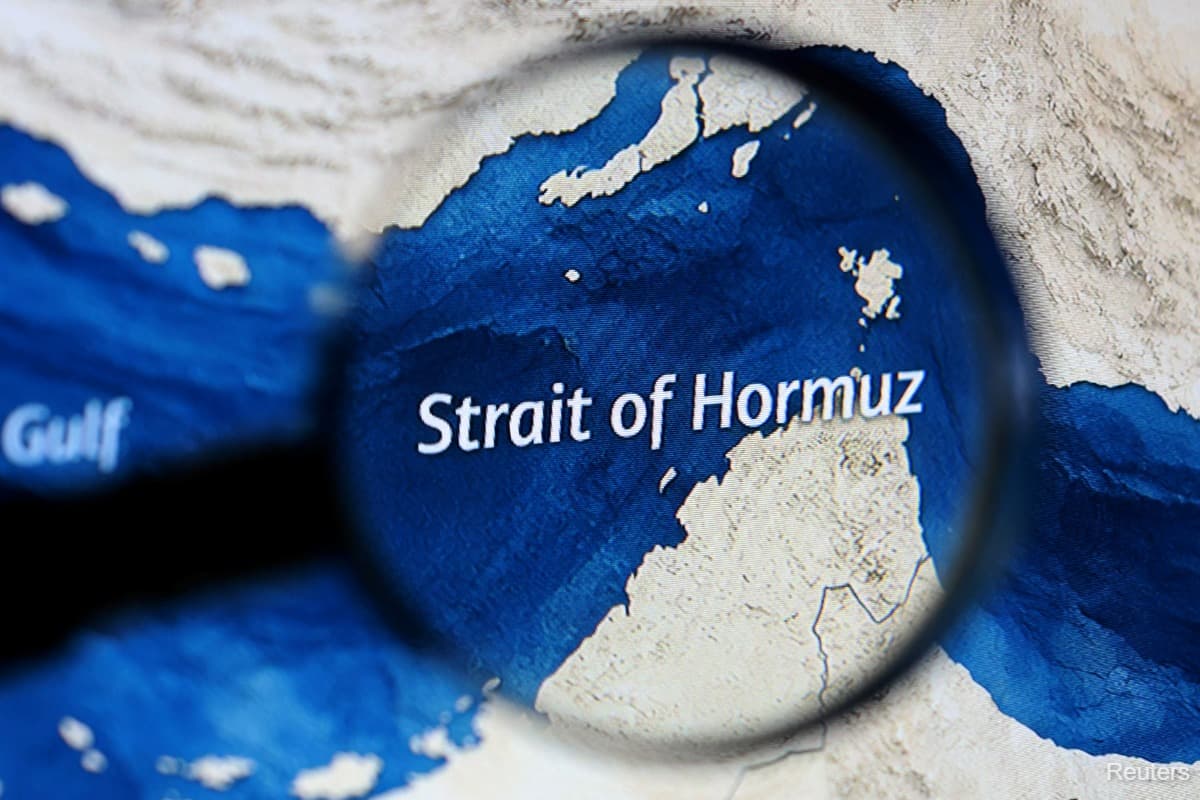
KUALA LUMPUR (July 22): BMI, a Fitch Solutions company, said that among its three new scenarios for the Iran conflict, there is a 25% probability that a re-escalation would push the global economy into a technical recession.
"A re-escalation of the war (25% probability) could push global growth below 2.0%, which is typically considered a global recession.
"Major disruption to shipping via Hormuz and attacks on energy infrastructure across the Middle East would see Brent prices jump above US$100 (RM409) a barrel once again, with a slower normalisation in 2027," said BMI in a note.
The research firm said under such a scenario, central banks would probably tighten policy much more aggressively in the near term to contain inflation, adding to the headwinds to activity.
"Our modelling suggests this scenario would add 1.0 to 1.5 percentage points to global inflation and reduce global growth by 0.3 to 0.5 percentage point this year to close to, or below, 2.0%.
"The sharp hit to real incomes and the lagged effect of monetary tightening would also entail a slower recovery over 2027."
Meanwhile, BMI has accordingly assigned a 55% chance that a preliminary deal will be made by the end of this quarter to resume operations in the Strait of Hormuz.
Under such assumption, BMI assumes transits will gradually normalise, and oil prices will drop back over the fourth quarter and early 2027.
Further, the agency noted there is a 20% likelihood that current skirmishes simply drag on until the third quarter and beyond.
"We think that prolonged military skirmishes which keep Hormuz effectively shut for the rest of the year would push average dated Brent prices above US$90 a barrel for 2026.
"We estimate this scenario would add 0.5 to 0.7 percentage point to global inflation in 2026 beyond our current baseline (3.9%), and shave 0.1 to 0.3 percentage point off our current global growth projection (of 2.4%)."

While optimistic on the Hormuz reopening, the agency has cautioned that underlying tightness in the oil market could prompt a sharp non-linear surge with prices going beyond US$100 a barrel, as current investor sentiment does not fully reflect actual global reserves and scarcity.
“This week, Yemen's Houthi movement also announced a naval blockade of Saudi Arabia via the Bab al-Mandeb chokepoint, posing a significant risk to Red Sea oil transits,” the agency further noted.
With several Saudi tankers already reversing course on Tuesday, a closure of two of the world’s most critical energy chokepoints could further exacerbate oil supply and place upward pressure on
inflation globally.
At time of writing on Wednesday, Brent crude was US$1 higher, with prices now standing at US$92.50 a barrel.