

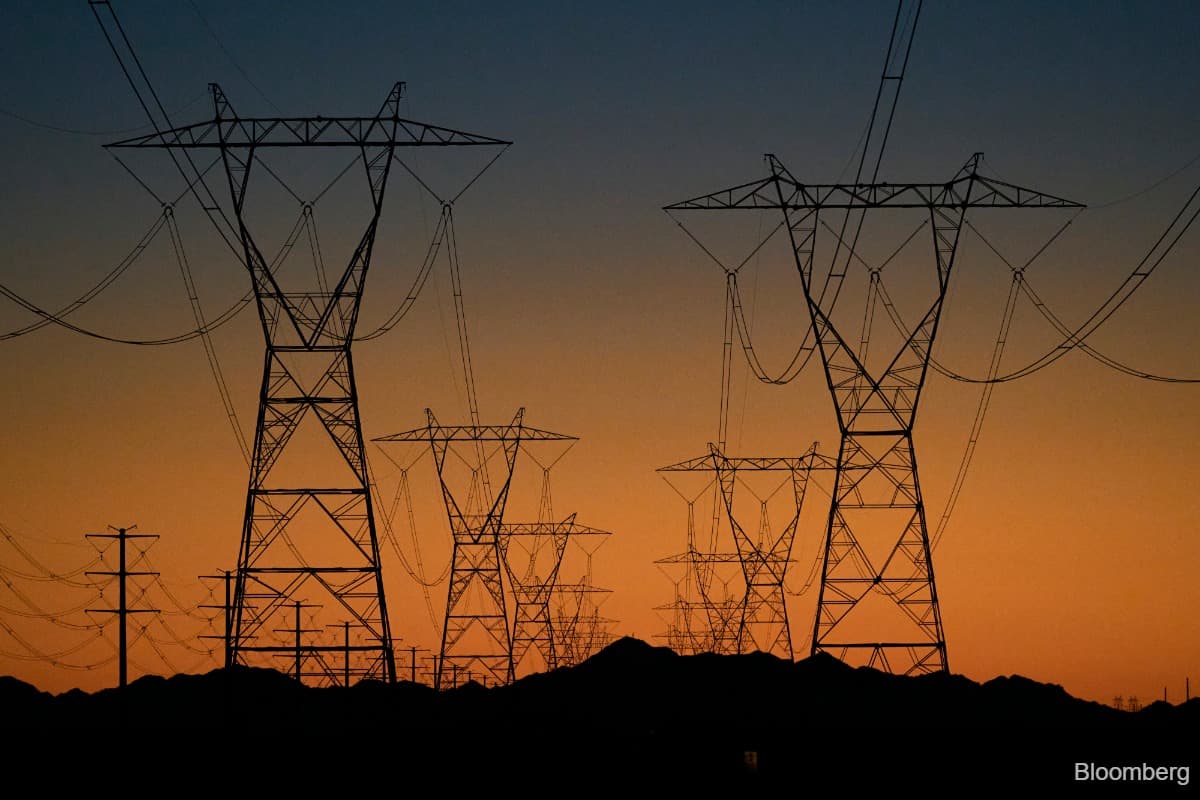
(July 21): Data centres in the US will account for about 20% of the nation’s electricity consumption in 2035, up from 5.9% today, according to BloombergNEF.
That compares with an estimated 12% in 2030, it said in a report Tuesday. In states such as Virginia and Texas, where data centres are concentrated, their share of electricity use will be even higher.
Given the speed at which soaring demand from artificial intelligence is increasing, BNEF projects data centre power needs to reach 194GW in the country by 2035. That’s a jump of 83% from its December forecast. The gain reflects a growing pipeline of AI facilities poised to be built within the next decade. One gigawatt is equivalent to the capacity of a traditional nuclear reactor.
Surging demand from AI data centres is already straining electric grids that are racing to provide enough energy to meet customer needs after two decades of stagnant load growth. That’s forcing companies led by data centre operators to find new ways to power their huge campuses. At the same time, developers face obstacles such as permitting freezes imposed by local governments and political opposition over the projects’ growing energy needs and environmental impacts.


“Every coal plant, every gas plant, every solar farm in the US — one unit of energy out of five generated by them is going to data centres," said Lloyd Arnold, an analyst at BNEF and one of the authors of the report. “So that’s the same energy that’s going to be going into powering electric vehicles, powering cities, et cetera.”
Data centres in areas served by PJM Interconnection LLC, the grid operator covering 13 states including Data Center Alley in Northern Virginia and the Electric Reliability Council of Texas Inc are expected to account for an above-average share of annual electricity use in 2035.
“We’re already seeing the grid struggling to keep up and that’s driving a change in how assets connect to the grid,” Arnold said.
Annually, the record for the amount of data centre capacity that can get connected to the grid is 7.1GW in a single year, according to BNEF. Even if that pace is maintained, the analysts project a 19GW shortfall by 2035 under the base-case scenario, despite additions of on-site gas generation, assuming that demand is served from the on-site gas pipeline.
Uploaded by Arion Yeow