

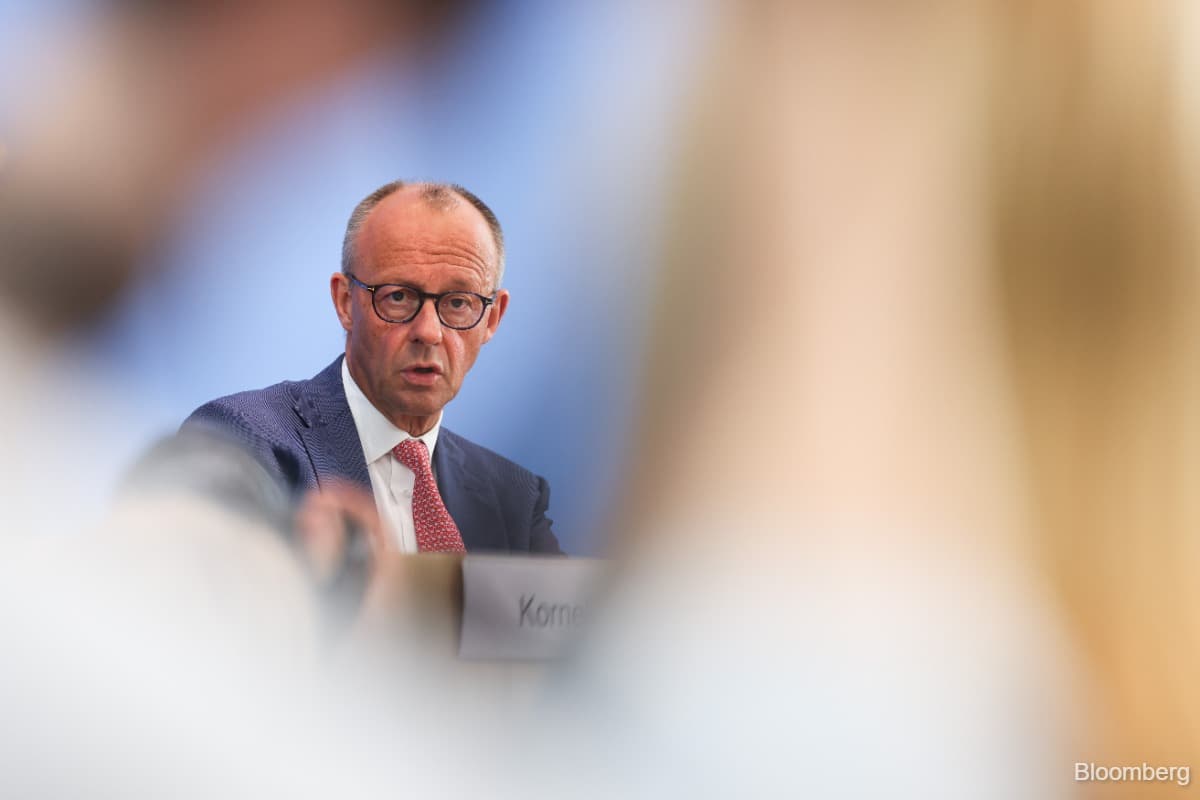
(July 21): German investor optimism rose to the highest level in five months, a sign of hope that Chancellor Friedrich Merz’s economic reforms will spur growth.
An expectations index by the ZEW institute in Mannheim rose to 26.3 in July from 10.5 in June. That’s much higher than the 15.3 median estimate of analysts in a Bloomberg survey. A measure of current conditions also increased.
The results reflect heightened optimism for Europe’s biggest economy in the wake of pro-growth measures unveiled in Berlin earlier this month. Investor sentiment rose even as renewed hostilities in the Middle East raised the prospect of yet more energy supply disruption hurting German industry.
“It seems that the reforms are having an effect,” ZEW president Achim Wambach said Tuesday in a statement, highlighting sustained growth in export-oriented sectors and domestic demand. “Nevertheless, the uncertainty associated with the developments in the Iran conflict and the oil price remain a crucial factor affecting the prospects for a recovery of the German economy.”

Earlier this month, Merz vowed to “break out of this slump in our economy” with the announcement of measures including reforms to the pension and health systems. He predicted that the package could generate economic growth of more than 1% in 2027.
The reforms helped push the DAX, Germany’s benchmark stock index, higher at the beginning of July, at a time when the Iran conflict also appeared to have abated. Those gains have since been erased.
Germany’s economy is still showing signs of stabilising despite the outbreak of new hostilities in the Middle East, the economy ministry said in its monthly report mid-July.
However, higher energy prices and raw-material costs are still expected to weigh on companies through higher input costs, according to the report.
Uploaded by Arion Yeow