

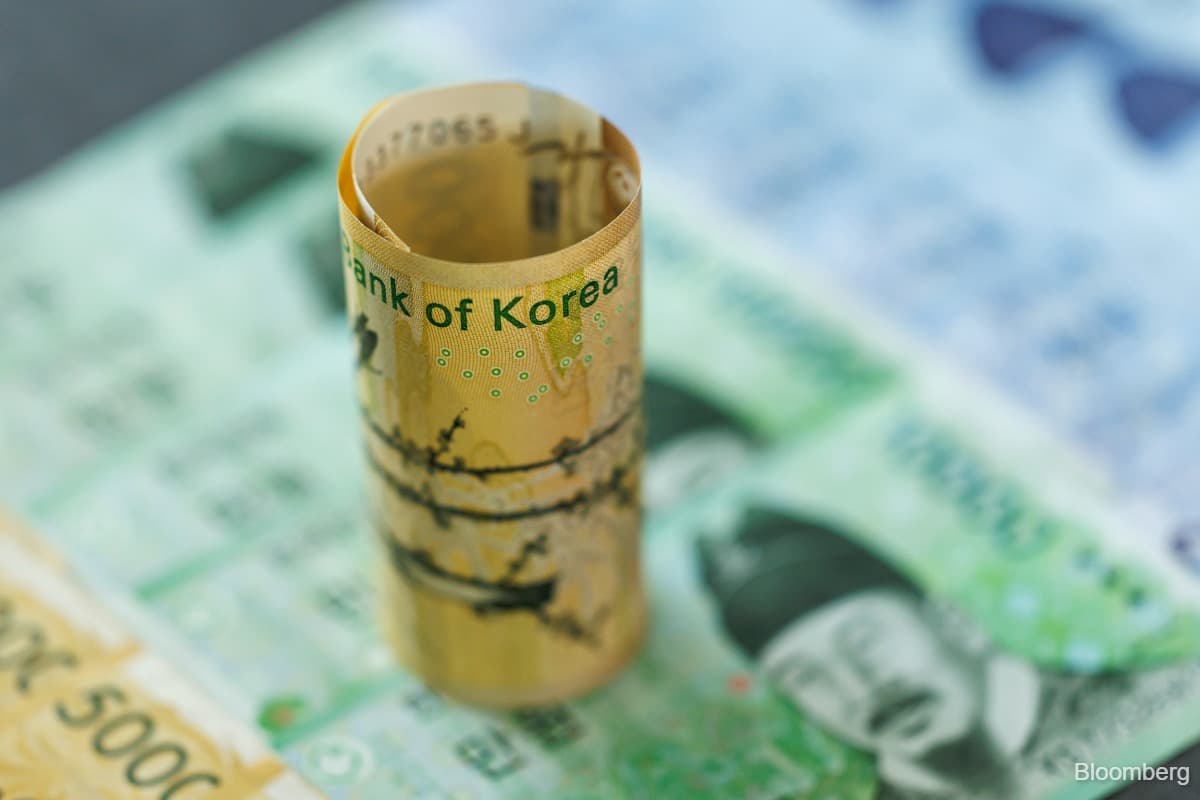
(July 20): South Korea laid out a detailed plan to make the won freely tradable among foreigners, its boldest step yet to liberalise the foreign-exchange market.
From January 2027, overseas investors will be able to conduct unlimited won transactions without having to open local won accounts via foreign firms registered with the government, the finance ministry said Sunday in a joint statement with the central bank and regulators.
Most capital transfers between foreigners through the new channel will be exempt from advance reporting, except those involving domestic real estate, according to the statement. Banks will need to verify only basic account information. The announcement provides the first details of the liberalisation, which was announced earlier this year.
Settlements will run through a new 24-hour Bank of Korea network, with pilot operations starting in September before full implementation in 2027. Authorities will also consider support for foreign banks’ local branches during nighttime trading and introduce incentives in September to shift activity from non-deliverable to deliverable forwards.
The measures build on the launch of round-the-clock won trading this month, which allowed New York investors to transact during local business hours. The broader reforms will let non-residents trade, transfer and settle the currency among themselves outside South Korea, in a move to internationalise the currency.
“The point is to lay a dedicated road so that foreigners can more easily deposit and hold won or use it for payment, settlement, funding, investment and transfers,” Kim Hee Jae, a director of the Finance Ministry’s international finance division, said at a briefing in Sejong near the capital.
Reporting thresholds for capital transactions, including won lending to foreigners, will more than double while verification procedures at foreign-exchange banks will be simplified.
The overhaul marks a major shift for a country that long kept tight controls on its currency despite its status as Asia’s fourth-largest economy and a major exporter. Policymakers want to attract global investors, expand the won’s international use and move closer to developed-market standards.
MSCI Inc has cited foreign-exchange restrictions as a key obstacle to upgrading South Korea to developed-market status. Easier access to the won could also draw reserve managers, pension funds and other institutions that favour currencies with fewer operational constraints.
The government will also permit securities lending of Korean treasury and monetary-stabilisation bonds between foreign investors through Euroclear and Clearstream. It plans to give overseas public sector access to the interbank repurchase market, allow non-residents to invest idle won in short-term instruments and study incentives for settling trade in the currency.
South Korea also plans a two-tier backstop for overnight funding. Foreign-exchange banks will first provide overdrafts to foreign investors, with the central bank considering additional support if needed. The foreign-exchange stabilisation fund may also provide liquidity until the settlement network upgrade is complete.
The reforms come as the won weakened this year following the Iran war, with the currency in June falling to its weakest level since 2009. Authorities have pressed ahead with liberalisation, arguing South Korea’s stronger external balances and deeper financial markets have reduced the risks that once justified strict capital controls.
Uploaded by Arion Yeow