

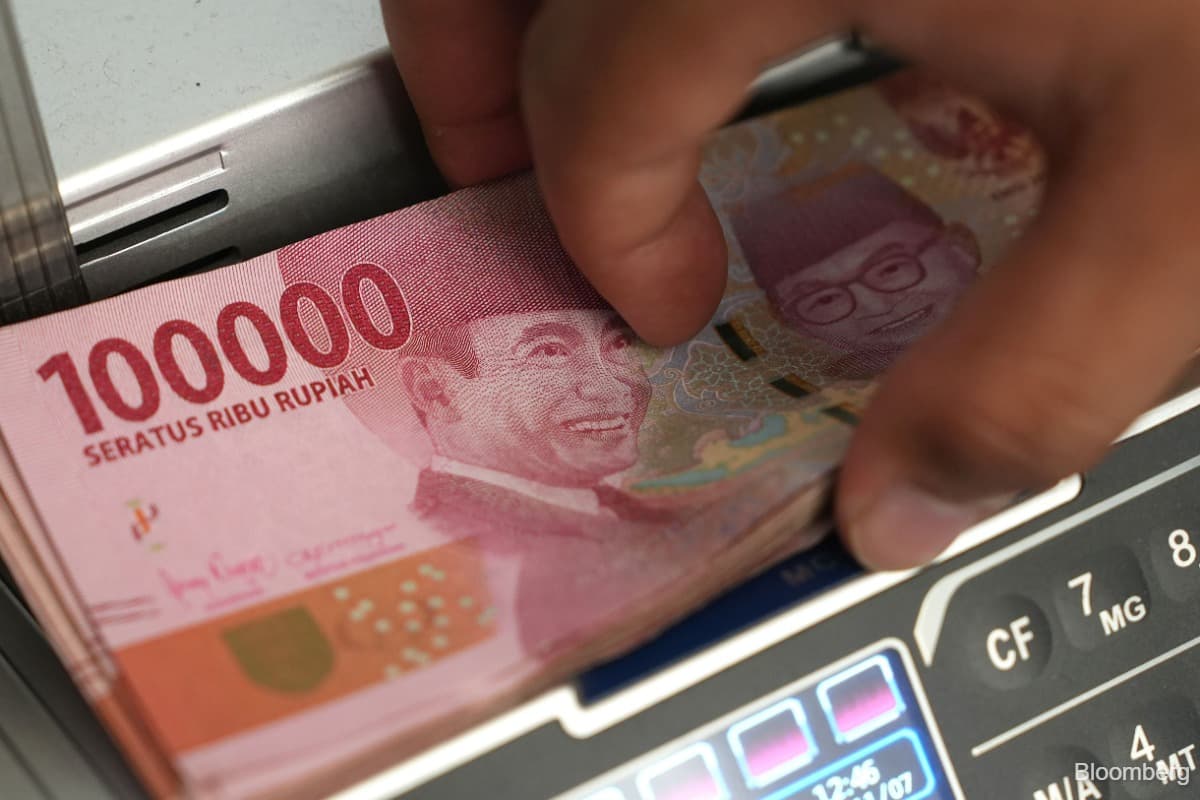
(July 20): The Indonesian rupiah is poised for a period of stability, with analysts expecting the central bank to continue supporting Asia’s worst-performing currency and foreign funds to step up purchases of the nation’s high-yielding bonds.
The rupiah may strengthen to around 17,850 per dollar this quarter, up from Friday’s close of 17,895, according to Credit Agricole CIB. The bank expects Bank Indonesia to shore up the currency through rate increases and direct market intervention after it tumbled 7% this year. Meanwhile, Bank Julius Baer forecasts the rupiah will advance to 17,800 in the third quarter.
Early signs of a recovery are already visible. The currency has rebounded about 1.3% since slumping to a record low of 18,190 against the dollar last month. The pair’s three-month implied volatility has dropped 115 basis points to 6.78% from 7.93% during the period, signalling lower near-term uncertainty.
A stable currency alongside a rebound in Indonesian stocks should offer President Prabowo Subianto more room to address concerns about strained state finances and economic policy direction. Bank Indonesia has hiked interest rates by a total of 100 basis points this year, partly to stem the market rout that began with MSCI Inc warning of a potential market reclassification in January.
“The rupiah should stabilise in the third quarter following BI’s rate hikes and tighter rules to curb speculative flows,” said Jeffrey Zhang, emerging markets strategist at Credit Agricole. “We expect BI to maintain a hawkish stance in the second half of this year to preserve rupiah asset attractiveness.”

The central bank is set to announce its policy rate on Wednesday, with analysts in a Bloomberg survey split between a hold and a 25-basis-point hike.
In a reprieve for Prabowo, S&P Global Ratings on July 13 retained Indonesia’s investment-grade credit rating and outlook. With the nation’s benchmark 10-year government bonds offering about 7.25%, among the highest returns in emerging markets, foreign investors are set to be net buyers for a second straight month.
Still, the rupiah faces pressure from rising costs of energy subsidies as an intensifying conflict in the Middle East drives oil prices higher. Currency traders will also closely track Prabowo’s ability to keep the fiscal deficit within target as he tries to cushion the economy from the war’s fallout.
“Coordinated policy focus on forex stability remains an important anchor,” said Edward Lee, chief economist and head of FX for Asean and South Asia, Standard Chartered Bank. “We expect the fiscal deficit to be contained below 3% of gross domestic product.”
The impending review of Indonesian equity market classification by index providers MSCI and S&P Dow Jones Indices is also an overhang on the rupiah, according to Lloyd Chan, a currency strategist at MUFG Bank Ltd. An MSCI downgrade to frontier status would trigger about US$15 billion (RM61.32 billion) in passive fund outflows, potentially putting more pressure on the rupiah, according to Barclays plc.
“Restoring investor confidence appears to be the most important piece in the puzzle, which will likely require more than monetary policy action alone,” said David A Meier, an economist at Bank Julius Baer. “A less hawkish US rate outlook could relieve some pressure on the rupiah, but the wide current account deficit outlook remains a structural headwind that may cap any meaningful recovery.”
Uploaded by Chng Shear Lane