

This article first appeared in City & Country, The Edge Malaysia Weekly on July 20, 2026 - July 26, 2026
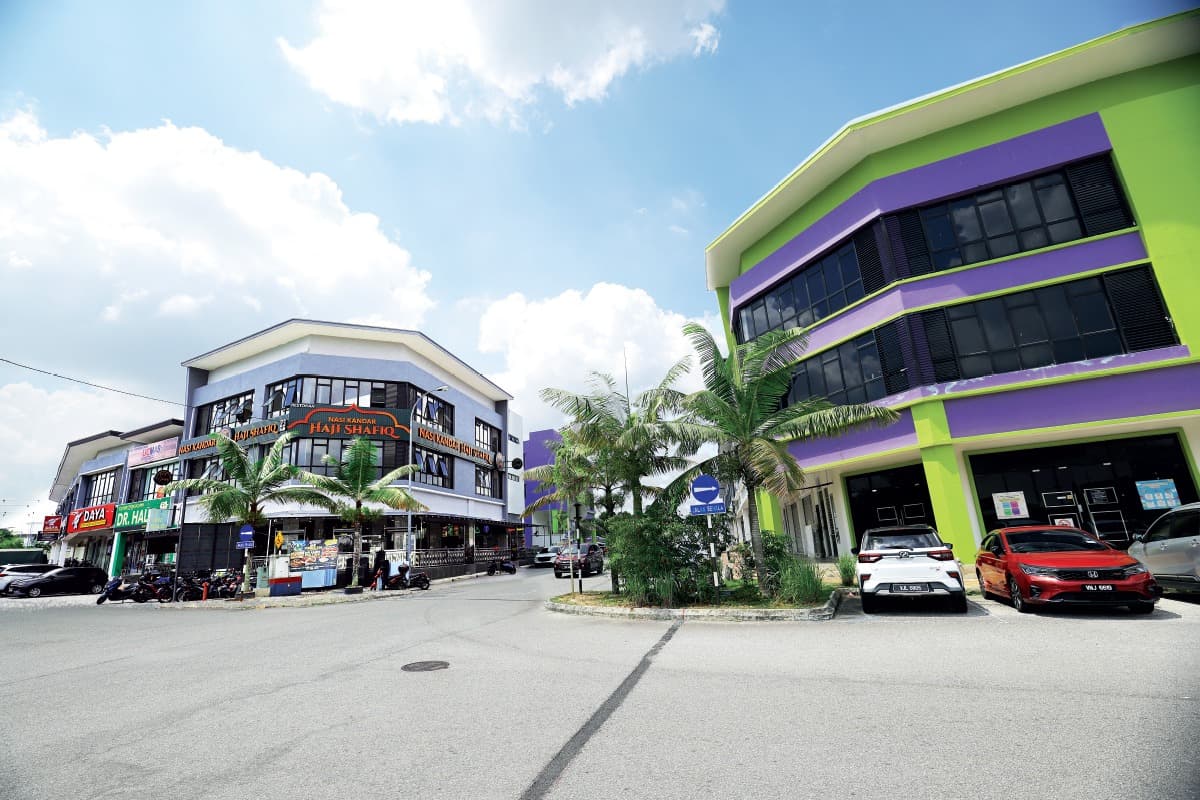
Eight years ago, Raju and his cousin decided to set up a barber shop at the Astana Alam commercial hub in Puncak Alam, Selangor. The area was not the most ideal location then, but the rent was affordable and there was no competition.
“Our shop has been open for almost eight years now. We started not long before the Covid-19 pandemic,” Raju recalls.
When the pandemic hit, they struggled to stay open like most businesses, but unexpected support kept them going. “We were forced to shut down the shop for a while. Our landlord was very kind to waive the rental during that period. When the MCO [Movement Control Order] was lifted, we got back to business with discounted rent, all the way to about two years ago, when the landlord reverted the rent to RM1,900 per month.”
The ground-floor, main road-facing shop has a built-up area of about 1,500 sq ft and is located just a five- to 10-minute drive from Lotus’s hypermarket. Since opening in 2013 as Tesco, the hypermarket remains among the commercial heartbeats of Puncak Alam despite more commercial and retail establishments opening in the area over the past decade.
Commercial activity is currently dominated by neighbourhood scale retail, particularly shopoffice developments such as Pusat Perdagangan Alam Jaya, Coalfields Retail Park, and Galaxy Avenue. These are complemented by hypermarket anchors such as Lotus’s, Econsave and KIPMall, which collectively serve the surrounding residential catchment.

At present, there are no regional-scale shopping malls within Puncak Alam. The nearest established regional retail destination is Setia City Mall, located about 20km away, followed by Paradigm Mall (35km), 1 Utama Shopping Centre (37.5km) and Sunway Pyramid (38km). This suggests that residents still rely on more established commercial nodes outside the immediate locality for higher-order retail and lifestyle offerings.
Similarly, the area does not yet have any purpose-built standalone office buildings. Most businesses operate from shopoffices or industrial premises, reflecting Puncak Alam’s current positioning as a suburban residential growth corridor rather than a fully integrated commercial centre.
“The commercial landscape in Puncak Alam remains at a relatively early stage of maturation and is largely shaped by residential-led growth across the wider northwest Shah Alam corridor,” says Knight Frank Malaysia executive director of research and consultancy Amy Wong.
Commercial properties gaining traction
Wong says as the population base continues to expand and residential townships become more mature, the area presents a clear latent potential for more diversified commercial offerings, particularly destination retail, lifestyle components and higher-order commercial developments that can serve the broader northwest Shah Alam catchment.
“Commercial demand in Puncak Alam is supported by several structural drivers, primarily centred on three key drivers: population growth, institutional presence and improving connectivity,” she says.

Wong explains that population growth in the surrounding residential townships remains the most immediate driver. “While specific population statistics for Puncak Alam are limited, the continued rollout of new residential phases suggests a steadily expanding catchment. The area has attracted a significant number of first-home buyers and young families drawn to the relatively affordable double-storey landed homes across townships, such as Eco Grandeur, Bandar Seri Coalfields and Bandar Puncak Alam,” she says, adding that this demographic profile typically supports stable, needs-based demand for neighbourhood retail, services and food and beverage (F&B) outlets.
Secondly, institutional and employment nodes contribute to the daytime population. Universiti Teknologi MARA (UiTM) Puncak Alam, which has almost 20,000 full-time students, generates steady demand for retail and F&B offerings.
“In addition, emerging industrial developments such as Eco Business Park V and Sunsuria Kejora are expected to bring a growing working population into the locality, further expanding the commercial catchment,” she says.
Thirdly, accessibility is gradually being enhanced by improving connectivity. The West Coast Expressway has strengthened road connectivity into Puncak Alam, while the planned East Coast Rail Link Puncak Alam station — part of a dual-purpose rail line serving both passenger and cargo services — is expected to improve regional linkages.
Wong says, however, that it is premature to assess the direct impact of these factors on commercial property, as ridership patterns and integration with surrounding developments are still evolving.
“Taken together, these factors point to a gradually strengthening demand base that is likely to support the expansion of neighbourhood and community-scale commercial offerings as the population and employment base in the area continues to grow.”
Healthy retail space per capita
As with Wong, Savills Malaysia group managing director Datuk Paul Khong says demand for commercial properties in Puncak Alam is driven mainly by consistent population growth over the years, as well as new emerging large-scale township developments in all sectors, ranging from residential and commercial to light industrial.

“We observe that there is an increase in the daytime population … the gradual developments in this corridor are slowly creating a growing local workforce, which provides support to the local F&B and service businesses throughout the week. There is also a sign of decreasing dependence on only weekend spending,” Khong observes.
While the commercial developments in Puncak Alam today remain largely neighbourhood-oriented, he says the area’s strategic location means there is plenty of potential for this segment to grow.
“Puncak Alam functions as a key residential area within this corridor, linking directly to Shah Alam, Klang and Kuala Lumpur southwards, as well as to Kuala Selangor/Sekinchan due north. This new neighbourhood is maturing well towards the northwest of Shah Alam, forming the enlarging boundaries of Greater KL and the Klang Valley,” Khong says.
According to data from Savills Malaysia, the current combined net lettable area (NLA) of retail space in Puncak Alam stands at 353,000 sq ft. With a current estimated population of 130,000 people there, the retail space per capita is 2.7 sq ft.
“With the upcoming Coalfields Retail Park, retail space per capita [in Puncak Alam] will rise to 7.3 sq ft, which is still lower than the Greater KL level at 10.1 sq ft per capita. In this context, we should prioritise positioning and tenant mix over mere total retail footprint,” Khong adds.
Developed by KLK Land Sdn Bhd, Coalfields Retail Park, which is located in its flagship township master plan called Bandar Seri Coalfields, is designed to be a hybrid lifestyle and community-focused mall to fill the lifestyle gap there.
It is set to be completed in the second half of 2026. Confirmed tenants are Village Grocer, HarborLand (one of Southeast Asia’s largest indoor playgrounds), Southeast Asia’s largest Skechers store, Serai Seafood Restaurant, Blue Ice Skating Rink, KKV, Decathlon, Panda Eyes, Pickle Park, Harvey Norman and Maybank.
Other tenants include The Social, Lisette’s Café & Bakery, K Fry, Lavender Bakery and Super Saigon.

“The mall’s diverse tenant mix indicates a strategy to keep spending within the corridor without cannibalising existing retail outlets, which will have an impact on the commercial and retail landscape in Puncak Alam,” Khong says.
On shopoffice development, he points out that the market is currently absorption-driven rather than rental-growth driven, especially for essential and necessity-based uses because the population base is expanding.
However, absorption is uneven, especially when comparing the newer, premium lifestyle shopoffices and older, secondary versions.
For example, double-storey shopoffices with a built-up of 3,300 to 3,500 sq ft in Eco Grandeur Esplanade have been transacted at between RM2.3 million and RM2.5 million, and have a current asking monthly rental of RM8,000 to RM10,000. In comparison, double-storey shopoffices with a bigger built-up of 4,000 to 4,500 sq ft in Puncak Alam Jaya have been transacted at RM1.1 million to RM1.5 million, and have a monthly asking rental of RM3,300 to RM6,000.
“In Eco Grandeur Esplanade, [the occupancy rate] is sustaining at 85% to 95% due to its niche branding, theme and concept, as well as its overall better and newer retail environment. They have outperformed their peers through strategic marketing and targeted tenant mix,” Khong explains, adding that other shopoffice clusters have an average occupancy rate of just 65% to 85%.
Growth will take time
Knight Frank Malaysia’s Wong says that overall, new retail and commercial spaces in Puncak Alam generally maintain relatively pragmatic rental expectations, recognising that retail performance is closely tied to the pace of population growth and the gradual expansion of the local catchment.
She highlights, however, that Puncak Alam has good potential to evolve into a more self-sustaining commercial hub, with room for rental yield and price appreciation to improve.
“A five- to 10-year time frame may be relatively short for such a transformation [into a self-sustaining commercial hub] to fully materialise. A more realistic horizon would likely be closer to 20 to 25 years, as this would require the accumulation of a critical population mass, sustained economic activity and meaningful job creation within the locality,” Wong says, citing the example of Bandar Utama, Bandar Sunway and Desa ParkCity, which took well over a decade to develop into established mixed-use environments with strong residential, retail and employment components.
She explains that Puncak Alam’s commercial evolution will likely depend on the continued expansion of its residential base, growth of nearby employment nodes and gradual emergence of more diversified commercial offerings.
“Until these fundamentals reach sufficient scale, the area will likely continue to function primarily as a support market serving the daily needs of its surrounding residential communities.”
Savills Malaysia’s Khong, meanwhile, says Puncak Alam is currently witnessing steady population growth with its improved connectivity and increasing industrial opportunities. As such, he reckons that developers should focus on integrated residential and small-scale commercial projects in the current cycle, in tandem with the anticipated growth of the township.
“It is crucial to avoid overbuilding ahead of demand as population growth and migration are still progressing … With its continued growth in both population and industrial and commercial activities, this neighbourhood is becoming more developed and liveable, providing strong support to the growth of the commercial property segment now and in the future,” he says.

Save by subscribing to us for your print and/or digital copy.
P/S: The Edge is also available on Apple's App Store and Android's Google Play.