

This article first appeared in The Edge Malaysia Weekly on July 20, 2026 - July 26, 2026
The future of a development will be assessed based on its ability to support a digital infrastructure equipped with reliable artificial intelligence (AI) solutions. When implemented effectively, these foundations hold the potential to revolutionise urban management and everyday living.

“When AI is designed around human needs instead of technology, it becomes almost invisible, quietly supporting everyday life. This is why equipping homes with AI is becoming increasingly important — not to add complexity, but to simplify it,” says Charles Kim, president of Samsung Malaysia Electronics.
Within a comprehensive township environment, the impact of AI multiplies exponentially, as the technology can connect residential homes, retail hubs, hospitality, mobility solutions, wellness centres and public spaces into one coordinated ecosystem.
Key areas poised for substantial improvement include automated security patrols, mechanised cleaning, advanced facilities management, predictive maintenance, crowd control, optimised car park operations, energy management and wellness support for the elderly.
For building owners, this transition translates directly into heightened operating efficiency, while residents and visitors experience marked improvements in convenience, safety and the overall quality of life.
“Today’s homes are filled with connected devices, but many still function independently. As people balance increasingly complex lifestyles, AI enables these devices to work together intelligently to improve convenience, efficiency and personalisation.
“Rather than requiring users to control every device manually, AI can learn routines, anticipate needs and automate everyday tasks,” says Kim.
This push to AI has also become more of a necessity rather than a luxury due to the structural changes that are happening in society such as labour shortages, an ageing population, escalating urban operating costs and security demands.
This makes it crucial for developments to start planning ahead and meeting the expectations of future clients and customers.
Having AI integrated into residential homes and the built environment also cultivates trust for the harmonisation of human and technology to feel natural rather than forced. This trust can also open up willingness for people to adapt newer technological innovations, further advancing the surrounding environment.

“If people encounter robots in spaces that feel unsafe, awkward or intrusive, they will resist the technology. But if the environment is properly designed with clear movement paths, safety zones, privacy safeguards, intuitive interfaces and human-centred planning, people will become more comfortable,” says Tony Mak, director of SA Architect.
Planning it out
To make this AI vision a reality, AI and robotics must be designed from the beginning of construction, rather than retrofitting the technology once plans are already in place. This makes it easier to align on a desired outcome for the development, and also reduces obstacles down the road.
“This includes wider and clearer circulation paths, robot-friendly corridors, charging and docking areas, stronger connectivity, integrated sensors, building data platforms, cybersecurity, and mechanical and electrical systems that can support future upgrades.
“The key is not to overdesign for one specific technology today. The key is to create flexible infrastructure so that buildings can adapt as AI and robotics evolve over the next 20 to 30 years. If buildings are not designed to support these technologies, Malaysia may end up adopting AI and robotics in a fragmented and expensive way,” says Mak.
He explains that it is generally more efficient to design AI and robotics infrastructure from the start than to retrofit later. Retrofitting usually costs more because existing layouts, risers, cabling, corridors, mechanical and electrical systems and operating procedures are not designed for intelligent machines.
The cost difference depends on the building type but, conceptually, early planning reduces future disruption and lowers long-term deployment costs. According to Mak, for AI Living, the developer is budgeting an additional 5% of the development cost to cover the AI and robotics infrastructure (excluding the cost of the robots). He says it would cost more than this to retrofit.
Mak sees Singapore and Japan’s infrastructure as references Malaysia can draw from. Singapore’s Virtual Singapore initiative demonstrates the power of creating a precise, dynamic 3D digital twin of an entire nation, highlighting that standardising data formats across government and private sectors is critical.
Meanwhile, Japan’s response to an ageing workforce via its open-source Project PLATEAU highlights the value of low-cost data collection. Project PLATEAU utilises satellite data and AI to construct an open-source 3D urban environment.
A recent pilot project in Semenyih, Selangor, successfully utilised Japan’s methodology to generate highly accurate urban digital twins, slashing conventional city-modelling costs by roughly 94%.
“Malaysia should scale this specific satellite-AI approach to map its secondary cities rapidly without expensive ground surveys,” says Mak.
Despite this, homeowners and developers looking to integrate AI into their existing properties can still do so by introducing the technology gradually. This can be done through connected devices, software updates and interoperable platforms that work with existing environments.
By keeping a phased approach, this gives older developments a chance to evolve alongside the industry while also making way for more opportunities and innovation for future-ready homes.
“Ultimately, successful AI adoption is less about large-scale infrastructure investment and more about creating flexible ecosystems that can evolve alongside technology and changing consumer needs,” says Samsung’s Kim.
Additionally, he cautions that as AI becomes more integrated into daily life, security and privacy must be embedded into every experience, and that consumers should feel confident that their personal data is being protected amid personalised AI services.
“Government, developers and technology providers will be key. By designing homes with future technologies in mind and educating consumers on the value of connected living, Malaysia can accelerate AI adoption in a way that is practical, secure and centred around improving everyday life,” he says.
A development in motion
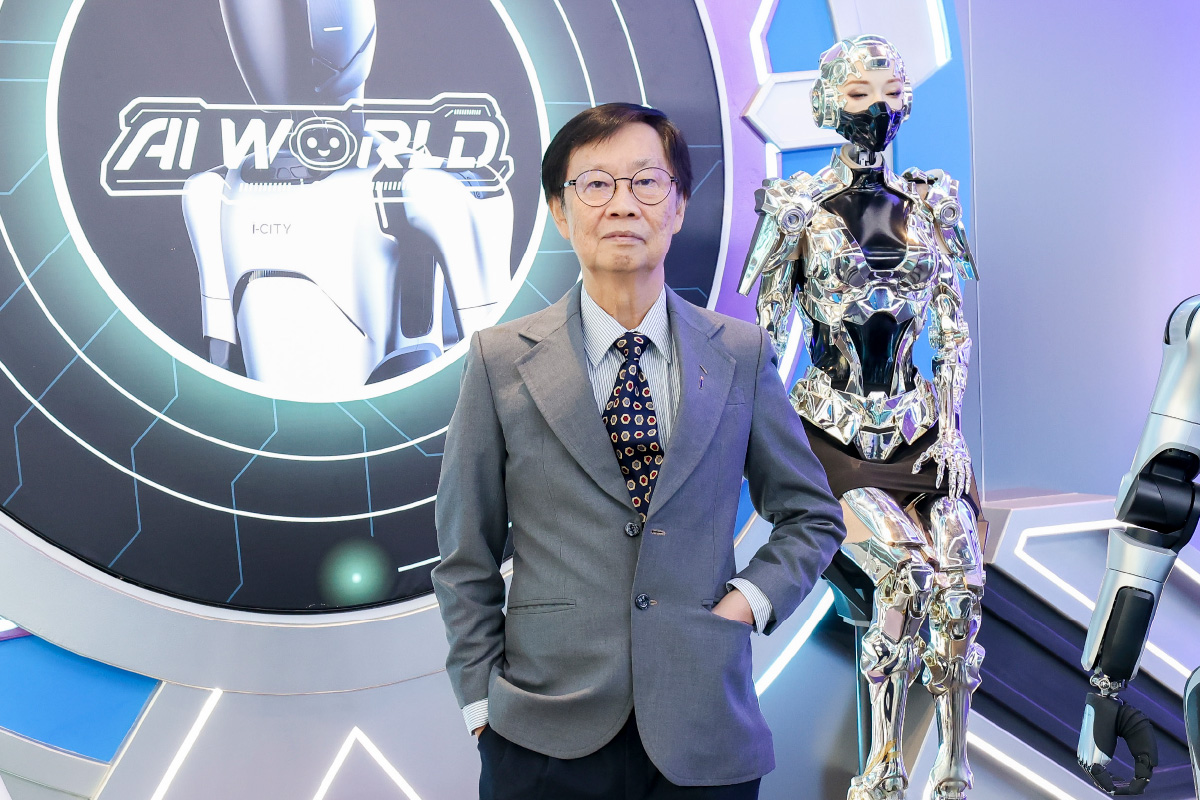
One upcoming development aiming to spearhead the synergistic design of AI and the built environment is i-City’s AI Living, the world’s first residential development enabled by robotics and multiple intelligence systems working in harmony, according to I-Berhad (KL:IBHD).
The project is in collaboration with four other companies, each responsible for providing a solution. One partner is Agibot, which will supply the development with high-end robotics, while another will be in charge of areas involving wellness.
There will be two more organisations that are yet to be announced, and these entities will be focusing on providing intelligent building management and AI consumer lifestyle products respectively.

“The strategy that we are adopting for AI Living is to design it as a platform rather than a collection of fixed products. We are working with established global brands and specialist partners within each platform so that innovation can continue long after the buildings are completed,” says Datuk Eu Hong Chew, non-independent non-executive director of I-Berhad.
“As a result, AI Living is not a single product or technology initiative. It is an ecosystem designed to evolve continuously as new technologies and services emerge over the coming years.”
The focus on these four areas stems from the realisation that the future of housing must extend beyond isolated robotic gadgets to address pressing structural and demographic shifts. By combining robotics for physical assistance, wellness tech for preventive health and intelligent building management for operational efficiency, the development directly combats challenges like labour shortages, an ageing population and rising costs.
Additionally, embedding a dedicated platform for AI consumer lifestyle products ensures that the home’s infrastructure can seamlessly absorb rapidly evolving smart devices. Unified by a central operating system, these four areas work in tandem to transform traditional, static residential units into adaptive ecosystems capable of evolving alongside their residents over the next few decades.
“The UrbanOS provides a common digital foundation that allows new products and services to be integrated as they become available. This means residents are not buying technology that may become obsolete. Instead, they are entering an ecosystem that is intended to continuously improve over time,” Eu explains.
Save by subscribing to us for your print and/or digital copy.
P/S: The Edge is also available on Apple's App Store and Android's Google Play.