

This article first appeared in The Edge Malaysia Weekly on July 20, 2026 - July 26, 2026
For more than three decades, the Malaysian government has repeated its assurance that at least half the country will remain under forest cover.
On July 27, six young Malaysians will ask the Kuala Lumpur High Court to treat that pledge as more than a podium promise. Their case, filed under the #ManaHutanKami (Where are our forests) campaign, is described as the country’s first national deforestation lawsuit.
The government has not made any public statements on the case. When contacted, the Ministry of Natural Resources and Enviromental Sustainability said it would not be able to provide an official response by press time.
This means before the court can consider how much forest Malaysia has left, it must first decide whether the promise can be enforced at all.
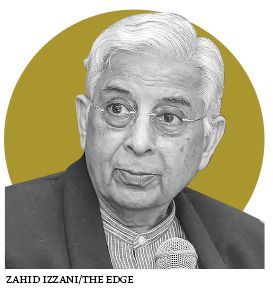
The difficulty, according to constitutional scholar Datuk Dr Shad Saleem Faruqi, begins with the Federal Constitution itself. “During the drafting of the Federal Constitution from 1956/57, environmental protection was not regarded as a pressing matter. Hence, it was not protected as a right available to the citizens,” says the emeritus professor of law at Universiti Malaya.
The Federal Constitution does not expressly protect forests, the environment or climate stability, while land and forestry issues sit largely with the states. Malaysia’s pledge at the 1992 Rio Earth Summit, made by then prime minister Tun Dr Mahathir Mohamad, to keep at least 50% of the country under forest and tree cover was never written into law.
The applicants are turning that gap into a constitutional question, arguing that unchecked deforestation violates the right to life under Article 5(1) and the right to equality under Article 8(1) of the Federal Constitution. They are also invoking legitimate expectations, arising from repeated government assurances, and the public trust doctrine, which treats natural resources as held for present and future generations.
Lawyer Lim Wei Jiet, who represents the applicants alongside Datuk Ambiga Sreenevasan, says the framing is deliberate. “You have to come from the perspective of the younger generation. That’s how we frame the suit, because they are the ones who are going to live with the consequences of today’s policies and decisions,” he elaborates.
He says young Malaysians are also arguing they are discriminated against because they will “disproportionately suffer the effects of climate change and deforestation compared to those in their sixties and seventies — the older generation”.
The absence of an express environmental right means the applicants must persuade the court to treat environmental harm as part of the right to life itself, rather than as a separate right that does not yet exist, says Shad Saleem.
“Although the constitutional guarantee of the right to ‘life’ in Malaysia’s Article 5(1) is silent about the right of citizens to a healthy and sustainable environment, fresh water, clean air, preservation of ancestral lands, and the right to livelihood, a few judges have admirably interpreted the concept of ‘life’ to include ‘livelihood’ and the ‘necessities of life’,” he adds.
The precedents, however, point in different directions. In Tan Tek Seng vs Suruhanjaya Perkhidmatan Pendidikan & Another in 1996, which concerned the dismissal of a school senior assistant without a fair hearing, the court ruled in favour of Tan and read “life” in Article 5(1) to cover his livelihood, holding that stripping him of lawful employment infringed his constitutional right to life. Yet in Kajing Tubek vs Ekran, decided the same year, the courts declined to stop a hydroelectric project in Sarawak that would displace thousands of natives, holding that the project had been carried out according to the law.
In the deforestation case, Wei Jiet argues that the right to life cannot be read narrowly when deforestation affects water catchment areas, livelihoods, food security, indigenous communities and the climate conditions that future generations will inherit.
Relying on the Rio pledge presents its own challenge because Malaysia follows the dualist approach to international law, under which an international commitment does not automatically become enforceable in Malaysian courts, says Shad Saleem. “International law is not enforceable domestically unless the international instrument has been adopted and given the kiss of life by national legislation,” he explains.
Even the United Nations General Assembly’s 2022 resolution recognising access to a clean, healthy and sustainable environment as a universal human right remains soft law in Malaysian courts unless adopted domestically. The applicants must also show the case is justiciable rather than a political matter for the government, and here, recent precedents are unhelpful, says Shad Saleem.
For instance, in the case of Bukit Cherakah, two environmental groups challenged Selangor’s backdated degazettement of part of a forest reserve, and in January 2024, the Court of Appeal upheld the High Court’s refusal of leave, treating forest reserve degazettement as beyond the courts’ reach. The matter is now before the Federal Court.
Public interest litigation in Malaysia remains young in a system where civic-minded citizens are often treated as “busybodies and not as public benefactors”, says Shad Saleem.
Wei Jiet argues that the pledge has “morphed into more than a diplomatic pledge”, pointing to its repeated affirmation in national policy documents and at the National Land Council. “If you promise something, you have to hold up your end of the bargain,” he says.
The applicants are seeking declarations that their right to life and equality has been infringed on and an order compelling the federal government and the minister to take all necessary steps to reduce deforestation and meet the 50% commitment.

How to define forest?
If the case clears the application for leave stage, the fight moves on to a deceptively simple question — what exactly counts as a forest in Malaysia?
The Forestry Department of Peninsular Malaysia publicly defines a forest as an area of land larger than 0.5ha featuring trees taller than 5m and canopy cover of more than 10%, mirroring the baseline definition used by the UN Food and Agriculture Organization (FAO), and administratively sorts these into permanent forest reserves, government land forests (managed by local authorities) and owned land forests (privately managed).
Yet, experts argue that translating these guidelines into practice is where the clarity blurs. “There is no single agreed national definition in Malaysia,” says Dr Lim Teckwyn, adjunct lecturer of environmental science at the University of Nottingham Malaysia.
He points to a 2022 policy report commissioned by the UK’s Foreign, Commonwealth and Development Office that identified a structural discrepancy within the government’s own frameworks. The report pointed to Malaysia’s National Physical Plan targeting 50% “forest cover”, while the Malaysia Forestry Policy of 2021, adopted by the National Land Council, commits instead to the broader measure of 50% “forest and tree cover”.
“They squeezed in ‘and tree cover’ at the end,” says Teckwyn.
The same report notes that “tree cover” remains legally undefined under Malaysian law, a gap that environmental analysts say obscures the true status of natural forests.
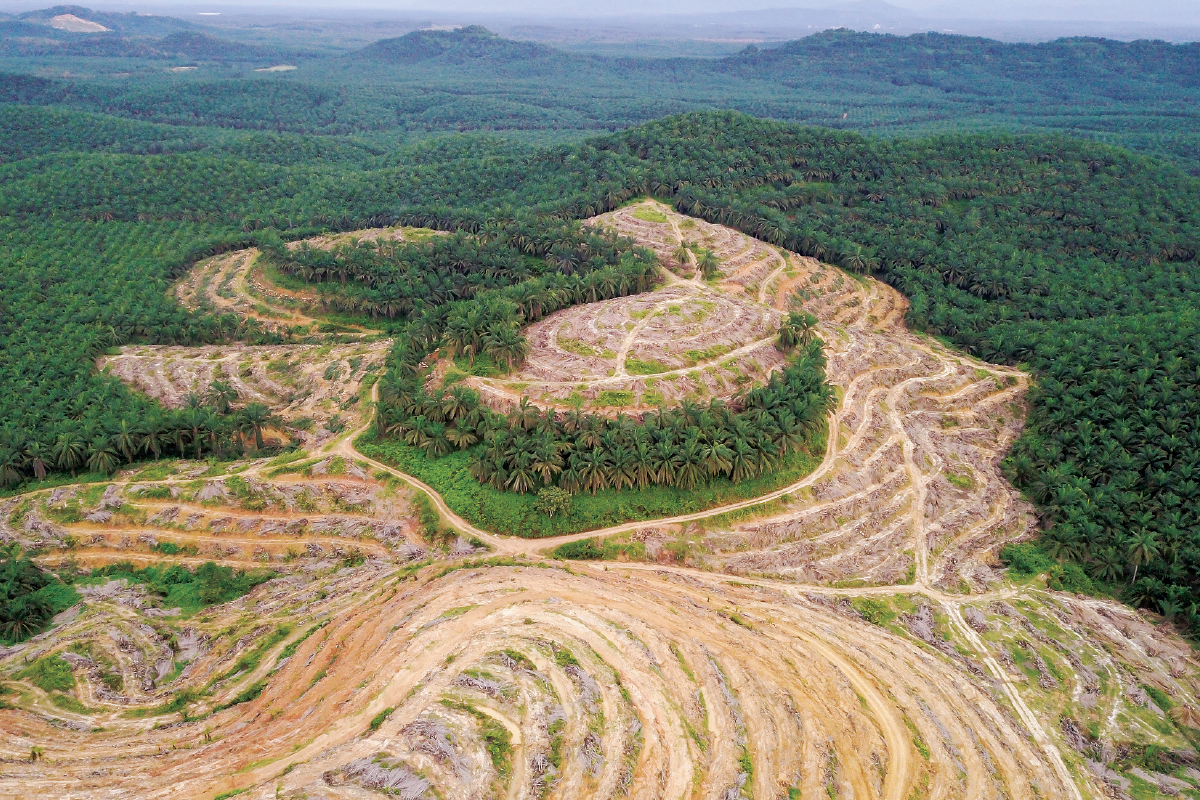
Plantations could also be considered forest or tree cover. In fact, the FAO’s definition of forest includes rubber and forest plantations. The latter refers to planted forests meant for industrial or non-industrial use. However, oil palm plantations and those planted for purposes other than wood are not considered forest.
This categorisation has been met with opposition from non-governmental organisations, who call for forests to be defined not just by canopy cover and tree height, as this definition has been used to justify monoculture plantations that negatively impact the environment and local communities.
Similarly, Malaysia’s submission to the FAO for the Global Forest Resources Assessment 2020 notes that rubber plantations are included in its forest area reporting for “international consistency”. The 2022 report also caims that commercial oil palm planted in approved “permanent forest” zones in states such as Sabah and Sarawak continues to be accounted for as “forest” in national statistics.
The inconsistency stems from a divergence between legal zoning and physical metrics, says Teckwyn. A forest can be defined legally by its designation, or physically by whether trees are actually present, and the two do not always match.
On paper, a parcel may be gazetted as forest but on the ground, it has already been cleared for a plantation or housing estate, which can only be detected via satellite mapping, he points out.
To put numbers to this gap, the campaign commissioned think tank RimbaWatch to assess Malaysia’s remaining natural forests, applying the FAO’s baseline definition — the same 0.5ha, 5m, 10% canopy parameters — excluding land predominantly under agricultural or urban use, alongside independent satellite mapping systems.
The RimbaWatch report estimates that natural forests covered between 60% and 63% of Malaysia’s land area as at 2020. Once land approved or earmarked for clearing is removed from the calculation, however, the figure falls to between 47.4% and 49.6%, leaving up to 4.51 million hectares of forest at risk.
The government, for its part, officially recorded Malaysia’s forest cover at 54.58% in 2024, and Wei Jiet expects the legal defence to rely strictly on official parameters. “They may say that we are not falling below 50%. This is our data, and this is what we define as forest. The courts will then have to decide which definition should be adopted,” he says.
Professor Dr Tapan Kumar Nath, who studies community-based forest management at the University of Nottingham Malaysia’s School of Biological and Environmental Sciences, agrees that the definitional framework “needs significant tightening”.
Natural forests sequester more carbon, support higher biodiversity and provide wider ecological services than monoculture plantations. The distinction is central to the legal argument, as Tapan Kumar notes that “the dominant driver of natural forest loss in Malaysia today is industrial timber plantations”.
The gap between the two sets of numbers is ultimately methodological. The applicants count only naturally regenerating forest, which excludes plantations of any kind, while Malaysia’s official figures, reported against the same FAO baseline, likely keep rubber and tree plantations in the count.

A state matter
Even if the courts accept the applicants’ definition of forest, they must still confront Malaysia’s federal structure.
Under Article 74(2), land and forestry matters fall under the states’ jurisdiction. States gazette and degazette forests, issue logging permits and collect timber royalties. The federal respondents do not directly control those powers.
Tapan Kumar calls this “perhaps one of the most structurally important questions in this conversation”. He adds that for states, forests are not just viewed as resources or revenue but also political assets.
Teckwyn puts the states’ position bluntly: “Why should I lock up my land in the forest when I could clear it for oil palm and generate revenue? What incentive is there for me to keep it under forest?”
The burden falls heaviest on forest-rich states such as Sarawak, Sabah and Pahang, which are expected to carry a national pledge while potentially forgoing revenue.
The applicants argue that the federal government still has a route through the National Land Council, chaired by the prime minister or deputy prime minister and made up of all menteri besar and chief ministers.
“It says in the Federal Constitution that the state governments have to abide by the policy of the National Land Council. So technically and legally, they have to abide by that,” says Wei Jiet.
Teckwyn agrees that Putrajaya cannot easily disclaim responsibility as it controls national policy, holds the purse strings and signs international commitments. But the machinery has not been used seriously.
“At a very basic level, they need to ask the states: How much forest do you have? If you have less than 50%, are you going to do reforestation? And if you have more than 50%, will you keep that forest?” he says.
“There has not been a serious discussion in the National Land Council for any kind of repercussions for dropping below 50%.”
The Ecological Fiscal Transfer fund, at RM250 million and rising, pays states for conservation, but real compensation would have to be far larger. “You’re talking about hundreds of billions if you really want to compensate for them,” says Teckwyn.

What is the ideal outcome?
Even if the applicants succeed, the court is unlikely to order Malaysia to reforest by decree. The more likely outcome is that the government will be forced to spell out its pledge, says Teckwyn.
“Is it 50% forest and tree cover, which is kind of meaningless, or is there actually a policy for 50% forest cover? And if so, how will that be achieved?” he asks.
Whatever the government’s answer, the economic stakes are already visible in a 2022 study by Bank Negara Malaysia and the World Bank, cited in the RimbaWatch report, which finds that 54% of bank lending in Malaysia is tied to industries that depend on nature, while 87% is exposed to sectors that contribute to environmental degradation. Nature-related risks could cost Malaysia up to 6% of gross domestic product annually by 2030, the study estimates.
Trade rules add to the pressure, chief among them the European Union Deforestation Regulation (EUDR), which uses the FAO’s basic definition of forest and covers palm oil, timber and rubber — three of Malaysia’s key exports. The regulation treats the replacement of natural forest with rubber or timber plantations as degradation, meaning clearing that leaves Malaysia’s headline numbers intact will still count against its exporters. The rules apply to large and medium operators from Dec 30, 2026, and to smaller ones from June 30, 2027.
Behind the legal doctrines are communities whose lives are tied to the land, says Teckwyn, pointing to Orang Asli villages in Pahang and Perak where water catchment forests are being logged. “There are communities in Malaysia whose lives really are jeopardised when the deforestation continues,” he adds.
The government has not publicly responded so far, and the July 27 hearing will only decide whether the case may proceed.
Wei Jiet says the applicants remain open to a negotiated outcome. “We hope the government will react positively. If we can come to a middle ground, I would say it’s a win. But in the event the government does not seek to engage us constructively, then we have no choice but to let the courts decide.”
The applicants — Abe Lim, Sitti Fatimah, Winona Elisha Jemak Anak Raymond, Lee Yu Dong, Adom Teh and Amira Aliya Abd Aziz, who are aged between 18 and 30 — are students and climate advocates from Kuala Lumpur, Johor, Sabah and Sarawak.
Even if the application for leave fails, the case — the first of its kind in Malaysia — will have forced the definitional debate into the open, and a favourable ruling could open the door to similar legal action.
Abe, the eldest at 30, says a large share of Malaysia’s natural forests has already been earmarked for commercial conversion. “We’ve been told for decades that Malaysia is maintaining its forests. But if you can stand on cleared forests and still call it ‘forest cover’, then something is broken. This case is about calling that out, because we’re not just debating definitions — we’re watching real ecosystems disappear while the numbers stay intact,” she says.
Save by subscribing to us for your print and/or digital copy.
P/S: The Edge is also available on Apple's App Store and Android's Google Play.