

(July 15): The world’s largest state-backed climate fund is freeing up billions of dollars in lending capacity by drastically reducing the amount of capital it intends to hold going forward.
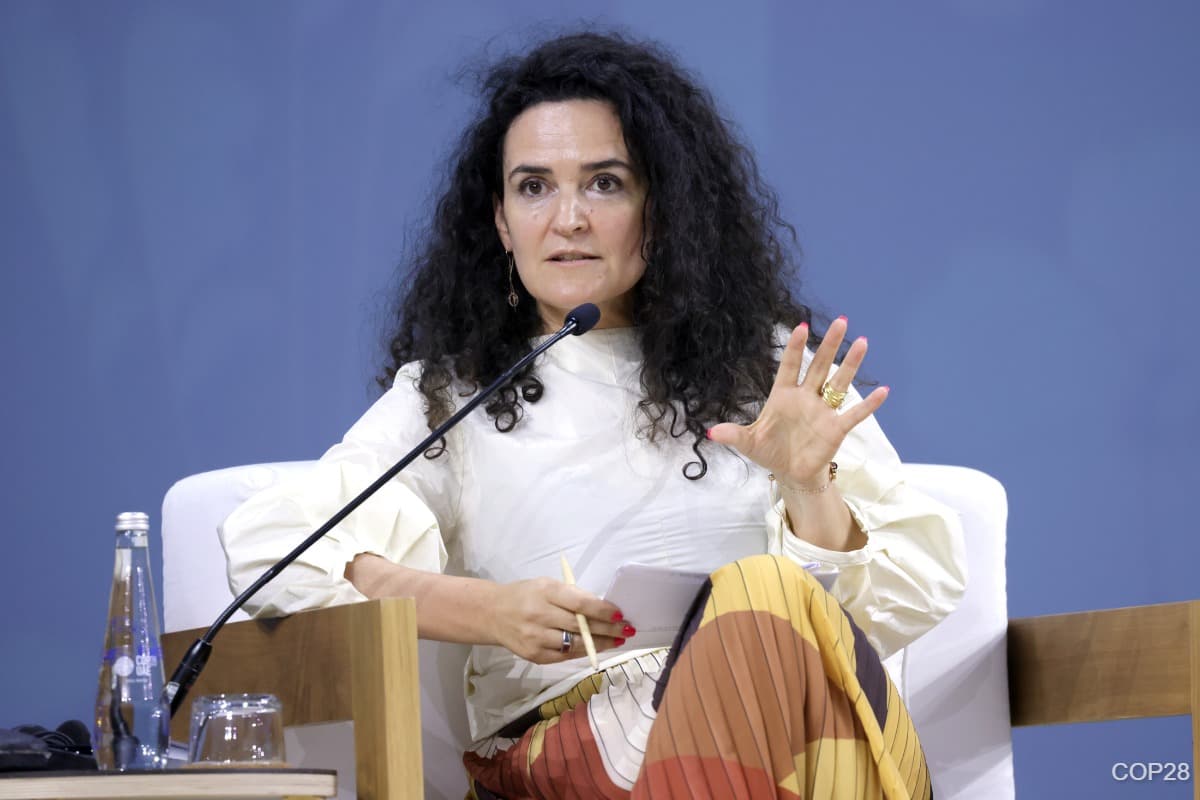
The decision by the board of the Green Climate Fund, set up by the United Nations, will release US$4.3 billion (RM17.53 billion) for climate projects this year and next, Mafalda Duarte, its executive director, said in an interview. That brings the total it can disburse in the period to US$5.65 billion.
The move comes as the South Korea-based vehicle reviews US$11 billion in funding requests from countries battling rising emissions and extreme weather. The fund has been under pressure to look for ways to scale up its capacity after the UK in May slashed its contribution by roughly US$1 billion through 2027. That followed the US’s decision last year to pull US$4 billion in funding.
“We really need to maximise all of the resources that we can,” said Duarte. “It is a challenging environment. We are looking at the replenishments of different funds and they are all coming way below [previous contributions],” she said.
Under US President Donald Trump, the US has taken a hatchet to funding for decarbonisation programmes. But Washington isn’t alone in its retreat. Other rich nations are increasingly curbing climate spending as they instead focus on issues they deem more urgent, such as defence and security.
Under the new framework, agreed to by the GCF’s board earlier this month, the fund will change the way it handles reserves backing loans and guarantees, which represent about 40% of its portfolio.
In the past, as soon as a project was approved by the board, 100% of the money allocated was then set aside as a capital reserve. That approach will now only apply to grants and equity investments, Duarte said.
For loans and guarantees, the GCF will instead hold a so-called capital conservation buffer of 15% of the value of such financing and a liquidity buffer that’s twice the historical disbursement rate over a two-year horizon, Duarte said.
“With those parameters in place, we are able to then release this programming headroom, which is how much more the board can approve in funding,” she said.
A more ambitious proposal that was not approved by the board would have seen as much as US$6 billion in additional funding. Duarte said, "They asked us to be a bit more conservative," as this is the first time the new framework will be deployed.
“As we gain more experience or the board gains more experience in this new approach and they feel a degree of confidence, we will be able to unlock further programming headroom,” she said.
In October, the GCF’s board will for the first time consider a proposal to accept funding from sources other than governments, such as philanthropic organisations, Duarte said. It will also be pushing developing nations to step up contributions.
While western Europe and the US are seen as being responsible for global warming due to their head start in industrial growth, China and India are today among the world’s biggest emitters of climate-warming gases.
“We are approaching a whole array of developing countries to basically make the case for voluntary contributions,” Duarte said.
Since it was established in 2010, the GCF has allocated more than US$20 billion to help developing nations cut emissions and prepare for more extreme weather.
“The objective is not to reduce prudence, but to replace a blunt dollar-for-dollar approach with a risk-based framework that better reflects the actual risk characteristics of the portfolio,” the GCF said in a response to questions.
Uploaded by Arion Yeow