

KUALA LUMPUR (July 15): French rare-earth processing company Carester is seeking to support Malaysia’s ambition to build a domestic rare earths value chain by transferring extraction and separation technologies that it claims can reduce the environmental impact of producing rare earths locally.
Under its partnership with Malaco Mining Sdn Bhd, Carester plans to provide technology for in-situ leaching without large ponds, rare-earth separation without wastewater and the removal of radioactive actinium-227 before the material enters the separation process.
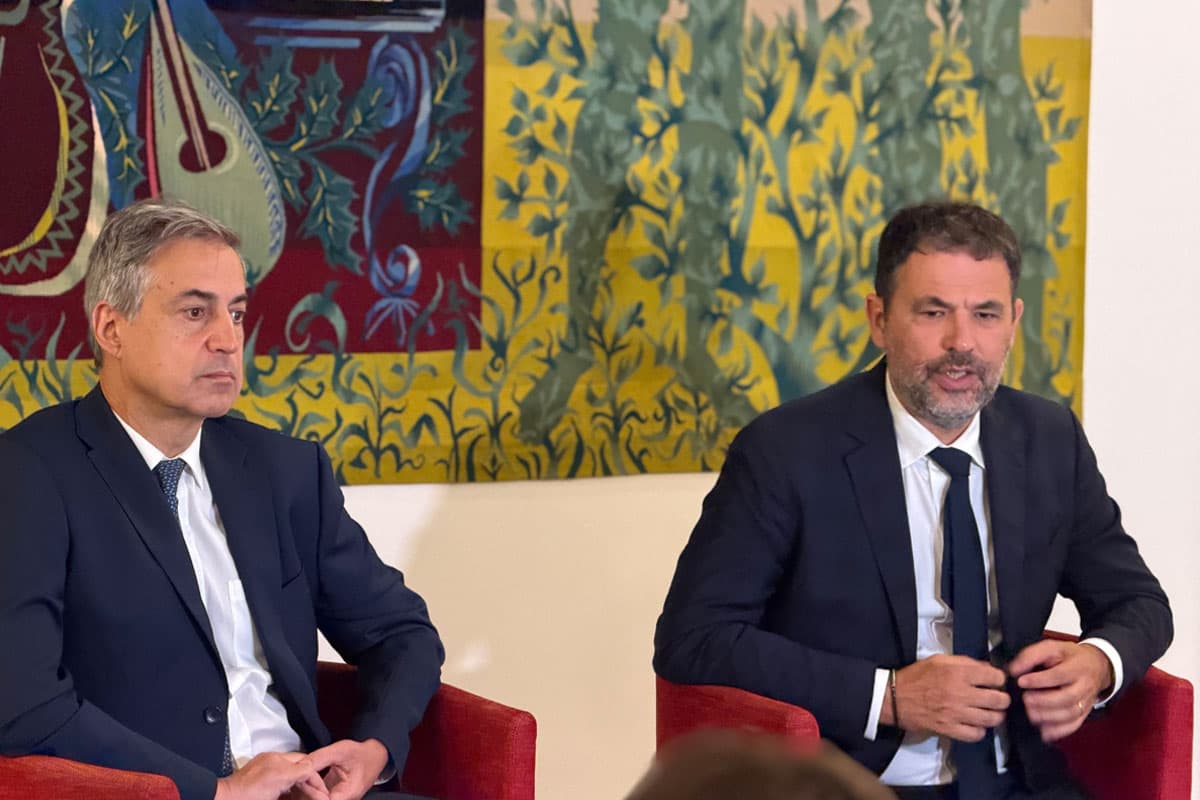
The projects remain at an early stage. Speaking at a media briefing at the French residence in Kuala Lumpur on July 6, Carester president Frederic Carencotte said that the company and Malaco are working on the design of a proposed separation plant in Perak with a projected annual capacity of 13,000 tonnes of raw rare earth feedstock.
They are also assessing potential feedstock sites in Perak and Kelantan and preparing environmental impact assessments (EIAs) and other approvals needed for the extraction projects, which remain at an early stage.
The proposed separation plant could produce chemically refined concentrates as well as neodymium-praseodymium, dysprosium and terbium oxides, which are used in permanent magnets for electric vehicles, wind turbines and other high-technology applications.
Carencotte said Carester is proposing a separation plant that would not generate wastewater. He said separating and purifying one rare earth element from another can require the material to pass through 40 to 60 extraction stages, compared with just two or three stages to separate nickel from cobalt.
Carencotte also said part of the carbon dioxide emitted at the furnace stage could berecycled and reused as a chemical reagent.
However, Carencotte did not explain in detail how the proposed separation process would avoid generating wastewater or how the liquid streams used in the process would be managed. ESG has reached out for more details but has not received answers by press time.
He said only that Carester had developed a technology that would produce “zero wastewater”, while part of the carbon dioxide emitted at the furnace stage could be recycled and reused as a chemical reagent.
Carester also plans to use the wastewater-free technology at Caremag, its recycling and refining plant under construction in Lacq, France. The €216 million (RM1 billion) facility is expected to begin operations in late 2026.
A separation plant without wastewater
The first technology Carester plans to bring to Malaysia is for in-situ leaching, which would be used to extract rare earths from ion-adsorption clay deposits.
The process involves injecting a leaching solution into the ground to release rare earths from the clay before collecting the rare-earth-bearing liquid for further treatment.
However, in-situ leaching can pose risks to groundwater if the solution escapes from the targeted area, while the injection of liquid into weathered soil can also affect slope stability and increase the risk of landslides.
Carencotte said Carester is bringing its in-situ leaching technology and expertise to Malaysia, while working with Malaco and the French Geological Survey, or BRGM, to design and test a site-specific system intended to reduce groundwater pollution and landslide risks.
He said the proposed method would involve extensive soil testing before holes are drilled, hydrogeological studies, greater control over the direction of liquid flows and a more complex arrangement of pipes.
“We will have much more control, and the number of pipes and the way they are organised will be more complex,” he said.
The process would also not use the large ponds associated with some leaching operations. Carencotte said the sulfate-bearing liquid recovered from the ground would instead be treated directly using a specific technology, although he declined to provide further details on parts of the system, because of intellectual property considerations.
“There will be no ponds in what we are doing. It will be a much more compact footprint. When we extract the sulfate, we will treat it directly with a specific technology to avoid any ponds,” he claimed.
It is unclear where the leaching solution would be stored before it is injected and how it would be recovered and treated. Again, ESG has reached out to Carester for more clarity.
Carester intends to first test the proposed system on plantation land, assess its performance and optimise the equipment footprint before deploying it more widely. Carencotte said one EIA was still being carried out, while two others were being prepared.
After the rare earths are extracted, Carester plans to remove radioactive elements from the resulting solution before it enters the main separation process.
Carencotte said uranium and thorium can be removed using established treatment methods, while Carester has developed a patented liquid-liquid extraction process to remove actinium-227.
Actinium-227 is a naturally occurring radioactive isotope and a decay product of uranium-235. Carester’s website describes the isotope as highly radiotoxic and saysremoving it is important for worker safety and the transport of rare earth products.
Carencotte said Carester’s patented liquid-liquid extraction technology would remove actinium-227 before the rare earth material entered the main separation process.
He added that the removal process would not generate waste and instead, produce a byproduct that could be sold to a fertiliser company, although there are no clearer details on this.
Carester’s process mixes the rare-earth solution with an organic solvent that attracts the actinium, according to its patent application. The two liquids are then separated, leaving a rare-earth solution with a much lower concentration of actinium.
There is no firm timeline yet for the extraction or separation projects. Asked when they could be up and running, Carencotte said the target was “as soon as possible”, adding that the local team was working on the approvals process.
Under the agreement with Malaco, which was signed a year ago, Carester will transfer upstream and downstream processing technologies to Malaysia and secure offtake of chemically refined rare earths products for its Caremag plant in France.
Carencotte said the offtake would be based on a percentage of production, but declined to disclose the percentage, tonnage or value of the concentrate.