

This article first appeared in The Edge Malaysia Weekly on July 13, 2026 - July 19, 2026
ABOUT 30 years ago, American multinational manufacturing solutions giant Jabil Inc expanded into Asia with a factory in Penang, which manufactures high-end disk drive product assemblies.
Today, Jabil Malaysia operates six facilities across the country, with the capability to help its global customers engineer products, optimise global supply chains and deploy artificial intelligence (AI) across manufacturing operations.
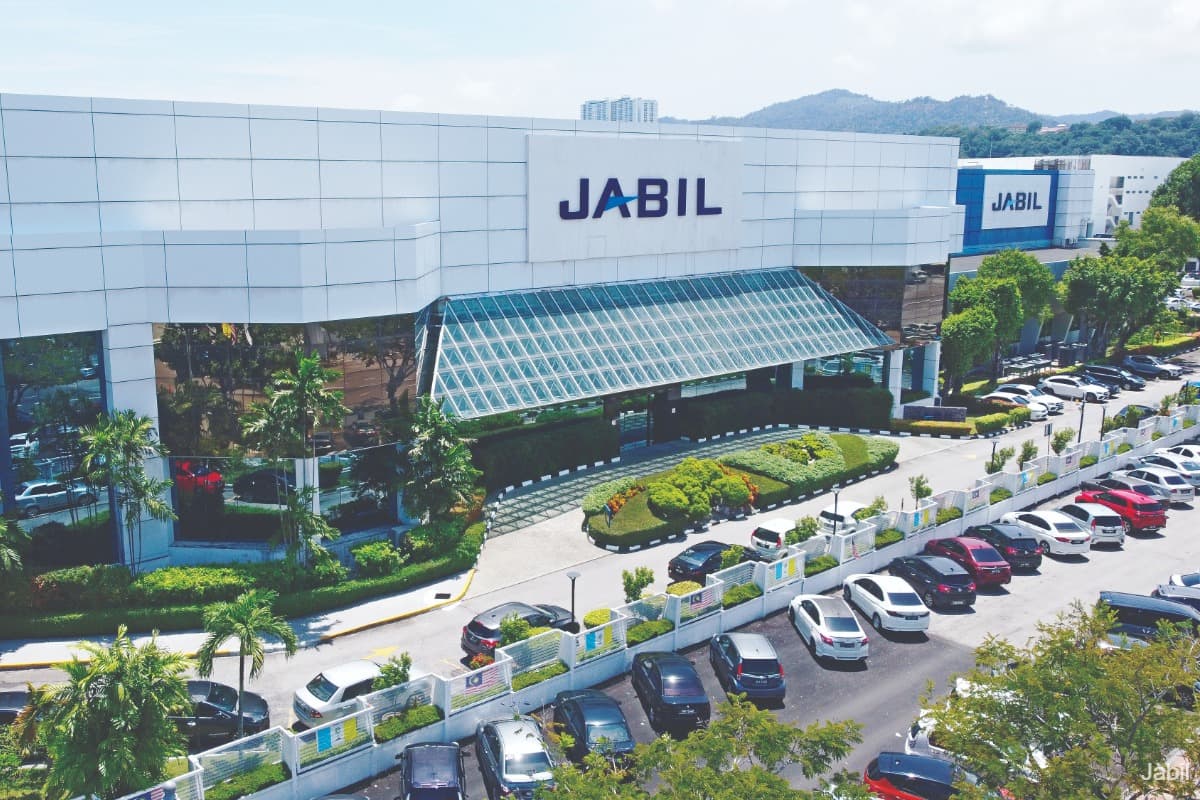
“Malaysia is one of our most strategically significant operations in Asia. Our Bayan Lepas operations alone span more than one million sq ft, running 24/7 across multiple plants. Add five more [local] locations and you have an operation of real depth,” says Jabil Malaysia managing director Tan Siew Jin, who started as a test engineer at Jabil Penang in 1995 and has seen first-hand how the company evolved over three decades.
“Penang was our first Asian facility in 1995. At the time, it was only the second site outside the US. Our Bayan Lepas site is consistently ranked among the top Jabil facilities globally, not just for output but also for capability. We have been working closely with the local small and medium enterprises (SMEs) — building their capability and supply chain resilience,” he tells The Edge in an exclusive interview in Batu Kawan, Penang.
In 2015, Jabil set up its manufacturing plant in Batu Kawan after acquiring an 8ha plot of land from state investment arm Penang Development Corp (PDC) for RM30 million.
Since then, Jabil has been focusing on upskilling its people to be able to meet customer expectations as rapid advancements in technology — including AI, machine learning and automation — are evolving roles both on and off the shop floor, as well as customer needs in the areas of quality, innovation and speed to market.
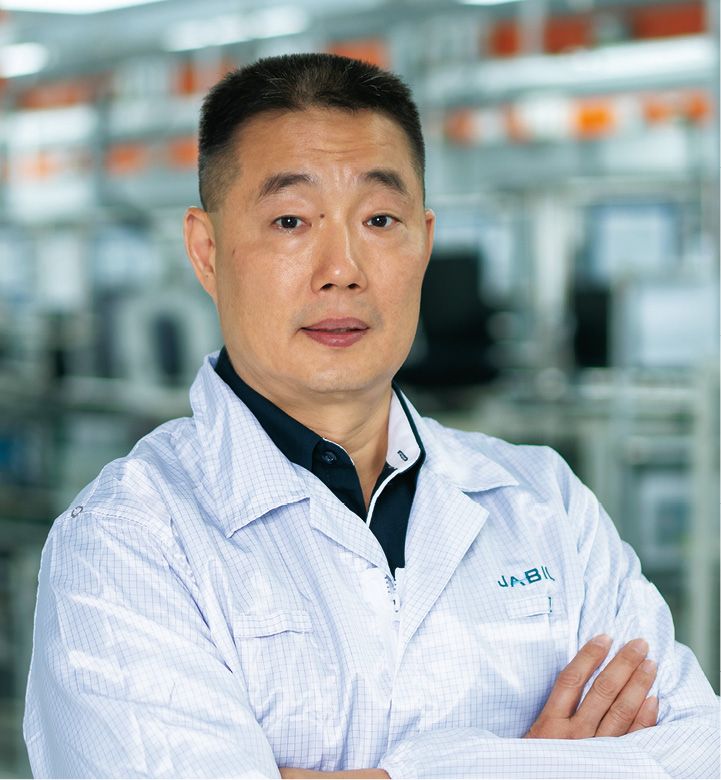
“Jabil has evolved — moving upstream in the value chain into engineering, development and integrated solutions. One of our strengths is the range of complexities we handle. We run products from very large form factors to very small, highly complex assemblies. Some products may not be large in size but require very high engineering capability in terms of build, test and development. This breadth of capability is part of what allows us to serve very different industries and customer requirements within the same ecosystem,” Tan explains.
Jabil is a fusion of the first names of its co-founders James Golden and William Morean, who subsequently passed the baton to his son Bill Morean.
In 1966, the company started out building circuit boards on the kitchen table of the Morean home outside Detroit, Michigan, for their first customer, Control Data Corp, which was then one of nine major US computer companies.
“Jabil started as an electronics manufacturing services (EMS) provider. Our early business was predominantly in printed circuit board assembly (PCBA), putting together components like capacitors, integrated circuits (ICs) and diodes onto boards. That process has evolved significantly over time — from manual soldering to highly automated machine-based assembly. We have also moved into higher-level assemblies, where we don’t just do PCBA anymore but integrate them into fully finished products,” Tan elaborates.
Beyond manufacturing, Jabil has expanded to engineering work, research and development (R&D) and co-development with customers. Therefore, it is no longer just adopting the “here is the specification, go build it” mindset.
“We now ask how we can design and build it better together. We are also deeply involved in supply chain and logistics, helping customers ship products globally and, in some cases, acting as their regional hub,” he says.
According to him, Jabil today is positioned globally in a balanced way across regions. From a supply chain, engineering and manufacturing perspective, the organisation operates on a globally distributed basis.
And hence, Tan opines that the description of a simple EMS company no longer fits, given how diversified the business has become.
“Our preferred description now is an end-to-end manufacturing services company — covering engineering, supply chain and manufacturing services,” he says.
For perspective, Jabil is currently the third-largest manufacturing services company globally and also the largest in healthcare manufacturing.
“Our customers are mainly brand owners. Essentially, we are the brand behind the brands. The end products are the brands people recognise but we operate behind them. We serve industries including healthcare, capital equipment, automotive, aerospace, defence and medical,” says Tan.
In total, Jabil serves more than 400 product brands globally. In many cases, customers provide specifications but its role has expanded beyond execution.
“We now participate earlier in the cycle, including co-design, development and validation. Depending on the customer, engagement can range from build-to-print models to full co-development and innovation partnerships. In some cases, customers come with concepts and performance requirements, and we work with them through design, qualification and regulatory compliance before production,” he says.
Headquartered in St Petersburg, Florida, and listed on the New York Stock Exchange, Jabil operates more than 100 sites across over 25 countries with about 140,000 employees globally.
Malaysia houses one-tenth of that global workforce, with 14,000 employees across six sites: Batu Kawan (its largest site), Bayan Lepas (two sites), one each in Kulim and Sungai Petani as well as Chuping, Perlis (its newest site).
“Each site plays a different role in our growth strategy, including advanced manufacturing and R&D-linked activities. Our planning is always based on customer needs and global optimisation, not individual site preferences,” he says.
A sizeable number of the Malaysian workforce are locals, with its long-term workforce model targeting “around 80%” local talent.
“We are progressing towards that, with local talent development as a consistent priority across all six sites. Our approach is to prioritise developing local talent so they can take on more skilled roles over time. Jabil Penang has a very strong R&D team and that is one of the reasons we continue to invest in Malaysia. Automation is absorbing repetitive work while hiring is shifting towards technical, engineering and digital roles. The question we ask is not ‘how many’ but ‘how skilled’,” says Tan.
Due to confidentiality policies, Jabil does not disclose the identities of its clients. However, The Edge has since learnt that some of its prominent clients include AI networking infrastructure providers, cloud computing firms, social media companies and wafer fabrication equipment makers from the US and Europe.
Tan says the Malaysian operations handle some of the most demanding, compliance-heavy, precision-critical programmes in global manufacturing.
“As a company, our diversified approach and global footprint allow us to respond to shifting market and customer dynamics. We know who our competitors are but our focus is not on watching what they do. It is on staying close to our customers, solving problems they cannot easily take elsewhere and delivering where the stakes are highest. Manufacturers who benchmark competitors tend to follow suit. The ones locked on customer needs tend to lead,” he remarks.
Tan believes Malaysia will remain a key manufacturing hub for Jabil globally.
“Following recent investments, including the launch of Jabil Chuping in 2025, the company continues to assess opportunities to strengthen its capabilities and footprint in the country, supporting evolving customer requirements and its global operations over the long term,” he says.
In the semiconductor ecosystem, Jabil sits in the middle of the value chain. The front end involves wafer manufacturing and fabrication while the back end involves packaging and testing.
The focus is on the assembly and integration stage — taking components, integrating them into higher-level assemblies and then testing and shipping. At the same time, the business is also moving further upstream into more advanced packaging-related capabilities.
“There is still a perception that manufacturing is low-end or purely factory work. That is not accurate for what Jabil does. What Jabil operates is a highly advanced, technology-driven environment that requires continuous learning and upskilling,” says Tan.
He further says that AI-driven data centre infrastructure, healthcare, semiconductor and capital equipment are generating the strongest demand signals right now.
“Our Malaysian facilities are directly serving customers in these spaces. Demand patterns drive investment decisions. We are deploying automated inspection, AI-driven quality systems and digital manufacturing tools in direct response to customer needs. When a better approach is proven at any Jabil site globally, it moves to Malaysia fast. We absorb demand without starting from zero,” says Tan.
It is worth noting that Jabil has an internal system called “vCommand”, which supports decision-making in supply chain and site allocation. It evaluates factors such as geopolitics, freight cost, transport mode, time-to-market and customer requirements.
“Based on these inputs, it can recommend the optimal location for manufacturing or distribution. This allows us to provide proposals not only based on customer requests but also data-driven optimisation. vCommand itself evolved from earlier systems and we have been using AI-assisted decision tools in supply chains for many years,” he says.
Tan highlights that monitoring geopolitical change is a structural discipline for Jabil as its local-for-local, regional-for-regional manufacturing model limits concentration risk by design.
“With one-third of our facilities each in Asia, Europe and the Americas, we can move production when conditions shift. Jabil manages more than 38,000 suppliers and over US$25 billion (RM102 billion) in annual procurement, with about 3,000 dedicated supply chain professionals — that scale lets us identify stress points before they reach customers,” he concludes.
A beneficiary of the global AI tech-stock upswing, Jabil’s stock price is up easily 60% in the first six months of this year to give it a market value of nearly US$40 billion — making it larger than every stock listed on Bursa Malaysia.
Save by subscribing to us for your print and/or digital copy.
P/S: The Edge is also available on Apple's App Store and Android's Google Play.